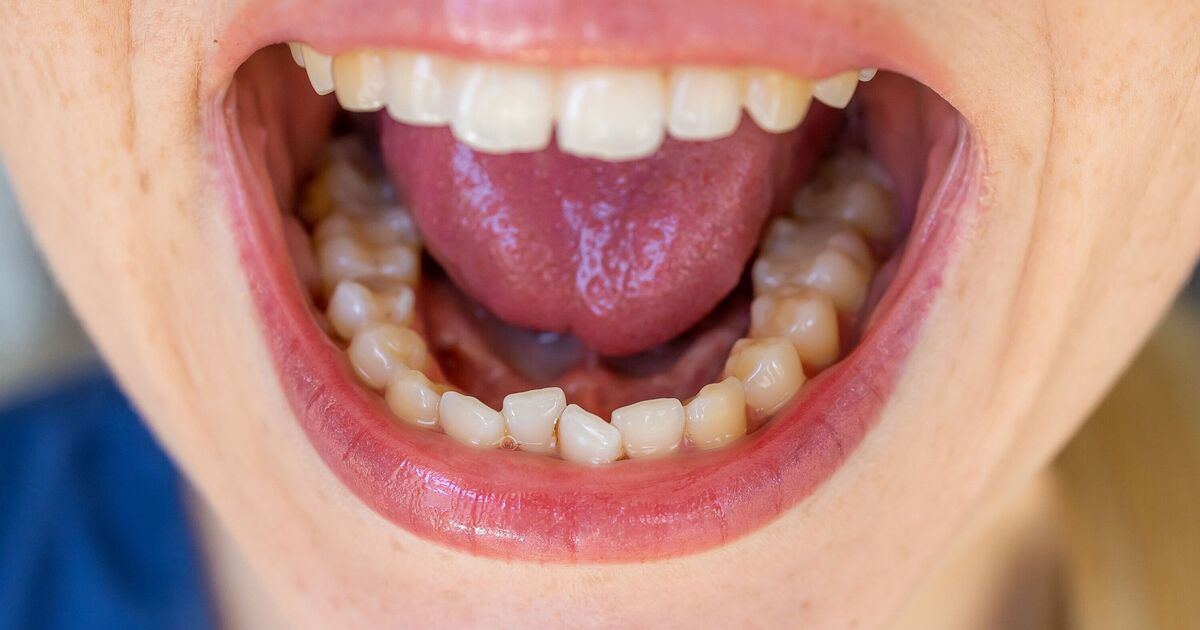
7 reasons you have a ‘metallic ‘ taste in mouth
The NHS has warned people with a “metallic” taste not to ignore the sign. While there are “lots of possible causes” some may need more urgent medical attention than others.
As explained on the NHS website: “A metallic taste is not usually serious. What you can do to get rid of it will depend on the cause.”
Fortunately, there are ways to eliminate the unpleasant taste. And it could simply be down to medications you’re taking, and in some cases, if you’re pregnant.
Why do I have a metallic taste in my mouth?
Common causes include:
- gum disease
- taking certain medicines, like metronidazole or zopiclone
- cancer treatments, like chemotherapy and radiotherapy
- colds, sinus infections and other airway problems
- indigestion
- being pregnant
- a lost or changed sense of smell
As noted by the experts, those taking metronidazole could be affected. This is used to treat skin infections, rosacea and mouth infections, including infected gums and dental abscesses.
It’s also used to treat conditions such as bacterial vaginosis and pelvic inflammatory disease (PID). Additionally, it is used for infected insect bites, skin ulcers, bed sores and wounds, as well as to treat and prevent bacterial and parasitic infections.
This medication has brand names including:
- Acea
- Anabact
- Flagyl
- Metrogel
- Metrosa
- Rosiced
- Rozex
- Vaginyl
- Zidoval
- Zyomet
Zopiclone is also mentioned as a common cause for this issue. This is a type of sleeping pill that can be taken for short-term treatment of severe insomnia. In its key facts, it warns: “Common side effects are a metallic taste in your mouth, a dry mouth, and daytime sleepiness.”
How to get rid of metallic taste in mouth
If you have a metallic taste in your mouth, the steps you can take to alleviate it depend on the cause. It will sometimes go away by itself.
-
Gum disease: Regularly brush your teeth, use dental floss, have a dental check-up every 6 months
-
Taking certain medicines: Speak to a pharmacist for advice – do not stop taking prescribed medicine without medical advice
- Chemotherapy or radiotherapy: Eat stronger-tasting food like ginger and spices, and suck on boiled sweets
- Colds and other problems with your airways: The taste should go away once the problem has cleared up
- Indigestion: The taste should go away after treating indigestion
- Being pregnant: The taste is usually temporary and clears up by itself
It concludes by noting you should book an appointment with your GP if you have a metallic taste that does not go away. You should also seek help if the metallic taste has no apparent cause.