Marty Supreme review: the ping pong movie is very stressful
The origins of table tennis have often obscured its influence — it was literally designed to be the diminutive form of tennis, after all. But the idea of “spin” first originated with ping pong; politically, it would become the thing that opened up negotiations between the US and China under Nixon. There are gestures to this in Marty Supreme, but the new film from Josh Safdie is more interested in the sport as a fixture for outcasts in the ’50s Lower East Side. Loosely based on the true story of Jewish table tennis underdog Marty Reisman, Marty Supreme arrives eager and ready to unnerve you.
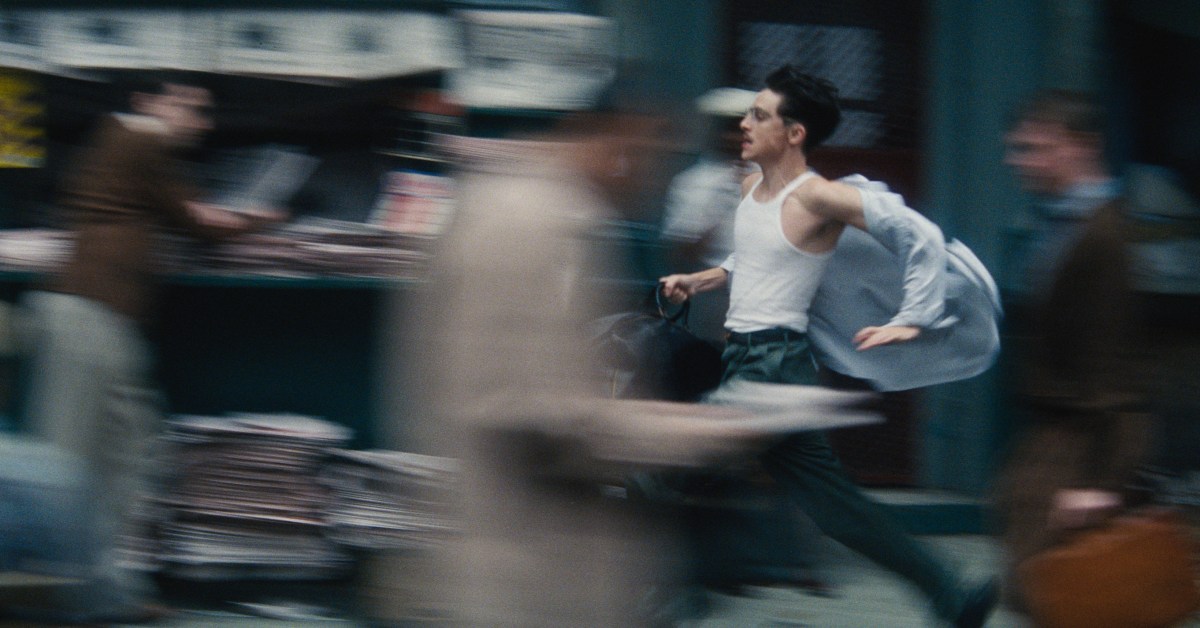
“Loosely” is the key word here, unless it turns out the real-life Reisman was a real piece of shit. This version, Marty Mauser (Timothée Chalamet), is as maddening as they come. Anyone who has seen the Safdie brothers’ previous movies Good Time or Uncut Gems will recognize the template: a man who constantly makes selfish choices, every bad decision an excuse to meet a strange character and sprint through the gorgeously shot streets of New York City.

Courtesy of A24
Like Robert Pattinson and Adam Sandler before him, Chalamet is charming but not too charming, driven by his belief that he can become a table tennis champion if he could only scrape together the dough. The film’s second act is possessed by Mauser’s need to acquire the cash for a plane ticket to get him to Tokyo. All his motives are informed by his fixation on beating his Japanese rival Koto Endo (Koto Kawaguchi, who in real life is a Japanese national Deaf table tennis champion). Every transgression that follows is an escalation. Each character — a friend, family member, or lover — is quickly betrayed in pursuit of Marty’s ping pong ambitions.
The Safdies know how to portray this kind of character, and they also know how to draw that performance out of their leading men. They turned Edward Cullen into a dirtbag; they turned Billy Madison into a dirtbag. Paul Atreides? Willy Wonka? The twink from Call Me by Your Name? All pretty good dirtbags too. As Mauser, Chalamet projects a deluded fool, a reluctant father-to-be, and an arrogant hustler. But even through the pencil mustache and thick eyebrows, Chalamet’s charisma grounds the character — or at least prevents him from being too hateable.
A number of other colorful figures populate the film. Gwyneth Paltrow plays a movie star past her days of fame; her asshole tycoon husband is played somewhat unconvincingly by Kevin O’Leary, who Shark Tank fans will know as “Mr. Wonderful.” More impressive surprise turns come from Tyler Okonma (aka Tyler, The Creator) as a fellow ping pong hustler and Abel Ferrara as a funny stereotype of a gangster you might find in an Abel Ferrara movie. These are nice novelties, but the focus is singularly on Chalamet.
As a Safdie movie, Marty Supreme made me crave something new. There’s nothing wrong with a director chasing the same themes or ideas, but this latest outing felt like more stepping backward than forward, or even sideways. (Even this fall’s other “unraveling” character, Josh O’Connor’s much gentler thief in The Mastermind, is a fresher take on an idea the Safdies love.) Chalamet might make a convincing character study of self-rationalization and delusion, but how different is that from Pattinson’s and Sandler’s versions of this? And it doesn’t help that, thanks to the baggy two-and-a-half-hour runtime, this film isn’t as focused or strong as Good Time or Uncut Gems.

Courtesy of A24
In fact, without giving much away, the only thing that really delineates Marty Supreme from this Safdie trilogy of stress tests is its ending — easily the least satisfying act of the film. There are copious scenes of ping pong throughout, but by the time Mauser gets to his final match, the stakes have been deflated by its main character already having suffered a pride-shattering humiliation. The movie maybe should have ended there but instead proceeds on to fulfill the big showdown you might expect from a more traditional sports film. It’s a kinder finale than we’re used to seeing from the Safdies; it’s also a lot cornier.
The Safdie brothers split for their most recent films. Josh directed Marty; Benny directed The Smashing Machine, a portrait of early UFC fighter Mark Kerr, a kind of transformative vehicle for Dwayne “The Rock” Johnson. It’s not hard to see them as similar projects: A24-backed period-specific sports movies starring household names, with expensive needle drops and an odd preoccupation with Japan. They even have similarly unsatisfying endings.
Marty Supreme at least has the effective thriller momentum over the inert Smashing Machine. But they both suffer from the same misguided assumptions. Perhaps it is more compelling to reckon with a sports gambler than an athlete. Maybe it’s easier to judge a character by their vices than by their strengths. But probably of all our contemporary filmmakers, it’s just boring to see the Safdie brothers go soft on their main characters.
Marty Supreme is in theaters December 25, 2025.