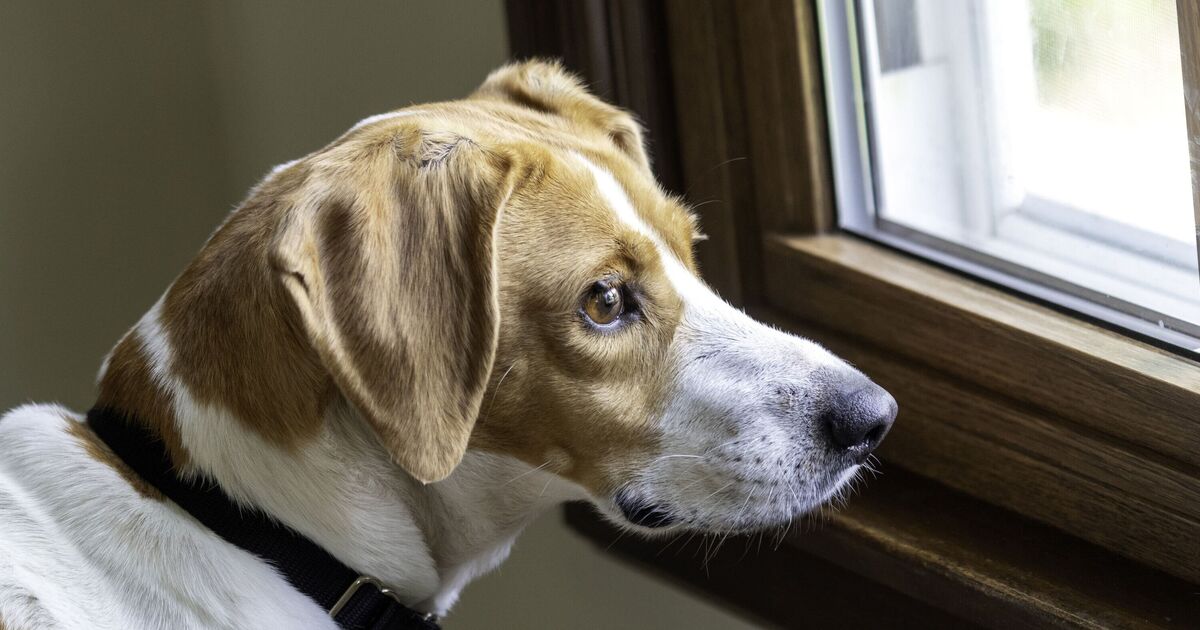
Dog owners urged to do 1 thing to help prevent separation anxiety
A vet has shared his go to tips on how he’s helping his own dog feel less anxious when he’s not at home, and how to best deal with it.
Research suggests that 8 out of 10 dogs find it hard to cope when left alone. Yet, half won’t show any obvious signs and so it can be easy for owners to miss, the RSPCA reports. So how do you know if your dog is affected?
The most common signs of separation-related behaviours in dogs are destructive behaviour, howling, barking or whining, and being excessively excited upon your return. Some less common behaviours might also include not eating, repetive behaviour (such as circling or barking), and panting.
Luckily there are ways you can help your pet feel more at peace when left alone. Taking to TikTok, a veterinarian named Amir Anwary shared how he deals with separation anxiety with his own dog.
“Generally, when we leave our home, that’s usually the worst part of their day,” Amir said. “They love being around us, they love us, and when we’re gone, they generally don’t like that.”
He went on to say that every time you leave your home, they get sad, and every time you do your routine when you leave your home, such as saying goodbye to your dog in the same way or putting your shoes on in the same way, they start to build that sadnessd and anxiety before you’ve even left your home.
“What makes it even worse is that when you get back home, you’re superexcited,” Amir said, saying people usually have a lot of energy they give to their dog that you don’t usually have in the day.
This means that the best part of your dog’s day is when you get back home with this happy energy after not having seen each other for hours.
This makes it even more difficult when your dog sees you leaving, as that middlepart becomes ‘psycological torture’, according to Amir.
So how can you make your dog feel better when you’re not there?
How to prevent separation anxiety in your dog
In order to help his own dog feel better and less anxious when he’s not at home, Amir explained that he’d started to change up his routine for when he leaves home.
He said that he’d usually say ‘stay’ to his dog to stop him from going out with him. But this resulted in the pup feeling anxious whenever that command was used. Because of this, he stopped using this command, and made sure to take out any other triggers for his pup to make him less anxious.
When you later get back home, Amir said to take out the emotion and not act excited or have a lot of energy for your pup, so they stop associating you coming home with a happy excitement they look forward to.
Instead, Amir said to be more energetic and happy with your dog throughout the day, so that they don’t associate this energy only with you coming home.
If you need more help, it’s adviced to contact your local vet to get more guidance on how to treat your dog’s separation anxiety.