Iran hospitals ‘overwhelmed’ as protesters shot sparking fears of regime ‘massacre’ | World | News
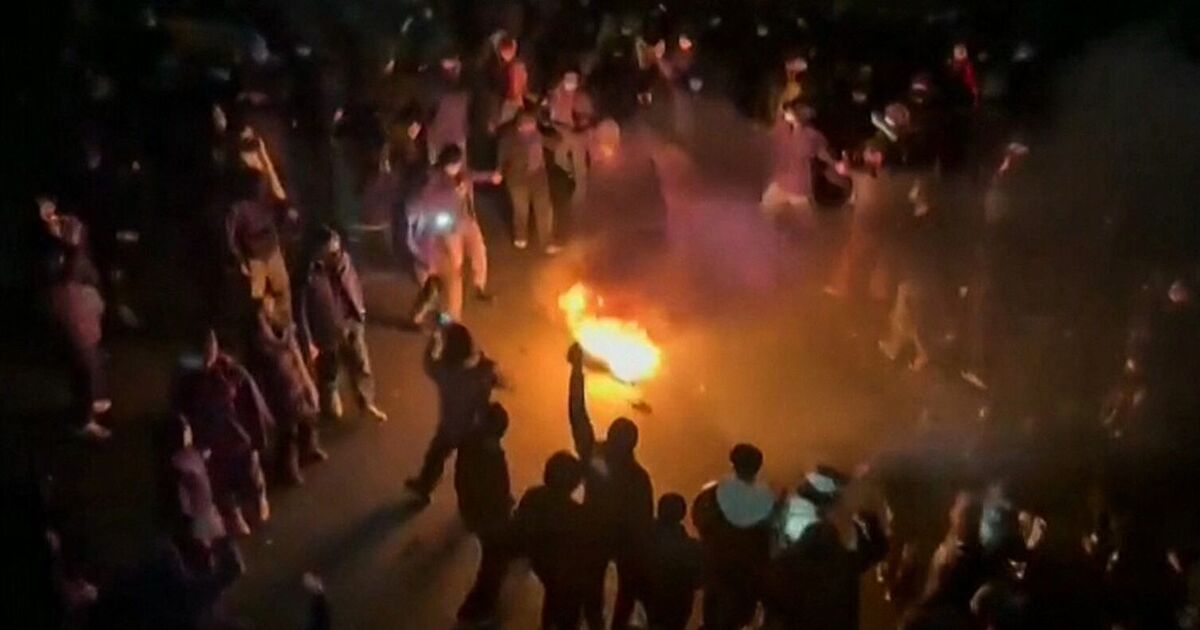
Iran is experiencing a period of intense turmoil, with hospitals reportedly “overwhelmed” as widespread protests continue, amid concerns the regime will clamp down harder on demonstrations. A nationwide internet blackout has raised serious concerns about the possibility of violent crackdowns happening out of public view, prompting fears of a potential “massacre.”
At the same time, millions of protesters who have taken to the streets in anger now face the threat of severe punishment, including the death penalty, as authorities attempt to regain control. According to reports, Tehran Eye Hospital is overwhelmed with injured patients as doctors scramble to provide treatment. A doctor from Iran, who contacted the BBC via Starlink satellite internet on Friday night, said Farabi Hospital, Tehran’s main eye specialist centre, had gone into crisis mode, with emergency services overwhelmed.
Anti‑government protests have continued to sweep across Iran, spreading to dozens of cities as public anger intensifies. According to two human rights groups, at least 50 protesters have been killed so far.
The demonstrations, which began over economic grievances, have rapidly evolved into broader anti‑regime unrest, drawing large crowds despite a heavy security presence. Reports indicate that hospitals are overwhelmed with injured demonstrators, and the nationwide internet blackout has made it difficult to verify the full scale of casualties.
Iranian officials have warned that the country is now operating at an exceptionally high level of military readiness, even greater than during its conflict with Israel the previous year.
According to state sources, Iran has activated its network of underground “missile cities” — vast, fortified tunnels designed to store and launch missiles while remaining hidden and protected from attack.
More than 2,300 protesters have been arrested as the unrest in Iran stretches into its second week, highlighting the scale and intensity of the demonstrations.
For the 14th consecutive day, crowds filled the streets on Friday, voicing their anger through powerful anti‑government chants, including calls such as “Death to Khamenei!”
Iran’s Supreme Leader Ayatollah Ali Khamenei remained defiant in a televised address on Friday, saying: “The Islamic Republic came to power through the blood of several hundred thousand honourable people and it will not back down in the face of those who deny this.”
Later, in remarks made to a gathering of supporters and broadcast on state television, Khamenei reiterated the message, saying Iran “will not shirk from dealing with destructive elements”.
United Nations Secretary General spokesperson Stéphane Dujarric said the UN was very disturbed by the loss of life.
He said: “People anywhere in the world have a right to demonstrate peacefully, and governments have a responsibility to protect that right and to ensure that that right is respected.”
French President Emmanuel Macron, UK Prime Minister Sir Keir Starmer and German Chancellor Friedrich Merz released a joint statement that said: “The Iranian authorities have the responsibility to protect their own population and must allow for the freedom of expression and peaceful assembly without fear of reprisal.”