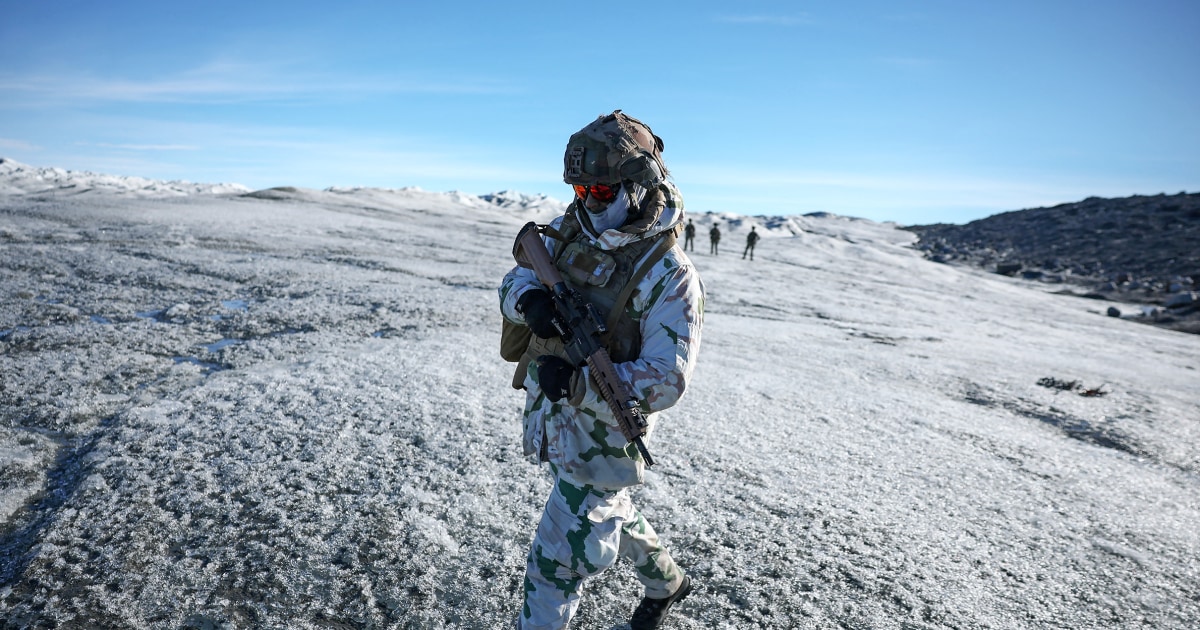
European troops arrive in Greenland as Trump throws another curveball
Denmark and other NATO allies have said the U.S. approach on Greenland threatens the very existence of the military alliance, already challenged by the Kremlin’s expansionist ambitions in the east.
European capitals were surprised and dismayed by Trump’s proposed peace deal to settle the war that has now raged for almost four years in Ukraine, the continent’s largest land conflict since World War II.
Kyiv and its allies have worked closely with the U.S. for months, revising the proposal and securing long-sought security guarantees from Washington.
U.S. military action in Venezuela and the unrest in Iran have drawn attention from Ukraine, though it was expected that the next step would be to present the plan to Moscow, with the ball firmly in Russia’s court.
But Wednesday, Trump flipped the script yet again.
It was not Putin but Zelenskyy, he said, who was the barrier to a peace deal.
Trump told the Reuters news agency that the Kremlin was ready to make a deal, while Kyiv was more hesitant. Asked why U.S.-led negotiations had not yet resolved the war, Trump responded: “Zelenskyy.”
The Ukrainian president said late Wednesday that he was being as “productive as possible” in negotiations, but that he expected more “energy” from the American side.
It was Russia who rejected the U.S. peace plan, not Zelenskyy, Polish Prime Minister Donald Tusk said. Russia’s only response was “further missile attacks on Ukrainian cities,” Tusk said Thursday, referring to a wave of attacks that have crippled Ukraine’s power grid, leaving millions in the dark.
The Kremlin, on the other hand, agreed with Trump’s assessment that Zelenskyy was at fault. “That is indeed the case,” spokesperson Dmitry Peskov said.

The unpredictability of Trump’s position on Ukraine, coupled with his escalating threats toward Greenland, is leaving Europe in a perpetual frantic mode to cobble a response, said Christoph Meyer, professor of European and international politics at King’s College London.
The multiple competing crises and the scale of challenges facing European leaders are “daunting” to navigate, Meyer told NBC News.
Europe’s foreign policy chief seems to agree.
The state of the world means it might be a “good moment” to start drinking, Kaja Kallas privately told lawmakers, Politico reported, citing two people in the room. Kallas’ office did not immediately respond to a request for comment from NBC News.
But it’s clear that a policy of “treading lightly” with Trump is not working for Europe, Meyer said.
“What Europeans are now trying to do is to kind of push back, but push back in a way that doesn’t overly publicly antagonize the administration, while still sending a clear enough message that there are very significant costs if they continue down that path,” he added.