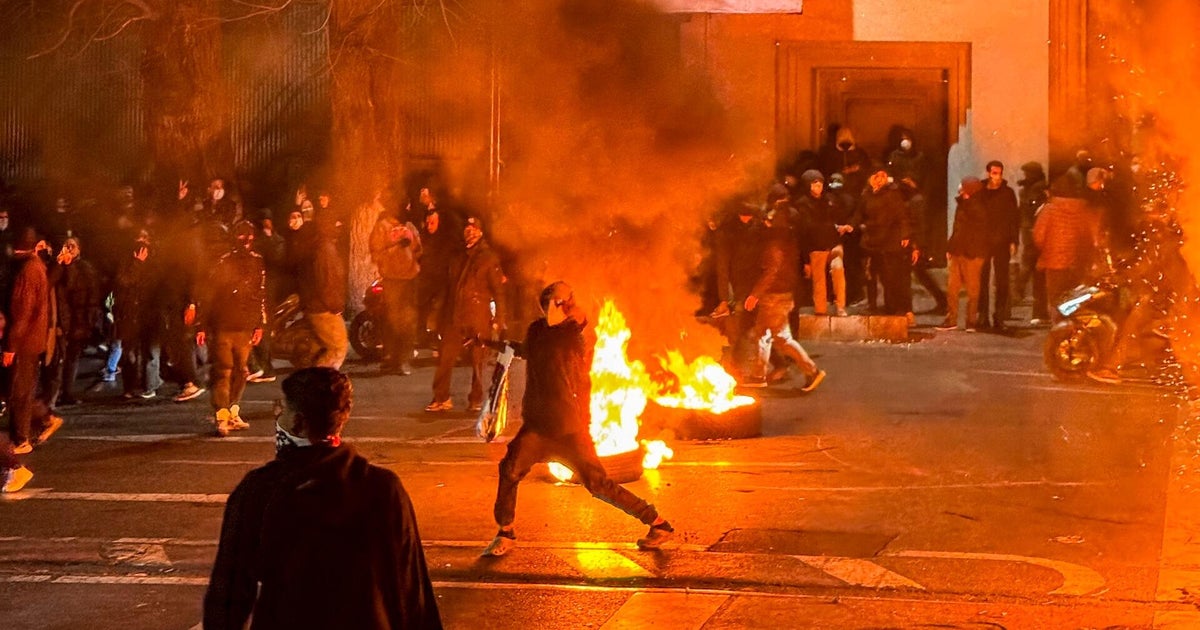
Iran gives “young people who became unwittingly involved” in protests 3 days to surrender, for “leniency”
Iran’s national police chief said Monday that people who were “deceived” into joining weeks-long protests deemed “riots” by Iranian authorities would receive lighter punishment if they turned themselves in within three days.
“Young people who became unwittingly involved in the riots are considered to be deceived individuals, not enemy soldiers” and “will be treated with leniency by the Islamic Republic system,” Ahmad-Reza Radan said on Iranian state television, adding that such individuals had “a maximum of three days” to surrender.
Demonstrations sparked in late December by anger over economic hardship exploded into protests widely seen as the biggest challenge to Iran‘s hardline Islamic rulers in years, though they subsided after a brutal crackdown that sources tell CBS News saw between 12,000 and 20,000 people killed.
Security officials cited by the semi-official Tasnim news agency, which is associated with the powerful Iranian Revolutionary Guard Corps, said late last week that around 3,000 people had been arrested in connection with the demonstrations. Rights groups say the number is likely closer to 20,000.
Anonymous/Getty 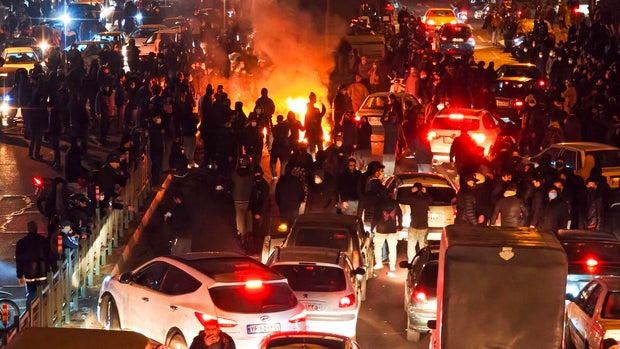
Iranian officials say the demonstrations were peaceful before turning into “riots,” which they accuse the country’s arch-foes the United States and Israel of fomenting to destabilize the regime, though they have presented no evidence to back up the claim.
Supreme leader Ayatollah Ali Khamenei said Saturday that authorities “must break the back of the seditionists,” adding that domestic and foreign “criminals” would not be spared punishment.
“We hold the American president guilty for the casualties, damages and accusations he has leveled against the Iranian nation,” he added.
The Iranian regime has already begun punishing people who were deemed to have supported the protests in any way, even if they didn’t go out onto the streets themselves. Last week, Tasnim quoted Iran’s Attorney General Mohammad Movahedi Azad as saying officials from the country’s judiciary were “obliged to identify the property of the ‘terrorists’ and report it to the prosecutors,” as a prominent businessman who closed his cafes in solidarity with the protests was detained and had his assets seized.
The attorney general said anyone who backed the uprising would have their assets seized to “teach them a lesson.”