
U.S.-allied fighters in Syria say they lost control of a prison holding ISIS militants
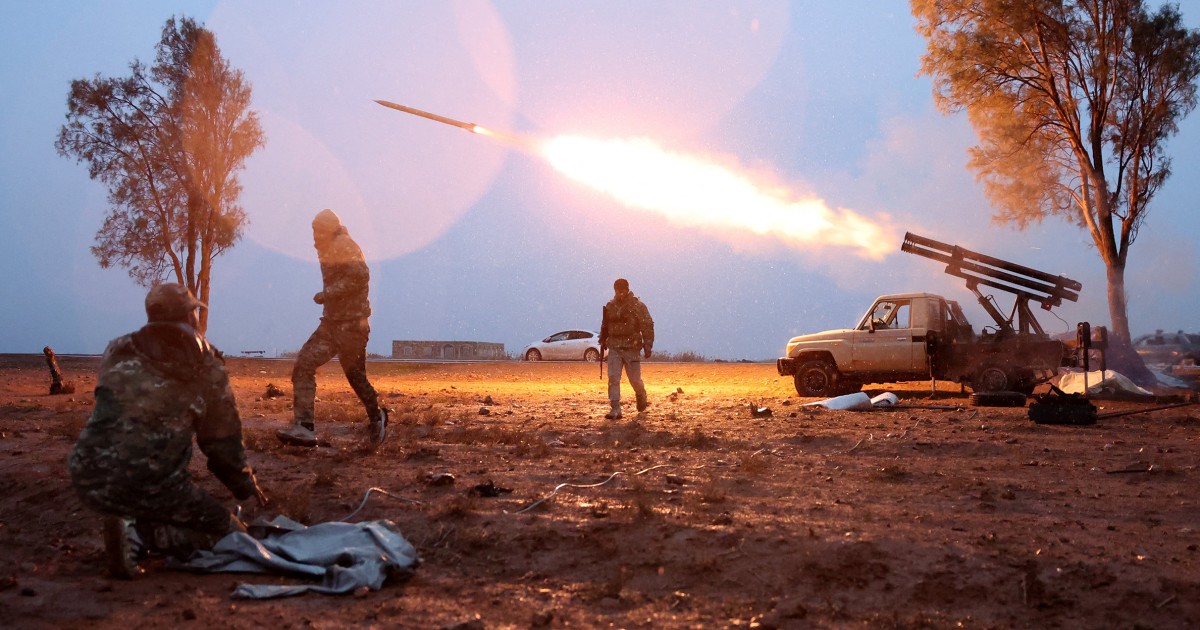
U.S.-allied forces guarding prisons holding thousands of Islamic State group militants in northeastern Syria said Monday that they had lost control of one of the facilities after fighting broke out with fighters loyal to the government in Damascus.
The Kurdish-led Syrian Democratic Forces (SDF) added that one prison was less than 2 miles from a U.S.-led coalition base, but it “did not intervene, despite repeated calls for intervention.” Now the facility was “no longer in SDF control.”
The longtime U.S. ally added on Telegram that it was trying to “prevent a serious security catastrophe.”
NBC News has reached out to the Pentagon for comment.

The SDF, once the U.S.’ main ally in Syria, earlier said it had also clashed with forces affiliated with the Syrian government near another facility holding ISIS detainees, the Al-Aqtan prison on the outskirts of Raqqa, the city that was once the center of the militant group’s short‑lived “caliphate.”
The Syrian army and the SDF on Sunday signed a ceasefire to end fighting that has displaced thousands.
Dozens of SDF fighters have been killed confronting forces affiliated with the Syrian government near the Shaddadi prison in the Hasaka province, the group said, adding it had been working with the international coalition to transfer ISIS detainees from the prison for three days.
The Syrian army accused the SDF of releasing ISIS prisoners from the Shaddadi facility. Units were securing the prison and combing the nearby city of the same name with the aim of arresting those freed, it said in a statement to the Syrian state-run SANA news agency.
“The Army Command contacted mediators and SDF commanders to hand over al-Shaddadi prison to the Internal Security Forces for the purpose of securing it and its surroundings, but the SDF leadership refused and continues to refuse to this day,” it added.
The fighting broke out a day after Syria’s government and the SDF signed a sweeping integration deal that was supposed to bring much of the autonomous region under government control. Responsibility for prisons housing Islamic State group detainees was meant to be transferred to the government.
SDF leader Mazloum Abdi confirmed it in a video statement, according to The Associated Press. The AP quoted him as saying that the group had accepted the agreement, which stipulates its withdrawal from Raqqa and Deir el-Zour provinces “to stop the bloodshed.”
Syria’s Defense Ministry said it had ordered the fighting to halt on the front lines after the agreement was announced.
Since toppling Bashar al-Assad in December 2024, Syria’s new leaders have struggled to assert their full authority over the war-torn country, but a recent push has seen them gain control over the Deir el-Zour and Raqqa provinces, critical areas under the SDF that include oil and gas fields, and border crossings.
President Ahmad al-Sharaa was shown by the SANA news agency signing and holding the agreement. “It’s a victory for all Syrians of all backgrounds,” al-Sharaa told journalists in Damascus after signing the agreement. “Hopefully Syria will end its state of division and move to a state of unity and progress.”
President Donald Trump and al-Sharaa had a phone discussion about the developments in Syria on Monday, according to SANA.
The two leaders discussed, “the importance of preserving Syria’s territorial unity and independence, and supporting all efforts aimed at achieving stability,” SANA said.
Sen. Lindsey Graham, R-S.C. said Monday in a post on X that Syria could face sanctions if the fighting continues.
“If Syrian government forces continue to advance in the north toward Raqqa, I will push for reimposing Caesar Act sanctions on steroids,” Graham wrote.
He added, “If this continues, not only will there be bone-crushing sanctions, it will permanently damage relationships between the U.S. and the new Syrian government.”
The two warring sides are key allies of Washington. U.S. envoy Tom Barrack met with al-Sharaa earlier Sunday as government forces were sweeping into the city of Raqqa and across Deir el-Zour province. Abdi reportedly joined the meeting over the phone.
Barrack praised the agreement, saying on X that it would lead to “renewed dialogue and cooperation toward a unified Syria,” ahead of working on the details of implementing the integration.


