The world’s tallest building that costs a whopping £895m hits major construction milestone | World | News
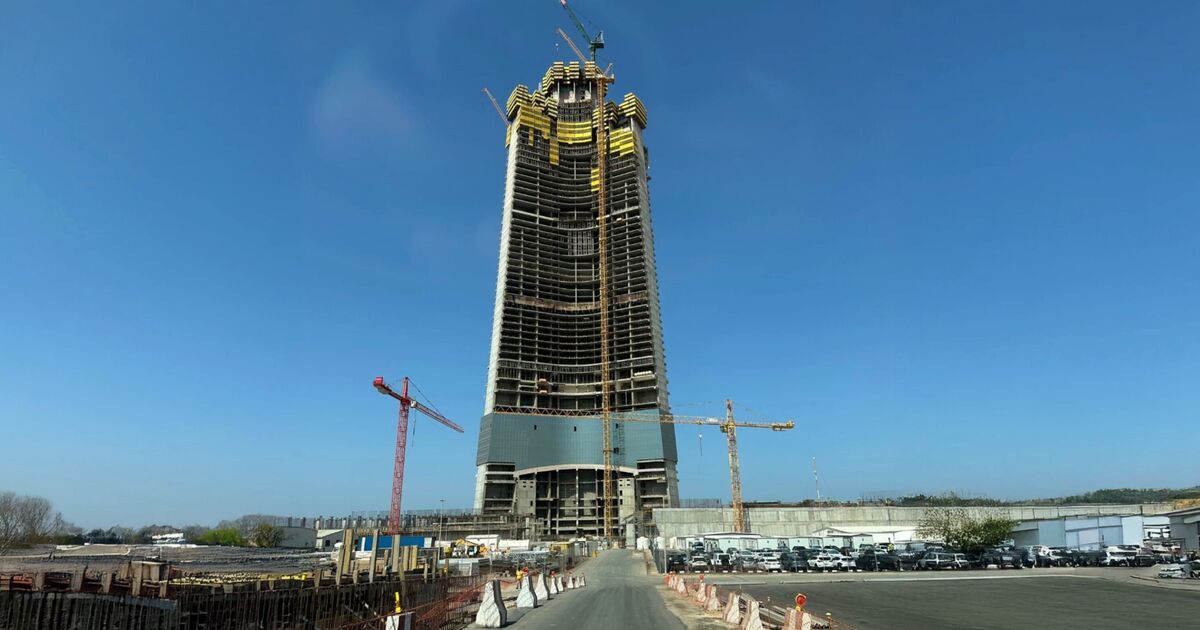
A huge new multi-million-pound skyscraper that is set to become the world’s tallest has hit a major construction milestone, according to reports. Jeddah Tower (also known as the JEC Tower) is a colossal project in Saudi Arabia planned to be the first 1-kilometre-tall building in the world.
With a planned height of around 3,281 ft, the epic structure would be some 590ft taller than the current world’s tallest building, the Burj Khalifa in Dubai, United Arab Emirates (UAE), which has held the crown since 2010. The new tower was designed by American architect Adrian Smith of Adrian Smith + Gordon Gill Architecture (AS + GG), who was also responsible for the Burj.
Construction of the tower is led by Saudi Arabian prince Al-Waleed bin Talal, chairman of Kingdom Holding Company (KHC).
Construction of the massive skyscraper began in 2013 but was paused in 2018 amid the fallout from the 2017-19 Saudi Arabian “purge” and later the COVID-19 pandemic.
Work on the project, which will form the centrepiece of the sprawling Jeddah Economic City development on the Red Sea coast, reportedly resumed in early 2025.
AS + GG previously put the estimated construction costs of the tower itself $1.2 billion (around £895m).
In an update in January, a firm providing design services for AS + GG said more than 80 floors (of the 60 or so floors its expected to have) had been constructed, marking a major milestone for the project.
According to SS + GG the tower will be a “mixed-use building featuring a luxury hotel, office space, serviced apartments, luxury condominiums and the world’s highest observatory”.
According to the firm’s website, the building’s extraordinary height requires “one of the world’s most sophisticated elevator systems” and the tower complex will “contain 59 elevators, including 54 single-deck and five double-deck elevators, along with 12 escalators”.
The company also anticipated that it would boast a sky terrace that would be considered the world’s highest observatory.
The building is set to be completed by 2028.