How much is a 2026 Winter Olympics gold medal worth as precious metal prices soar?
The medals athletes win during the 2026 Winter Olympics in Milan could be far more valuable than in past games because of soaring gold and silver prices.
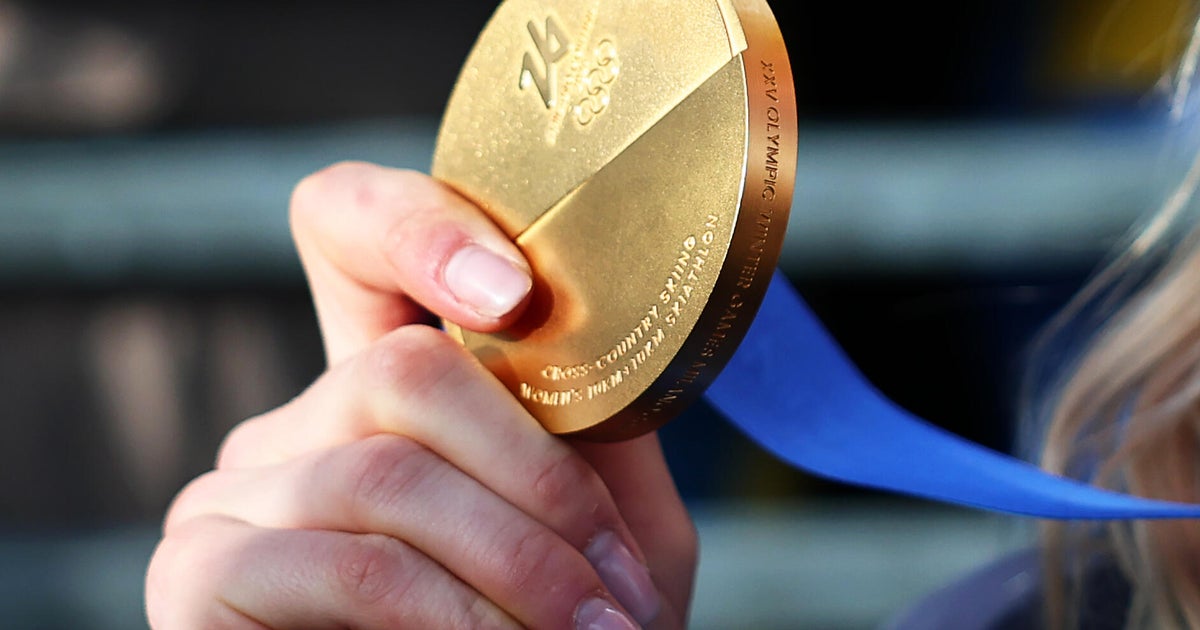
Olympic gold medals are no longer made of solid gold. The last time a pure gold medal was awarded was at the 1912 Summer Olympic Games in Stockholm, Sweden, Bobby Eaton, an Olympics memorabilia expert at Boston-based RR Auction, told CBS News. Now, the International Olympic Committee only requires that gold medals consist of at least 92.5% silver, according to IOC guidelines.
Olympic gold medals today are composed of 500 grams of silver plated with six grams of pure gold. Silver medals contain 500 grams of silver and no gold plating. Bronze medals are solid bronze.
At current precious metal prices and based solely on the mineral contents, the so-called “melt value” of an Olympic gold medal is around $2,500.
On Monday, the price of gold rose to $5,090 per ounce. Six grams is equal to 0.2 ounces, giving the gold contained in the Winter Olympic medals a value of $1,018. At $83 an ounce, the silver contained in a gold medal is worth about $1,463. That would make a gold medal worth $2,481, just based on the value of its components.
Gold prices soared to record highs last month, surpassing $5,000 for the first time, as investors flocked to the precious metal to hedge against risks related to geopolitical uncertainty and rising global debt.
No melting down history
Of course, Olympic medals typically have a far greater financial value because of their historical significance and collectability. If an athlete were to try to sell their medal soon after the games, they could fetch between $50,000 and $80,000, Eaton told CBS News.
“There is a discrepancy between the melt value and actual collectible value,” he said.
While most Olympic athletes hold on to their hard-earned medals, some prize winners resell them for prices that can reflect their prestige and significance. In 2013, one of four gold medals won by U.S. track and field athlete Jesse Owens at the 1936 Olympic Games in Berlin was auctioned for $1.47 million — a record for an Olympic medal, according to SCP Auctions, which handled the sale.
More recently, swimming champ Ryan Lochte in 2022 auctioned six of his medals — three silver, three bronze — to raise money for a children’s charity. Over four Olympics, he won a total of 12 medals, including six gold.
“I’m not one to be all sentimental about medals,” Lochte told The Associated Press at the time. “My medals are just sitting in my closet collecting dust. The memories that I have is what means the most.”
Handle with care
This year’s medals are drawing attention for another reason that could presumably take some of the shine off. The Olympics Organizing Committee said it is investigating an “issue affecting a small number” of the prizes after some athletes complained that their medals had broken.
“Don’t jump in them,” Breezy Johnson, who won the gold medal in downhill skiing for Team USA on Sunday, told reporters after her race.
“I was jumping in excitement and it broke. I’m sure somebody will fix it — it’s not like crazy broken — but it’s a little broken,” she said.