Winter Olympics star disqualified as his father breaks down in tears after controversy | Other | Sport
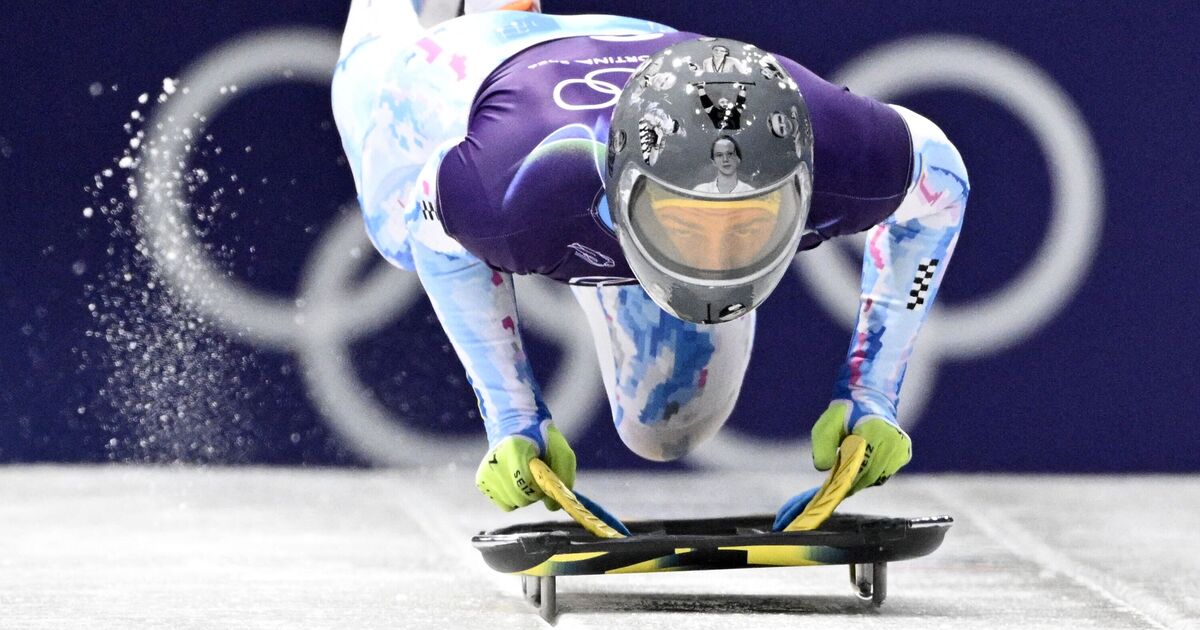
Vladyslav Heraskevych has been disqualified from the Winter Olympics for continuing to wear a helmet featuring images of Ukrainians killed during Russia’s invasion of the country. The skeleton had been wearing a ‘helmet of memory’ in honour of his dead compatriots but was ordered to ditch it by the International Olympic Committee (IOC). It was heavily implied that Heraskevych would be banned from competing if he failed to comply.
He was offered the chance to compete while wearing a black armband instead of the helmet, which the governing body said violated competition rules on political statements. In a statement on Thursday, the IOC said it had “decided with regret to withdraw” Heraskevych from the Games. They explained that the message wasn’t the problem, but rather the way in which he decided to express it.
The statement read: “Despite multiple exchanges and in-person meetings between the IOC and Mr Heraskevych, the last one this morning with IOC president Kirsty Coventry, he did not consider any form of compromise.
“The IOC was very keen for Mr Heraskevych to compete. This is why the IOC sat down with him to look for the most respectful way to address his desire to remember his fellow athletes who have lost their lives following Russia’s invasion of Ukraine.
“The essence of this case is not about the message, it is about where he wanted to express it. Mr Heraskevych was able to display his helmet in all training runs. The IOC also offered him the option of displaying it immediately after the competition when going through the mixed zone.
“Mourning is not expressed and perceived in the same way everywhere in the world. In order to support athletes in their mourning, the IOC has put in place multifaith centres in the Olympic Villages and a place of mourning, so that grief can be expressed with dignity and respect.
“There is also the possibility to wear a black armband during competition under certain circumstances. During the Olympic Games, athletes are also offered a number of opportunities to mourn and express their views, including in the media mixed zones, on social media, during press conferences and in interviews.”
Following the news of Heraskevych’s disqualification, his father was pictured breaking down in tears while being consoled by Chanmin Chyun, president of the Korea Bobsleigh and Skeleton Federation.
In a social media post after the IOC’s decision, Heraskevych wrote: “For me, the sacrifice of the people depicted on the helmet means more than any medal ever could – because they gave the most precious thing they had.”