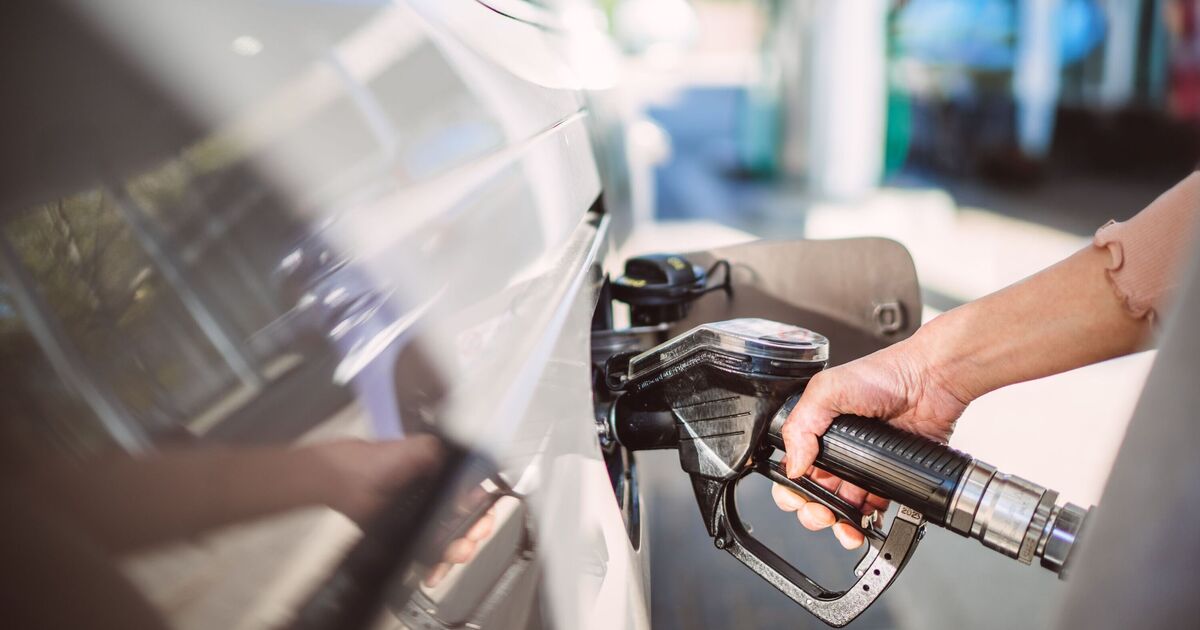
Experts warn UK petrol prices could reach £2 a litre by May | Personal Finance | Finance

The US-Israel war on Iran shows little signs of stopping soon (Image: Getty)
Petrol prices could average £2 a litre in the UK by May if the Iran war escalates, experts warn. Fuel prices continue to rocket in the UK, with petrol at 148.78p a litre on average, according to the latest data released today.
This is the highest level since May 2024 and has risen by more than 12% since the start of the war a month ago. Drivers have even reported seeing over £2 a litre at some pumps. Similarly, diesel is now 176.52p a litre on average in the UK – the highest level since December 2022. The war in the Middle East shows no sign of abating, with Trump issuing new threats to “obliterate” Iran’s power plants and oil wells if a deal is not reached “shortly”. Meanwhile, Iran’s foreign ministry has denied there are any negotiations with the US to end the war.
READ MORE: Garage forced to ration petrol as drivers flock to fill up
READ MORE: Petrol drivers hit with 19p per mile charges in April

Petrol prices could hit an average of £2 a litre (Image: Getty)
Samuel Mather-Holgate, managing director at Mather and Murray Financial, said he expects to see £2 a litre in a matter of weeks, if the Iran war escalates.
He added: “The war in Iran continues to affect the UK consumer, as petrol prices keep going higher. Average prices will hit £2 a litre by May if there is further escalation in the region, which is a real possibility given the track record of Trump.
“Given that same consideration, if Donald Trump declares he’s won and pulls out of the region, then the price of oil could retreat as well, meaning petrol prices could be back to normal by the summer.”
Colette Mason, author and AI consultant at
She added: “Petrol at £2 a litre isn’t a forecast anymore. It’s already on some forecourts, and the average is catching up fast. I paid £197p a litre for regular diesel on the last fill up.
“For businesses, this isn’t just a cost-of-filling-the-tank story. It runs straight through logistics, field services, delivery, and any operation where staff or goods move.”
For Anita Wright, chartered financial planner at Ribble Wealth Management, the price increases are a “warning sign” of how fragile our systems are.
She said: “This is not a story about the world suddenly running out of oil. There is a crucial difference between there being no oil and there being oil that becomes more expensive to move, insure, refine and deliver because geopolitics has disrupted the chain.
“When that happens, pump prices jump quickly, not because the earth has run dry, but because the route from producer to motorist has become unstable. This is a warning sign of how fragile the pricing system becomes when energy meets monetary weakness.”
However, some experts have pointed out that £2 a litre is unlikely to become the national average soon, because, in the end, consumers have the final say.
Tony Redondo, founder at Cosmos Currency Exchange, explained: “While £2 a litre has been spotted at high-cost pumps, it is unlikely to become the national average soon. Historically, such levels trigger demand destruction where consumption drops, naturally capping prices.
“The UK’s 5p fuel duty cut, in place until September, remains a vital buffer against that psychological threshold. In the US, sharp price hikes are a political landmine for Donald Trump ahead of November’s midterms.”