I come from the world’s happiest country – Brits could learn these 3 things | World | News

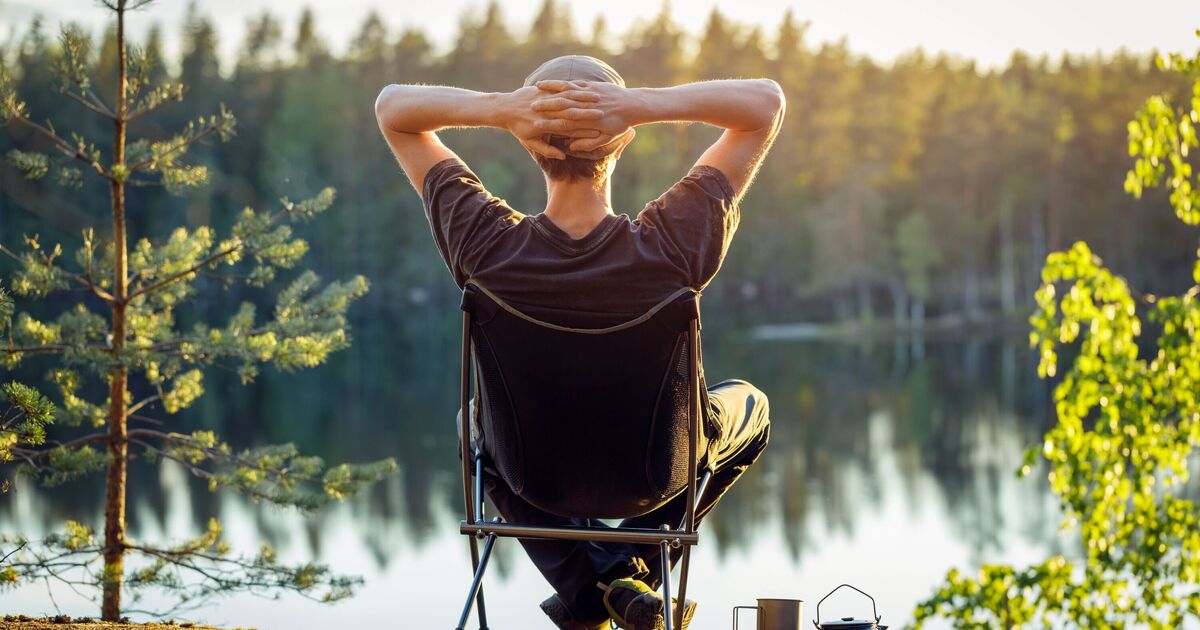
Trust, log off and relax, the Finnish CEO says (Image: Getty)
Finland has once again been named the happiest country in the world – and to many Brits, that can sound faintly ridiculous. How can a country where people spend months in darkness, keep conversations to a minimum and don’t exactly radiate Mediterranean exuberance keep beating the rest of the world to the top spot? According to one Finnish business leader who spends his working life measuring employee and customer happiness, the answer is not that Finland is perfect. Far from it.
“We are a bit puzzled ourselves,” Miika Mäkitalo, a proud Finn and CEO of HappyOrNot, told the Express. “If you look at our newspapers or listen to the radio, many things are not ideal. There are political fights. Many things are broken.”
And yet, Finland has ranked number one every year since 2018 in the World Happiness Report, while the UK has continued to slip down the rankings in recent years, taking the 29th place in 2026.
Here are three things Mäkitalo thinks Britain could be doing better.
READ MORE: Finland named world’s happiest country – full list as UK doesn’t make top 20
READ MORE: Happiest country in the world doesn’t have many tourists

Miika Mäkitalo is a proud Finn and CEO of HappyOrNot (Image: LinkedIn)
1. Work towards trust
For Mäkitalo, the number one difference comes down to more trust.
“I don’t like to preach about what should be done,” he told the Express humbly, “but I do understand that there are many elements that build happiness. One is a kind of contentment in people’s lives. And I think there are a couple of key aspects behind that: trust among citizens, trust towards institutions, and the feeling that things are working. We feel we can rely on other people, on the system, and on the government.”
That sense of things “mostly working” matters more than perfection. Finland is far from crisis-free, he added, but it is still a relatively high-trust society. Indeed, around 47% of Finns report trust in their national government, above the OECD average.
Mäkitalo believes part of that comes down to how politics is structured.
“The multiparty system forces parties to work together,” he said, which according to him creates a different tone to politics – less about total victory and more about compromise.
But he doesn’t think a two-party system is necessarily wrong. What’s more important is for politicians to follow the mantra
“build, don’t tear down”.
He explained: “Don’t focus on the political theatre… showing that we are fighting and we hate each other.”
Instead, he thinks politicians should collaborate more to show people that they care for Britain, despite their different views.
He recalled a moment when the former PM Sanna Marin was in office and one of the biggest national controversies was footage of her dancing at a party.
“It was the biggest political topic,” he said. “I had many British and American friends asking, ‘Is this a joke? Is this the biggest political problem you have in your country?'”
“If that is the biggest problem,” he added, “you are living in a great place.”
The level of trust begins with a strong education system, for which Finland is renowned.
He added: “There are only a very small number of private schools, so the system is essentially the same for everyone, and I think that helps create equality.
“Everybody goes to the same schools. Teachers are well trained – it’s a master’s-level profession here – so they know what they’re doing. They care about education and teaching, and I’m very happy and grateful that my own children can benefit from that.
“We don’t have the equivalent of Oxford or Cambridge in terms of elite branding, but we do have strong universities and excellent degrees. And because there is no tuition, ideally anyone – regardless of their parents’ wealth or background – can go to university if they are capable and motivated.”
2. Leave work on time
If British culture quietly rewards overwork, Finland has built something closer to the opposite. Not that Finns don’t work hard. But according to Mäkitalo, they are less likely to build their entire identity – and self-worth – around work.
“In Finland, if your contract says eight hours, you work the eight hours and then you leave,” he said. “Then you live your life and enjoy your life to the fullest.”
For a sauna-obsessed country, free time and vacations are treated as non-negotiable recovery time. He contrasted that with what he sees in the US: “I’ve seen people say, ‘I’m having a small surgery… my responses may be delayed, I will get back to you immediately when I can.'”
In Finland, that would raise eyebrows.
He said: “Vacation is a whole period in peoples’ lives… they don’t want any interference from work. They want to focus on recovery… and then they come back full of energy.”
Although Mäkitalo admits that as a CEO, he often needs to work outside of office hours, he still tries not to set unrealistic standards.
“I need to set an example,” he said. “There is no mindset that you have to stick around as long as your boss is there. When my colleagues start their vacations, I say: ‘I won’t disturb you. Please enjoy your vacation.'”
3. Build a life, not just career
The final point is about what you do with your free time.
“Make sure you are having free time… do the things you like,” he said.
That includes things that don’t look impressive on paper: walking, being outside, seeing friends, doing nothing in particular.
“Enjoying the nature, being with friends… these are the things that are energising.”
His most telling point came down to a simple question:
“When you are 80, what would you say to your younger self?
“I know many always say: I wish I had done less work, less meetings. Spent more time with my kids. More time outside.”
No one, he pointed out, regrets not sending more emails.
“So let’s do those things before we have to regret that we didn’t”.