Colombians are divided over the fate of hippos linked to Pablo Escobar
Diana Hincapié pauses her work at a Puerto Triunfo restaurant, taking a seat to chat beside a mural of a female hippopotamus and her calf.
“We don’t want to see a dead hippopotamus. They aren’t African anymore; they are Colombian, born and bred here for over 30 years,” said the 48-year-old business owner, noting she is ready to take to the streets in protest if the euthanasia plan proceeds.
Her restaurant, situated on the banks of the Cocorná Sur River — a tributary of the Magdalena — draws nearly 200 tourists a month. Most come specifically for the hippos, and Hincapié fears that the government’s plan would decimate the area’s tourism.
Confinement, transfer or death
As one of the largest terrestrial mammals on Earth, hippopotamuses have now spread across approximately 43,000 square kilometers (16,600 square miles), according to Environment Ministry estimates.
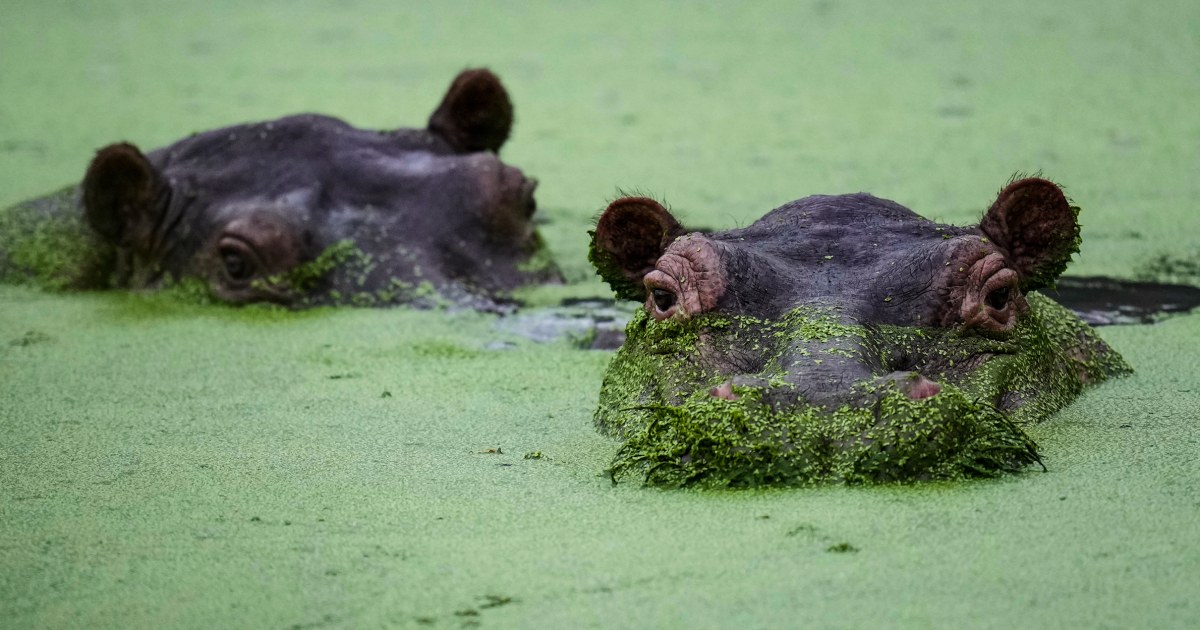
With no natural predators and a stable, drought-free climate — a stark departure from their native Africa — the animals found a sanctuary on the “Island of Silence,” a vegetation-covered river island that has become the heart of their expanding colony.
Álvaro Molina, 61, who lives on the riverbank opposite the island, recalls that the first pair arrived roughly 11 years ago. Since then, the population has surged. “One night I saw 12 at once, but I understand they have been migrating,” the fisherman says.

Encounters on the river are so frequent that Molina now takes them for granted every time he goes fishing — especially at dusk. A few years ago, his boat ended up right on top of two hippos which, startled, capsized the vessel. The fisherman managed to swim to another barge without injury.
“Whether they are killed or taken away, it does us a favor,” Molina said, noting that the hippos have crippled the local fishing industry because so many people have abandoned it out of fear.
The government’s control plan includes confinement, a move supported by Puerto Triunfo residents, transfers to international sanctuaries or zoos and euthanasia, a last resort reserved for cases where non-lethal alternatives prove unfeasible.