Colombia’s Petro sows doubt on election showing his favored successor heading to runoff against pro-Trump rival
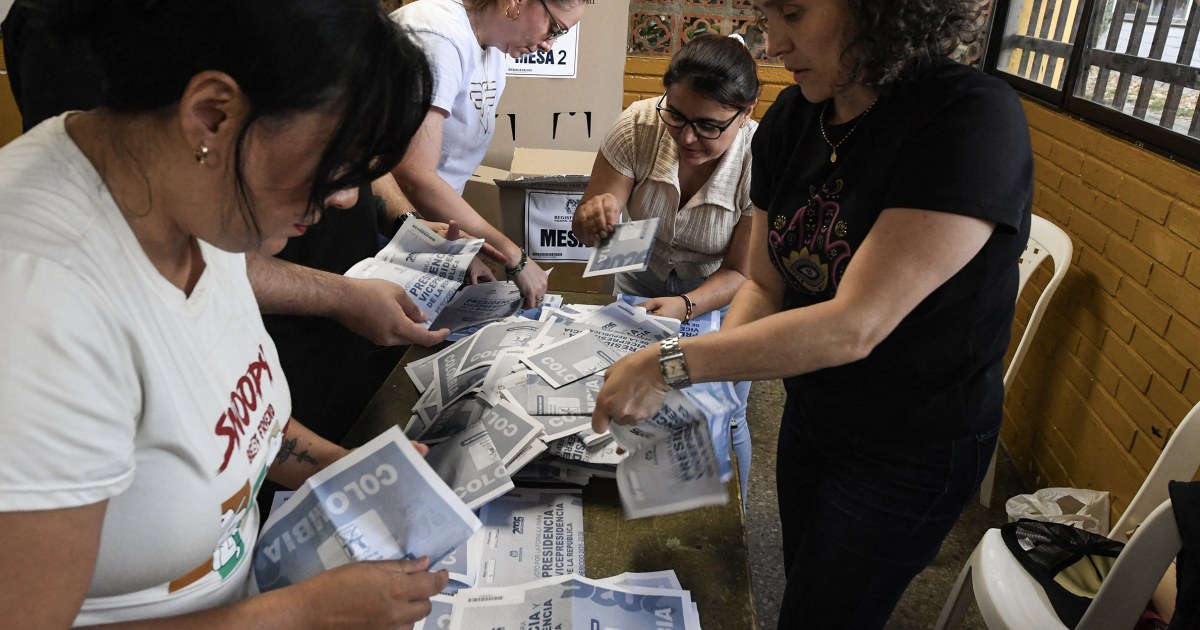
Colombia’s outgoing president on Sunday sowed doubt on his country’s elections, which showed his preferred candidate, Iván Cepeda, headed to a runoff next month against right-wing opponent Abelardo de la Espriella.
Subscribe to read this story ad-free
Get unlimited access to ad-free articles and exclusive content.

Neither candidate earned more than 50% of the vote in the first round of the election Sunday, but with more than 99% of votes tallied, de la Espriella — running as a candidate for “Defensores de la Patria,” a party he founded — was leading the polls with more than 43% of the vote. Cepeda, of the incumbent party “Pacto Histórico,” was trailing behind at just over 40%.
President Gustavo Petro, who endorsed Cepeda, said he would not accept the preliminary count released by the country’s electoral authority, claiming some of the software used by private companies to count votes was flawed and that the results were not binding.
Petro claimed 800,000 IDs were added to the software, representing people who were not on the official census.
Cepeda, too, sowed doubt on the results, saying votes were miscounted and that there were discrepancies.

“Today, we secured 10 million votes that were miscounted in Colombia,” Cepeda said during a speech in Bogotá. “There is a discrepancy that we wish to verify.”
The country’s electoral body, the National Civil Registry, reveals preliminary results in advance of final, official results. The chief of that office, Hernán Penagos, said in March that the preliminary count of this year’s congressional elections reached 99.8% precision — a historic high — compared to the final results.
Juanita Goebertus, the Americas director of Human Rights Watch, said Sunday in a post on X that Colombia’s electoral system was “independent and trustworthy.”
“It is regrettable that the president is sowing unjustified doubts,” Goebertus wrote.
“De la Espriella and Cepeda will proceed to the second round. The election results must be respected,” she added, while calling on the international community to rally around the National Civil Registry.
Sunday’s results set the stage for a showdown between Cepeda, a left-wing senator who helped negotiate Colombia’s historic 2016 peace deal, and de la Espriella, a lawyer and political outsider who has positioned himself as an ally to U.S. President Donald Trump and who has vowed to crack down on crime.
“We will defeat tyranny and absolutism,” de la Espriella wrote on X after it became clear he would advance to June the runoff.

“We made it to the runoff thanks to the more than 10 million Colombians who answered to the roar,” said de la Espriella, who often refers to himself as “The Tiger.”
The runoff is scheduled to take place June 21.
Paloma Valencia, a candidate for the conservative Centro Democrático party who was a protegé of right-wing former Colombian President Álvaro Uribe and pitched herself as a centrist who could build coalitions, was forecast as a possible candidate who could advance to the second round. But she earned less than 7% of the vote Sunday, knocking her out of the race.
Voters for Valencia — who ran in opposition to the term-limited Petro’s left-wing mandate — could support de la Espriella in the upcoming round that will decide the next leader of the country. Valencia endorsed de la Espriella in a news conference Sunday following the results.
Sunday’s vote, seen as a referendum on Petro’s policies, comes 10 years after Colombia signed a historic peace pact with guerrillas of the Revolutionary Armed Forces of Colombia, or FARC.
That agreement offered hope of breaking the nation’s vicious cycle of fighting between rebel groups and the government, but violence has roared back since then, coming to a head in the lead-up to the presidential election.
Criminal groups have increasingly launched drone strikes, armed attacks have plagued the race and last June, 39-year-old politician and presidential hopeful Miguel Uribe Turbay was fatally shot at a political rally.
Petro, a former Marxist revolutionary and the country’s first leftist president of the modern era, has often feuded with Trump — and used those conflicts to build up his image.
In February, however, the two leaders appeared to make peace during a closed-door Oval Office meeting in February, after which Petro departed the White House with a red “Make America Great Again” baseball cap and a signed copy of Trump’s book “The Art of the Deal.”
Trump said he and Petro “got along very well” after the meeting.
But some U.S. officials have made moves to spotlight de la Espriella and suggested that voting for Cepeda could be a mistake.

Sen. Bernie Moreno, R-Ohio, who has become a key voice in advising Trump’s policy toward Colombia and was present during Petro’s and Trump’s February meeting, said during an event at the Atlantic Council last week that Colombia’s elections would be pivotal and would determine “where the people are going to decide which way they’re going to go.”
“We’ve seen one way, and we just had to take military action in Venezuela to fix that,” Moreno said.
Moreno said he would serve as an international observer for the elections this week to ensure a free and safe election.
Petro reacted to Moreno’s words on X last week, asking him to not make comments “different from those pertaining to his mission of electoral oversight.”
“Political statements about the citizenry’s vote are illegal interference in the free decision of the people,” Petro said.
Other U.S. lawmakers weighed in ahead of the election, too. Rep. Maria Elvira Salazar, R-Fla., officially endorsed de la Espriella in the lead-up to the election.
Salazar, Moreno and other lawmakers, including Rep. Carlos Giménez, R-Fla., congratulated de la Espriella for leading the polls Sunday after results came in.
“Democracy won today, but the work isn’t done yet. There’s a runoff in three weeks, and, at the request of the CNE, I’ll be back to observe the final round,” Moreno wrote on X.