Mount Everest’s ‘ugly’ reality exposed as climber visits | Asia | Travel

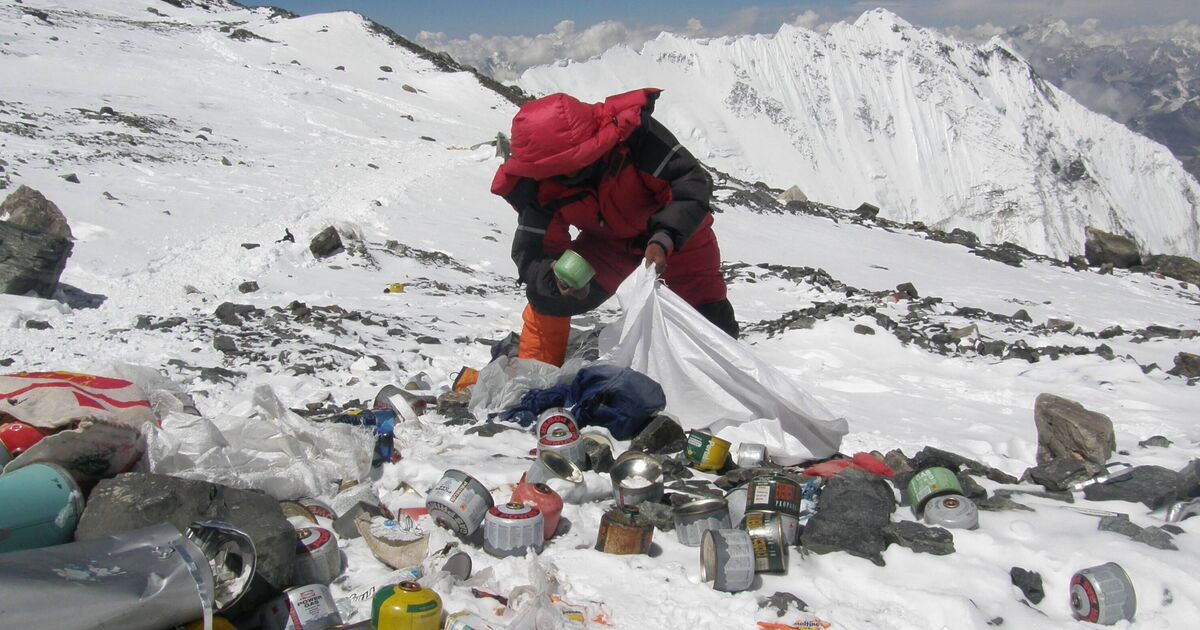
Mount Everest’s ‘ugly’ reality has been exposed by a climber (Image: NAMGYAL SHERPA, AFP via Getty Images)
What ought to be amongst the most pristine locations on Earth is seemingly turning into a genuine eyesore as a result of human interference.
The highest altitude campsite on Mount Everest is now littered with rubbish that has been discarded and strewn by careless mountaineers. An X account devoted to the world’s highest peak highlighted the scene at Camp IV earlier this week, which stands at 7,900m and serves as the final stop-off point before Everest’s summit.
“What should be one of the most extraordinary places on the planet has, in many ways, become one of the ugliest faces of Everest’s commercialisation,” Everest Today condemned alongside footage captured by climber Angelina Angelova.
Further illustrating the scene in Nepal, they added: “Abandoned tents, empty oxygen bottles, food cans, torn gear, and other waste are scattered across the South Col, turning the world’s highest campsite into a graveyard of climbing equipment. The mountain deserves better.”
Angelina swept her camera across the windswept Camp IV, where numerous tents could be observed battling against the elements, debris covering the rocky terrain.
This is Camp IV on Mt Everest (~7,900 m), the highest campsite on Earth and the final stop before the summit.
What should be one of the most extraordinary places on the planet has, in many ways, become one of the ugliest faces of Everest’s commercialisation. Abandoned tents,… pic.twitter.com/0Th04sCa5J
— Everest Today (@EverestToday) June 1, 2026
This follows 274 people conquering Everest via Nepal in a single day in May (20th) – and while that figure should be hailed as a triumph for humanity, it merely contributed to the mounting debris.
Throughout the years, numerous efforts have been undertaken to clear Camp IV, the final station before Everest’s notorious ‘Death Zone’ – but the undertaking is incredibly hazardous, especially in blizzard conditions.
Back in 2004, a team of Sherpas and Nepalese soldiers tackled the monumental task of clearing 11 tonnes of rubbish from the site, and sombrely recovered four bodies from the mountain, one of which had been entirely encased in ice.
“The garbage left there was mostly old tents, some food packaging and gas cartridges, oxygen bottles, tent packs, and ropes used for climbing and tying up tents,” group leader Ang Babu Sherpa explained afterwards.
The post on X prompted hundreds of users to vent their fury at the behaviour of mountaineers. One said: “These people are sportsman looking to conquer not naturalists looking to preserve. Shame on the companies and climbers who have taken advantage of the mountain and its people. There is not one reason not clean up one’s own mess. This is hubris at its peak. Shame.”
A second declared: “Horrible sight. A desecration. Climbers, guides, peddlers and other pests, take every bit of your crap away with you when you leave!”
A third cautioned: “Stop this degradation of Mother Earth! If you can afford to climb up all the way to the summit, have the big heartedness to carry back your leftover dirt. The day Mother Earth has enough of such jokers, she will teach you all a lesson you won’t forget for centuries!”
While a fourth put forward a suggestion: “Climbers (and their porters/guides) should be legally required under a ‘Mountain Code’ to take down everything they took up. They should be required to have a significant financial deposit (backed by insurance) that will be retained as a pollution fine if they fail to.”
They went on to add: “The collected fines to be put into a clean-up fund that pay guides/porters or other agencies to clean the mountain top down of bodies and equipment and return the mountain to a pristine state.”