What do you mean my new smart scale is ‘built for GLP-1 users’?
This is Optimizer, a weekly newsletter sent from Verge senior reviewer Victoria Song that dissects and discusses the latest gizmos and potions that swear they’re going to change your life. Opt in for Optimizer here.
A few days ago, I walked into the basement of a midtown gym. Smoothies and healthy snacks were passed out. Fresh from a group workout, sweaty fitness influencers (and some less sweaty tech reporters) sat in a semicircle on some patchy leather couches and recliners. We were all there to get our hands on a smart scale. But not just any smart scale. We were there for the Withings BodyFit, a smart scale marketed as “built for GLP-1 users.”
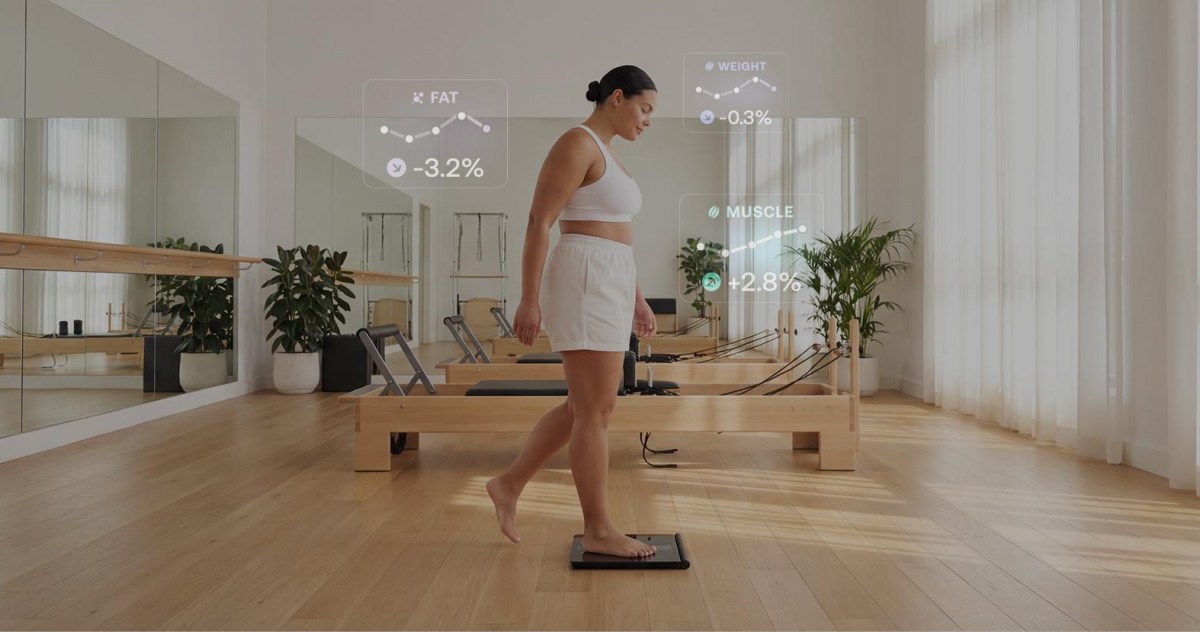
That claim stuck out because, for all intents and purposes, the $280 BodyFit scale is a budget, wellness-focused version of Withings’ more premium $500 Body Scan scale. As in, it has a retractable handle that enables segmented body composition analysis through bioimpedance tech, but leaves out the more medically coded features. I’ve detailed the pros and cons of smart scales in my review of another Withings scale, but traditional smart scales, by the nature of how bioimpedance tech works, generally only really measure your lower body and use algorithms to extrapolate your total body metrics. Segmented body composition incorporates your upper body and torso by including additional measurement points.
So how does this relate to GLP-1 users? Thinly. GLP-1 medications like Ozempic, Wegovy, Zepbound, and Mounjaro slow down your digestive system and suppress appetite. A potential side effect of that is that many users end up losing muscle mass. It’s why doctors recommend that GLP-1 users prioritize protein intake and regularly strength train. Withings’ pitch here is that a body composition scale can help you monitor your muscle mass. That can be useful! But it’s a stretch to say this existing tech was specifically “built for GLP-1 users.”
“GLP-1 therapies changed obesity care, but they did not eliminate the need for long-term support,” says Antoine Pivron, Withings’ vice president of health solutions. “Medication creates momentum, but sustainable outcomes come from combining treatment with services and continuous health data. What we are seeing is a broader shift toward more personalized and connected metabolic care, and that is where Withings has been focused for years.”
While I arch my brow at Withings’ blatant GLP-1 marketing rhetoric for the BodyFit, Pivron is broadly correct! I’ve often written about the increased focus on metabolic data in the wearable sphere. And given that about one in eight Americans has taken or is taking a GLP-1 medication, we’re about to see a lot more GLP-1 marketing from health tech companies. Case in point, just last week Oura announced it, too, is launching a feature to provide “GLP-1 insights” in its app.
As the Dr. Doofenshmirtz meme goes: If I had a nickel for every time in the past 10 days a major health tech company announced GLP-1 tech, I’d have two nickels. That isn’t a lot, but it is weird that it happened twice.
I’m sensitive to GLP-1 marketing — not only as a health tech reporter, but as someone currently on a GLP-1 medication to treat my borked metabolism. The spectrum of GLP-1 experiences is wide, but mine hasn’t always been a pleasant one. For the past six months, I’ve had nearly every possible side effect under the sun, combined with an unusually long adjustment period despite being on the lowest therapeutic dose. It has, in myriad ways, upended my life. Desperate to feel normal again, my instinct was to experiment using existing health tech to research, manage, and optimize my treatment.
It’s been a bumpy ride.
It’s one thing to review health tech products when you’re in pretty good shape and feeling good. It’s another when you’re chronically not. I could probably rant for 2,000 words about how the vast majority of wearables and AI health products operate from an aggregated viewpoint. Meaning, a lot of the “insights” and feature design were created to serve a “normal” user. Great if that’s you; objectively frustrating if it’s not. Personalized health tech is supposed to address that, but it’s an ongoing process that, currently, isn’t fully aligned with what’s available. For example: Logging medication and side effects? Tedious, but easy with most tech. Understanding how that relates to your other metrics and recognizing patterns so you can have a productive conversation with your doctor? Well, I hope you enjoy spending hours crunching numbers, training AI health coaches, fact-checking every single insight, printing out charts, and explaining to doctors why it matters in the 15 to 30 minutes allotted in your appointment. I have the benefit of being paid to do this. The overwhelming majority of people seeking guidance, agency, and relief do not.

Intellectually, I understand why health tech companies see the popularity of GLP-1 medications as an opportunity for new features. Withings is not evil for pointing out that, hey, a smart scale could be a useful tool if you’re concerned about GLP-1-related muscle loss. I actually wish Oura’s GLP-1 feature had been available to try when I started taking one. It’s designed to help you track your dosages as you titrate up and track symptoms. It also uses AI insights to let you know if what you’re experiencing is normal at the stage you’re in or may require consulting a physician. For instance, say you notice your resting heart rate starts creeping up after beginning the medication. GLP-1s can cause that, but since it’s not clinically dangerous, you get told not to worry. On paper, I see that as a useful implementation. I’m eager to see how it pans out in long-term testing.
Now that I have a BodyFit scale for testing, with a few segmented body composition readings under my belt, I have more questions! Initial data from the BodyFit scale says I have normal muscle mass for my age and gender! That actually, it’s higher than average for several parts of my body, but somehow still, in total, not enough. I also apparently still have too much body fat — but it seems to be all subcutaneous (aka aesthetically poisonous to looksmaxxers but not as metabolically dangerous) since my visceral fat reading is very low! Is this the correct interpretation? If it is, then do I just need to hit the body fat goal my doctor set and call it a day? How do I do that when I’m having moderate chronic fatigue? If it’s not, how do I gauge which is the most pressing issue to focus my limited bandwidth on? What does it all mean in the context of my current situation?!
Or perhaps this is all normal and, once again, I’m subconsciously falling headfirst into the familiar trap of wellness data fatigue.

The problem with calling the BodyFit a GLP-1 tool is that its use case here is too broad. You could lose muscle mass for any number of reasons. Maybe it’s the medication. Maybe it’s because you’ve experienced a life event and haven’t been able to be consistent with training for a few months. I could ask Withings’ AI bot, but that means setting aside time to train yet another AI health chatbot with my specific circumstances. A task I find exhausting, daunting, and often without the guarantee of helpful context.
Personally, I believe both Withings and Oura have good intent with these GLP-1 features. But from a user standpoint, the problem is framing. Based on my experience — which I recognize won’t be the same as every GLP-1 user’s — Oura’s proposed feature is more appealing because it addresses a genuine problem I’ve had and needed help with. It is a specifically defined tool with clear actions that I can choose to use or ignore. In the future, perhaps it could apply to other commonly used medications as a means to help people in between doctor visits.
Withings’ framing has some merit. I, too, according to my doctor’s InBody Scale, have lost some muscle mass. It’d be good, theoretically, to focus on my protein and monitor my body composition at home to prevent further loss. But I’ve already been doing that with a different Withings scale. So the real “benefit” I get, as a GLP-1 user, is a more detailed look at my body composition.
Either way, I wouldn’t be surprised if this time next year, GLP-1 users get pitched even more tech products. Here’s hoping at least some make navigating treatment less complicated.