Martin Lewis warns Nationwide customers ‘it does count’ | Personal Finance | Finance

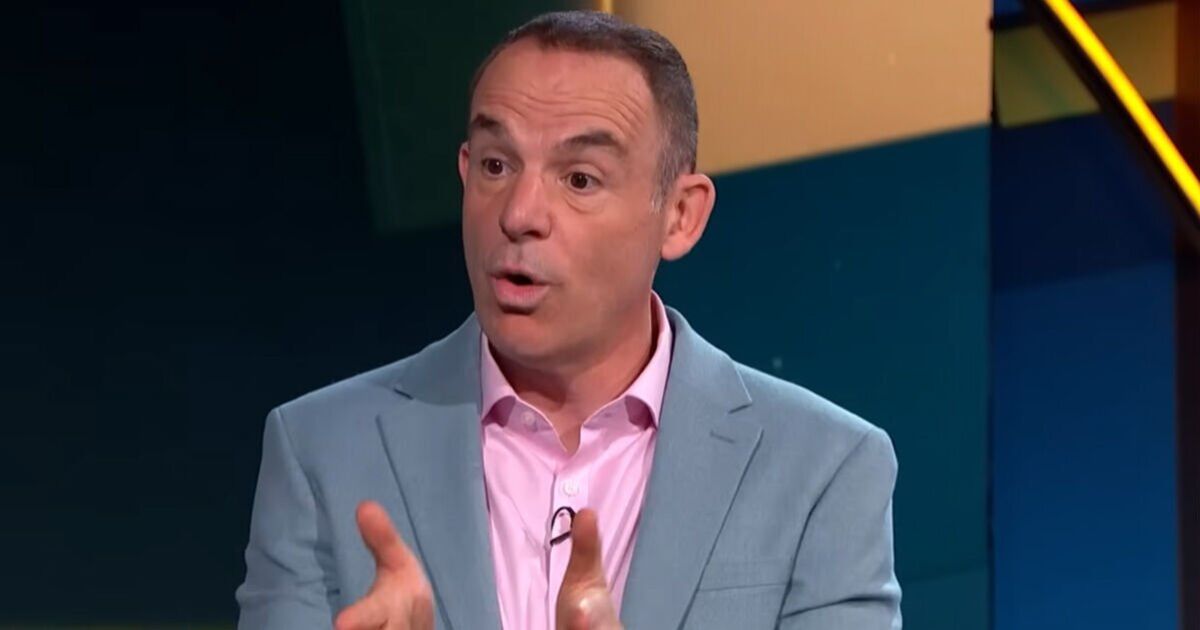
Martin Lewis spoke about a tax bill that could be facing Nationwide members (Image: ITV)
Nationwide Building Society members may want to check over their tax liabilities. Martin Lewis drew attention to the issue and shared some thoughts on his BBC podcast.
The issue relates to an £100 payment that millions of Nationwide customers have just received in the latest round of the Fairer Share scheme. This is where Nationwide shares out its profits among loyal members, with an £100 payment issued to millions of account holders each time.
There have been four rounds of the payment now, with the current one landing in customer accounts between June 10 and 30. You needed a combination of a Nationwide current account along with either a savings account or a mortgage with them to qualify, and to have had certain account activity in recent months.
Nationwide previously said the vast majority of the payments have now gone out. Some free cash is always welcome, but you may have to pay some of it back to HMRC.
Martin Lewis was asked on his BBC podcast a question about the potential tax liabilities you could incur with the £100 payment, by someone who has a joint account with his wife, as he had received the £100 payment.
‘It does count’
He wanted to know how the payment would be treated for tax purposes, whose allowances it would use up and if it would be reported to HMRC. Mr Lewis said: “The Nationwide Fairer Share payment is an £100 payment this year and in previous years.
“Effectively, it’s a loyalty bonus for existing Nationwide customers who fulfil certain criteria. What is interesting about this particular payment is it does count as interest.
“If you get a bank switching bonus, that is seen as an incentive as opposed to a reward for an existing customer, so that is not taxable, the same as cashback on credit cards is not taxable.
“But because this is effectively a benefit of a mutual organisation and is a membership payout, that is taxable, and it’s taxable as interest.”
£50 each
He went on to explain who would have to pay some tax on the payment. Mr Lewis said: “So for those people who earn above their personal savings allowance, of £1,000 a year as a basic rate taxpayer or £500 a year as a higher rate taxpayer, you would have to pay tax on the £100.
“If you earn less, you won’t have to pay tax on the £100 or if you’re a non taxpayer, you won’t have to pay tax on the £100. Like if you have joint savings, the interest payment is demarked 50/50, the Nationwide Fairer Share in a joint bank account is demarked 50/50.
“I haven’t asked Nationwide if that is what they report to HMRC but that is exactly what the situation is. I can’t see any reason why that isn’t what they would report to HMRC. So yes, you should consider this to be £50 each. Simple as that.”
‘You may need to contact HMRC’
Nationwide was asked to clarify what happens in such a case where a couple with a joint account receive a £100 payment . The group said: “The £100 payment belongs to the eligible member, however, in the case of a joint account where only one of the parties was eligible, HMRC may assume the interest is split between parties.
“The customer may need to contact HMRC for this to be changed if it impacts their tax position.” In terms of the tax you may have to pay, you pay tax on any taxable interest earnings in line with your marginal income tax rate.
So if you had to pay tax on the whole amount, as a basic rate taxpayer you would have to pay £20 to HMRC. Those on the higher rate would face a £40 bill while those on the additional rate would have to pay £45 to the taxman.