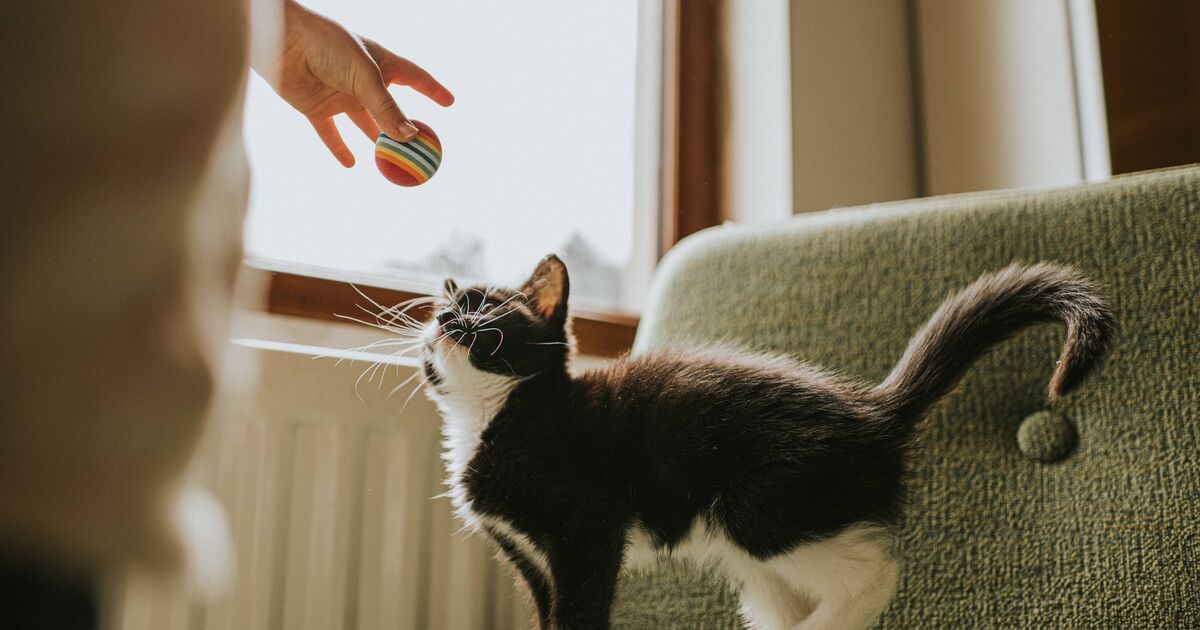
Cat owners may be misreading their pet’s vibrating tail
If you own a cat, you’ve likely observed that occasionally their tails vibrate, leaving you puzzled about what this behaviour means. Indeed, you may have even reached the incorrect conclusion about this action, thinking it indicates they’ve spotted something unpleasant, or felt frightened, within your household.
It’s a frequent feline gesture, but the majority of us are misreading it entirely, believing our cats are anxious when they exhibit this behaviour, when it actually signifies the precise reverse of our interpretation – in fact, it’s their method of expressing enthusiasm. Someone posted a clip of their cat, captioning it: “I can’t be the only one who didn’t know this is what it meant! Tell me if your cat does this too.”
The account, @winnieandgeorge2019, explained: “When a cat is extremely excited, the tip of its tail may quiver or vibrate. So next time your cat’s tail vibrates, they are saying ‘Yay! You’re home’!”
Adopt A Pet explains: “Cats’ tails may vibrate as a sign of excitement, anticipation, or arousal, often seen during greetings or when using urine to mark their territories”. Should your cat remain unneutered and be shaking its tail, it could be marking its territory with its scent.
Intact cats frequently quiver their tails when experiencing heat, or when they’re particularly stimulated by the proximity of a potential mate. Cats may also perform a swift tail quiver when welcoming their favourite humans or when a meal is imminent, as they experience excitement, though this is typically accompanied by purring.
To differentiate between territorial spraying and sheer excitement, consider the context: if the cat is reversing towards a wall or vertical surface with a rigid, trembling tail, it is most likely marking its territory. They may additionally be ‘phantom spraying’, replicating the behaviour of scenting without actually depositing anything to mark their territory.
Experts suggest this is how cats express their “emotions”, and it is essential to consider the context of the situation before interpreting the movement of your cat’s tail. Apparently, “the higher up a cat’s tail is, the more confident and friendly they are,” but if their tail is “wrapped around them or low to the ground,” they “might be feeling insecure or anxious”.
If their tail is “thumping or twitching back and forth,” the cat “is probably feeling irritated, so proceed with caution”. However, if you share a strong bond with your cat, “tail vibrations are high praise and say many positive things about how your cat feels about you, so take that shaky tail as a huge compliment”.