Startup reveals prototype of floating survival pod designed to withstand tsunamis and extreme flooding
A French startup company has unveiled a prototype for a survival device that it says can save people from tsunamis and severe flooding.
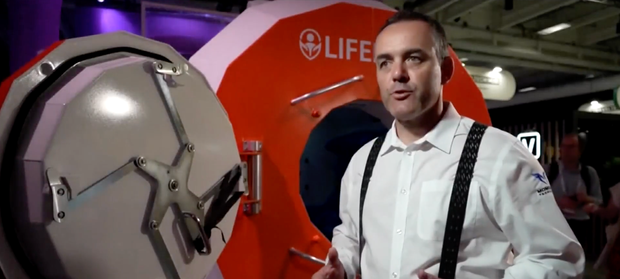
The prototype was revealed at a technology conference in Paris earlier this month. The company, Lifepods, says it believes the device will help save lives minutes before disaster strikes, when evacuation is no longer a safe option.
LifePods CEO Cedric Choffat said emotional images of the aftermath of the world’s deadliest tsunamis, such as in the Indian Ocean in 2004 and off the coast of Japan in 2011, prompted him to consider how a purpose-built survival capsule could work. Even as better forecasting and preparedness have led to fewer fatalities from tsunamis and floods over time, extreme weather events like the historic central Texas floods in 2025 have still wreaked destruction. So how could he help save lives?
“That question became the starting point of LifePods,” Choffat told CBS News.
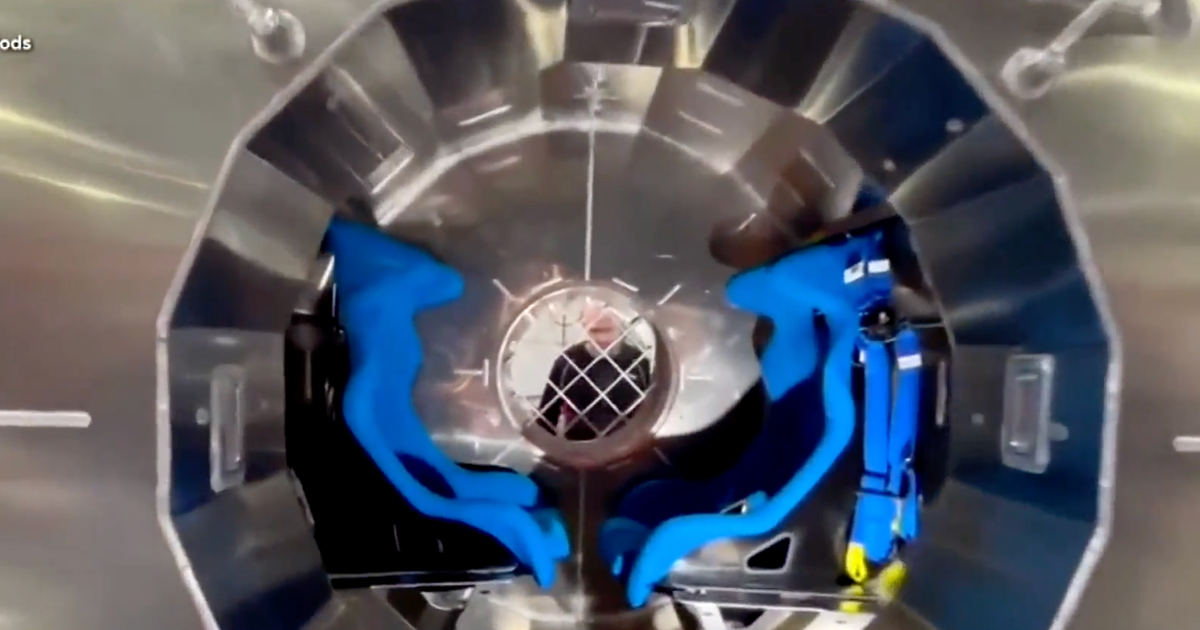
That led to the creation of the W-01. The device is essentially a floating fortress, with enough room for up to four adults and four children to fit inside, albeit snugly. The capsule is equipped with harnesses and can broadcast an emergency distress signal until rescuers arrive. There is room under seats for essential supplies like food, water and medicines. A GPS tracker can be installed to ensure rescuers can find the pod.
CBS Chicago / LifePod 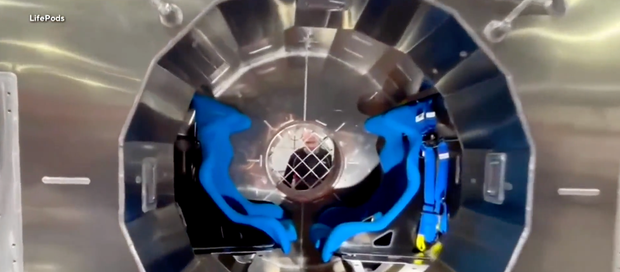
There isn’t room within the capsule to do much but sit and wait. The device is meant to be used short-term, as a last-chance refuge. Unlike traditional bunkers, which are fixed in place, Choffat described the floating capsule as “rapidly deployable,” including by air, and easy to install at scale in high-risk areas.
W-01 relies on what Choffat refers to as a passive hydrodynamic design, in which the capsule’s buoyancy and shape carry it through the water rather than mechanical motors or steering systems. The device is made from a marine-grade double-aluminum shell separated by a foam core. Its makers say this creates a rigid structure that distributes the force of a potential impact throughout the capsule rather than concentrating it in a single spot, protecting the inhabitants from massive floating debris like cars, trees and building materials, which is one of the biggest dangers during flood events.
However, the W-01 has yet to undergo real-life testing, which LifePods describes as a process that would start with harbor trials to verify buoyancy under different payloads, move to towing tests at sea to assess how the capsule would cope with waves, and then progress to more demanding conditions. The company did release a dramatic AI-generated video showing how the product could work.
LifePod / CBS Chicago 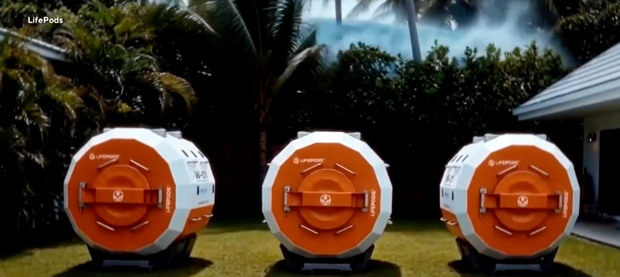
The product is expected to become commercially available next year, LifePods says. It will likely have a price tag of $45,000 per pod. Choffat said government agencies, civil protection organizations, and private security companies have shown interest in the device, suggesting the target consumer is institutional rather than individiual. In the U.S., discussions are “still at an early stage,” he said.
“We believe the market has tremendous potential due to the increasing number of hurricanes, floods, and coastal storm surges affecting many states each year,” said Choffat.
LifePods isn’t breaking into a flooded market, but it does have a competitor – Seattle-based Survival Capsule LLC. Their patented spherical pod is already on sale, and for much cheaper, costing $13,500, or less than a third of the expected price of the W-01.
LifePods is also designing mobile land-based survival pods, including one that can withstand earthquakes and building collapses, and another for protection against armed attack and explosions.
CBS Chicago