Quansah banned two games as FIFA backlash grows | Football | Sport
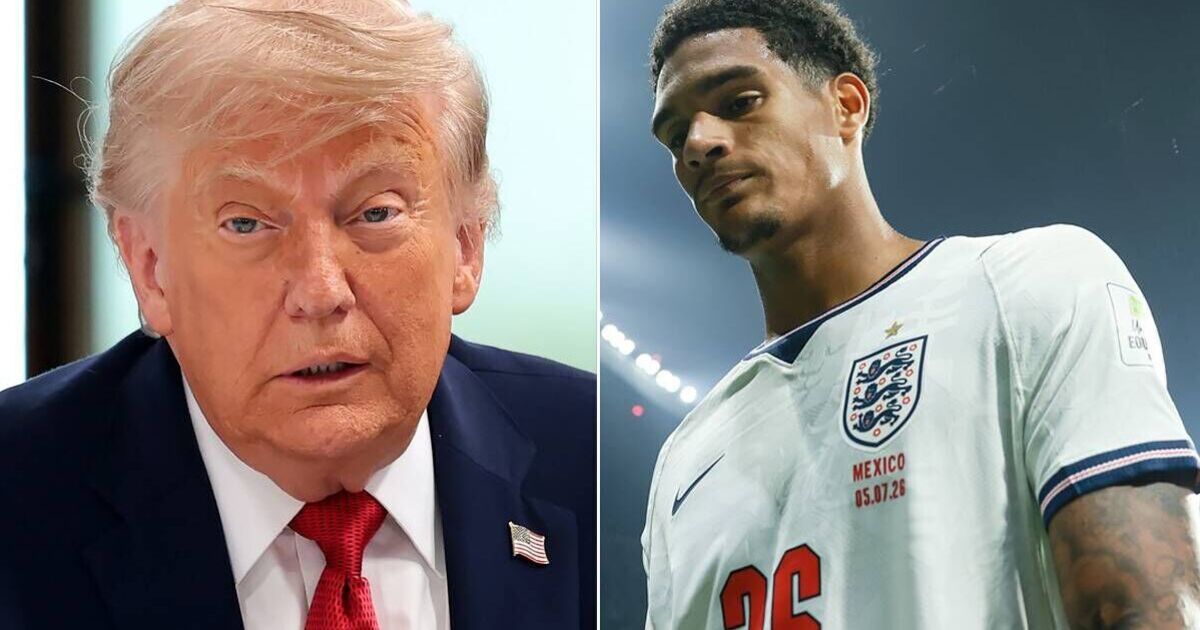
FIFA’s decision to hand England defender Jarell Quansah a two-match ban has reignited fury over the governing body’s handling of the Folarin Balogun affair, with fans on social media accusing the organisation of applying its disciplinary rules inconsistently under political influence.
Quansah was shown a red card in the 54th minute of England’s 3-2 Round of 16 win over Mexico following a VAR review which judged he had made a high challenge on defender Jesus Gallardo.
FIFA confirmed on Thursday that the 23-year-old will be absent for two fixtures, ruling him out of Saturday’s quarter-final meeting with Norway in Miami, which could potentially pose England further weather-related challenges, along with a potential semi-final if the team advances.
The timing of the announcement, arriving just days after FIFA’s decision to rescind Balogun’s one-match red card suspension following a telephone call between President Donald Trump and FIFA president Gianni Infantino, has prompted accusations of double standards from fans.
“So Jarell Quansah is banned for 2 games following his red card against Mexico, yet Trump calls Infantino and Balogun’s red card for a career threatening tackle is overturned,” one supporter posted on social media.
“What will happen if Messi is red carded against Switzerland? Milei calls Trump, Trump calls Infantino?”
“It’s really confusing,” another supporter commented. “Jarell Quansah has been given a two-match suspension, yet the American player’s red card was overturned, so his suspension was canceled. Donald Trump stepped in which makes the whole situation stink of corruption.”
Another fan branded the circumstances “pure corruption,” while a third alleged FIFA had permitted “political / state intervention to have USA’s best player escape a ban” while penalising Quansah in the wake of English media criticism of the Balogun verdict.
England manager Thomas Tuchel also voiced his frustration at the inconsistency, calling into question the standard FIFA had established with the Balogun decision.
“Where does this start and where does this end now?” Tuchel said. “Can we overturn it or not overturn it? What’s going on? Where to draw the line is the question that I ask. I have no answer to that.”
Unlike Balogun’s case, in which FIFA waived the automatic suspension under Article 27 of its Disciplinary Code, no provision within FIFA’s 2026 tournament regulations permits teams to directly challenge red cards, though the FA reportedly weighed up its options following FIFA’s ruling on Balogun.
France’s football federation contested a FIFA ruling earlier in the week, seeking the withdrawal of a yellow card handed to midfielder Michael Olise, only for that appeal to be firmly rejected.
The Express reached out to FIFA for comment via email.
The Balogun controversy has continued to hang over the tournament ever since FIFA’s initial decision. Belgian authorities have argued that the ruling compromised the integrity of the competition, while Infantino has maintained that FIFA’s disciplinary committee functioned independently, without any political interference.
The Americans subsequently went down 4-1 to Belgium despite Balogun’s recall to the squad, making an early exit from the tournament at the Round of 16.
With Quansah sidelined and Reece James still nursing a hamstring injury, England will be without their two first-choice natural right-backs for Saturday’s quarterfinal, leaving Tuchel with little option but to reshape his defensive set-up ahead of the clash with Erling Haaland and Norway.