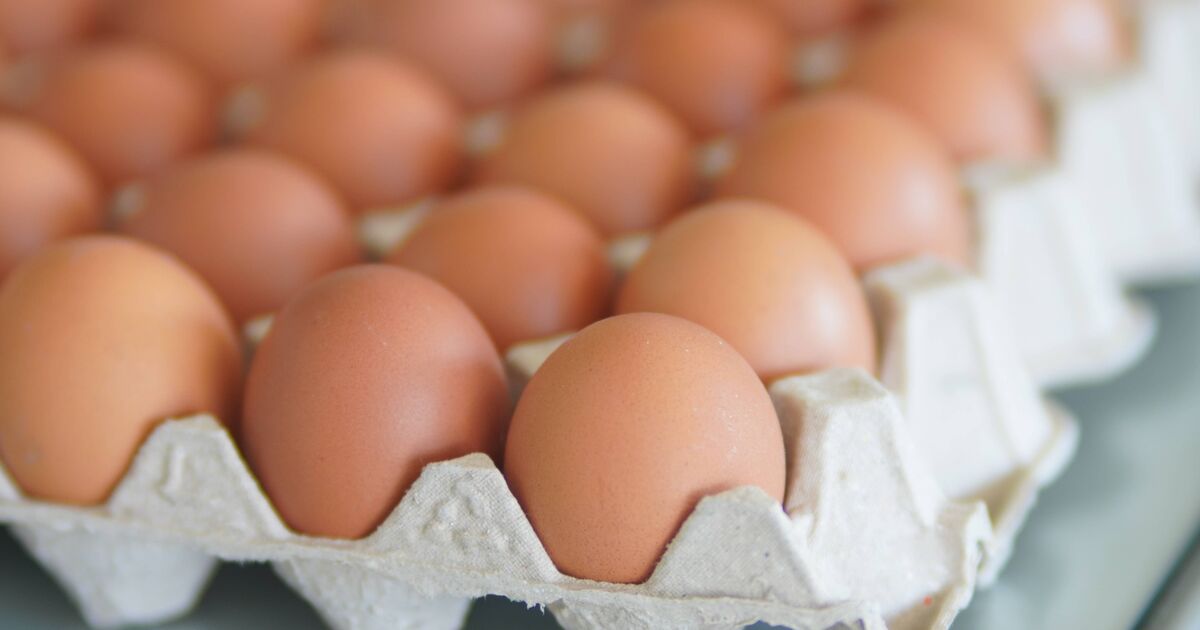
Should eggs be stored in the fridge or cupboard? Four chefs share their verdict

Chefs weighed in on the long-running debate over where eggs should be stored (Image: GETTY)
Four chefs have shared their perspectives on the longstanding debate surrounding whether eggs should be stored in the fridge or the cupboard. Speaking with us, Mike Reid, Jeremy Pang, Nima Safaei and HelloFresh’s Mimi Morley shared their opinions on the matter, with one storage approach proving to be the clear favourite for keeping eggs fresher for longer.
According to Mimi, refrigerating eggs represents the “simplest way to keep them fresher for longer”. Supporting the recipe developer’s view, Soho restaurateur Nima Safaei highlighted an additional benefit of refrigeration.
The Italian chef, who released his debut book At Home with Nima last week, explained: “There’s the age old debate of cupboard versus fridge.
“But I have to say I always opt for the fridge with the eggs kept in their original carton, as that helps protect them from absorbing other flavours and odours.”

Chef Mike Reid says cupboard is best (Image: PH)
Revealing which variety he considers delivers optimal results, he continued: “It’s also worth noting that the better quality eggs you buy, the better they generally tend to keep. That’s why I always go for Burford Browns as my preferred egg.”
British-Chinese chef Jeremy maintained both refrigeration and cupboard storage represent viable options.
“My answer is a bit of both,” he told us. “I know that eggs are better stored outside of the fridge at room temp, in fact in our studio we keep them this way and they hold their white shape much better when fried for example.”
Jeremy explained that with a busy household with children, he also stores his eggs in the fridge for practical reasons.
“Either way, I love eggs and eat them everyday so never really get near to use by dates with eggs anyway,” he added.
In stark contrast to his fellow chefs, Mike Reid, who frequently shares recipes on his YouTube channel, is opposed to refrigerating eggs.

Chef Jeremy Pang shared why he stores eggs in the fridge (Image: ITV)
He declared emphatically: “Cupboard. 100 per cent. No debate. I’ll fight anyone in the car park over this one.
“Here’s the thing – the fridge is a British and Aussie own goal. Over here our eggs aren’t washed, so they keep their natural protective coating (the ‘bloom’), which means they’re perfectly content at room temperature.
“The Americans scrub theirs, strip that coating clean off, and then have to refrigerate – so they’ve essentially invented their own problem and blamed the poor egg.”
Outlining several additional reasons why he believes the cupboard is superior, he went on to say: “Room-temp eggs simply bake better.
“Try whipping a fridge-cold white into a glossy meringue and watch your will to live quietly leave the building.”

Four chefs have shared their verdicts on the best place to store eggs (Image: GETTY)
He added: “Eggs are basically tiny sponges. Park them in the fridge and they’ll happily soak up last night’s curry. Nobody asked for garlic custard.
“So, cupboard, cool, out of direct sunlight, pointy end down. Done.”
What egg companies actually say
According to Geldard Farm Eggs, eggs are frequently sold unrefrigerated in the UK due to a natural protective layer known as the cuticle, which helps prevent bacteria from entering.
However, once eggs have been chilled, they must stay refrigerated to avoid condensation, which can compromise the eggshell and heighten the risk of contamination.
For optimal freshness, the company recommends storing eggs in the refrigerator at a consistent temperature below 20°C. The stable cool conditions slow down the deterioration process and help preserve egg quality for an extended period.
The Food Standards Agency recommends keeping eggs in a cool, dry location, preferably in the fridge, and storing them away from other foods.
“Storing eggs on their sides is detrimental to them keeping their qualities as the yolk will naturally sink closer to the shell,” it adds.
“Storing eggs with their pointed end down allows the chalazae and albumen to support the yolk in the centre of the egg thus helping to extend quality and freshness.”