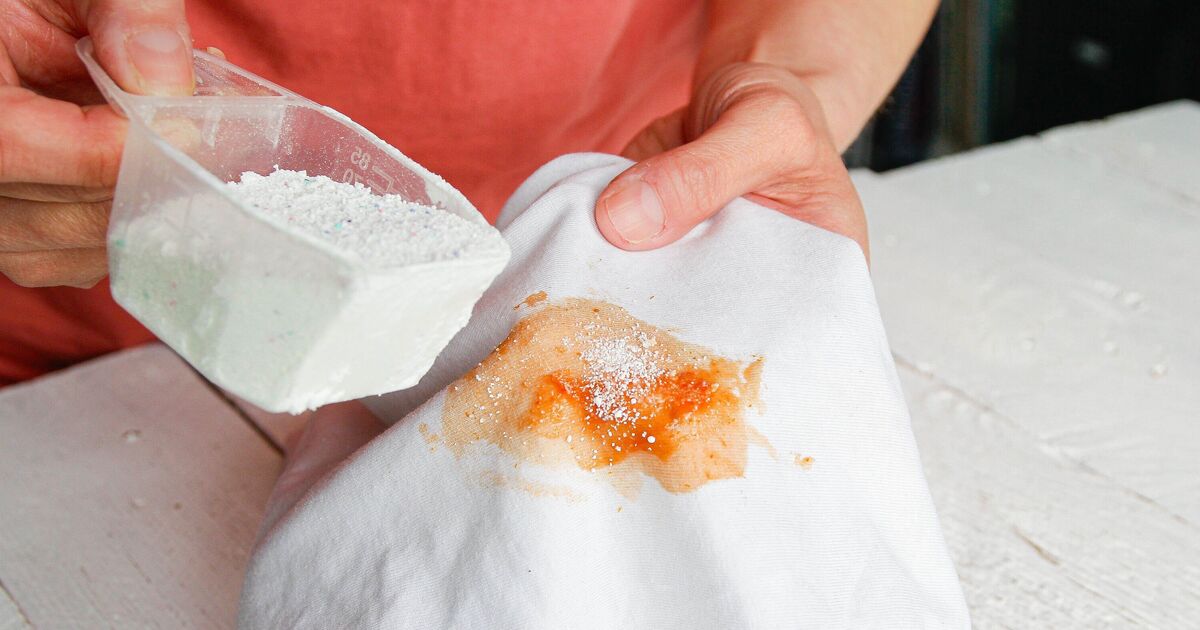
The £2 hack with 4 kitchen staples that will ‘make white clothes look new’
A crisp white T-shirt is a summer wardrobe staple for many, but the annoying thing about the pieces of clothing is that they are susceptible to destruction, meaning any sort of coffee spill, a touch of makeup, or accidental drop of food, that’s the top pretty much ruled out. And even if you don’t end up staining your top, after a few washes, it doesn’t quite have that shiny white look it had when you first bought it.
That being said, a clothing expert has revealed a way to restore your white clothes to look brand new, and everything you need will only cost you £2. Caroline Jackson, Creative Director at Monsoon, shares a £2 hack to tackle stains on white fabrics, offering an affordable way to keep garments looking fresh without relying on expensive cleaning products.
Ms Jackson emphasised home ingredients as “one of the most effective ways” to tackle stains from bright white garments.
She said: “Baking soda, mixed with lemon juice, white vinegar, dish soap and cold water is what is going to successfully refresh your clothes without trying different brands and sprays that will end up costing a fortune.”
As well as being cost-effective, using the household staples is straightforward and requires little time, with the expert explaining exactly how to use them.
She said: “Rinse the stain with cold water, then simply add the combined mixture on the stain, grab a toothbrush and brush the stain away.
“This should help lift marks on the suitable fabric but I always recommend testing first, because lemon juice and vinegar can affect some fibres and finishes. It’s important to note that leaving lemon too long on fabrics can cause discolouration, so ensure you keep a close eye when treating any stains using this method.”
Ms Jackson also explained the four common mistakes people make when treating white clothing stains. She said that using too much product, like stain remover, can sometimes leave residue behind.
Using heat too soon can do more harm than good, as it can sometimes set the stain. She urges using cold water wherever possible.
Rubbing too aggressively and ignoring the fabric type are two things you want to avoid as well. Different fabrics respond to treatments differently, so make sure you are using the garment labels to help you.
She said: “We believe caring for your favourite pieces is just as important as choosing them, small wardrobe accidents are inevitable, but understanding how to treat stains properly can help extend the life of garments and keep them looking their best.”