Horror as woman spends ‘6 weeks in coma’ after tick bite on holiday | World | News
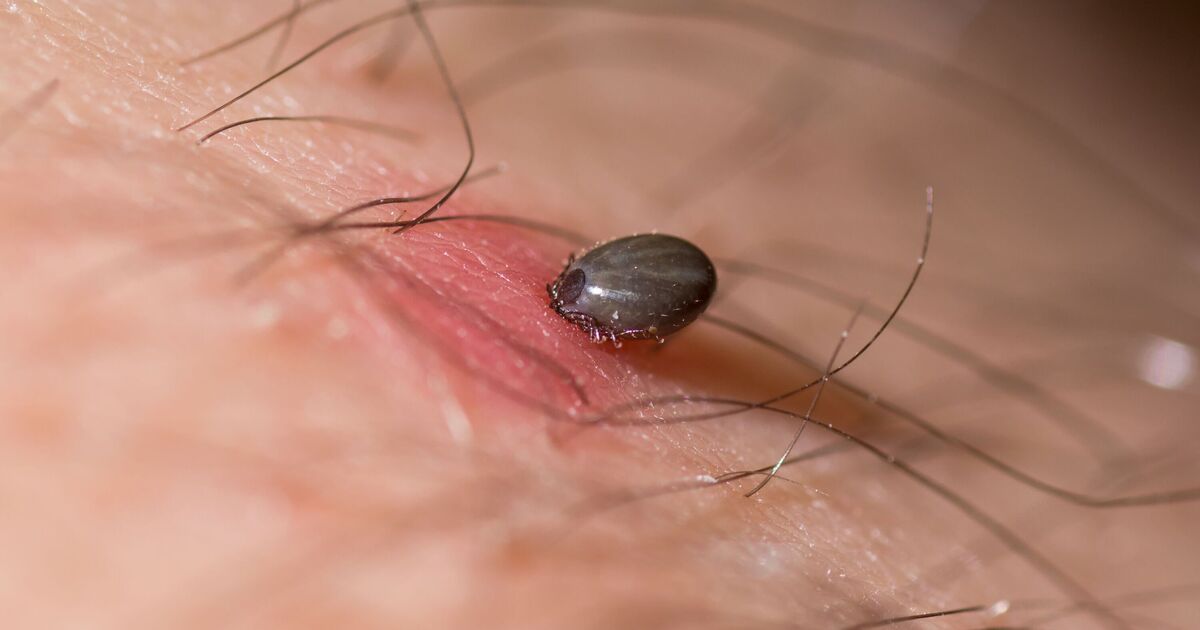
A mother-of-one was left in a coma for nearly six weeks after a tick bite while on holiday in Greece. Victoria Stellas, from Anglesey, has also been left with memory loss following the bite on Syros in 2019.
The 51-year-old had flu-like symptoms while on the island and after arriving back home, began having night seizures. After undergoing an MRI scan at hospital, she was taken by helicopter to The Walton Centre — a major neurology hospital in Liverpool — where she was placed in an induced coma for 42 days. Ms Stellas was then diagnosed with tick-borne encephalitis, external (TBE), a potentially fatal brain inflammation.
Speaking to the BBC, Ms Stellas said the illness has changed her life “completely” and she now doesn’t “go out as much”.
She said she was in hospital and received treatment for around six months, and now has to take up to 18 tablets a day.
Ms Stellas said her symptoms have seen her lose her jobs in a pub and as a teaching assistant at a school for children with special educational needs and disabilities.
She told the BBC: “Tell me a job that doesn’t require memory? Everything you do in life requires a memory. Shopping, working, travelling.
“When I returned home and tried to go back to my job as a teaching assistant… I couldn’t remember the names of children in different classes and staff.
“I would recognise everyone but not the names and that’s still a problem to this day.”
Ms Stellas, who was born and raised in Greece, believes she was bitten by a tick when visiting her brother-in-law’s home as he has goats that can attract them.
The NHS says ticks that can spread the TBE viral infection can be found in most of Europe — including the UK — as well as Russia and parts of China and Japan.
It says the risk of getting TBE in the UK is very low and the chances of getting seriously ill from a tick bite is extremely unlikely.
The NHS recommends people get a vaccine for TBE if they are planning on doing outdoor activities in a country where infection is common.
Ms Stellas, who visits Greece each year on holiday, said she did not know about the vaccine but hopes to raise awareness about the infection.
She also urged people travelling to at-risk areas and spending time in the outdoors to receive the jab.