Google’s upcoming Pixel phones are for the fans, even if its launch event isn’t
Last year’s Made by Google event for the Pixel 10 resembled a late night talk show, complete with Jimmy Fallon as host, and it aired an hour after the phones were revealed. Spec dives and executive appearances were replaced with celebrity cameos and awkward skits, to the confusion of many diehard Pixel fans. But it served its purpose in reaching a broader audience: Last year’s stream racked up 8.4 million viewers on YouTube; the launch the year before only managed 1.4 million.
This year, Google has only escalated matters. For tomorrow evening’s livestream, Fallon has been replaced by Trevor Noah, who will lead a “stacked” lineup of celebrities including basketball star Stephen Curry, podcaster Alex Cooper, and DJ Peggy Gou. What the event won’t have is many surprises. While the launch event kicks off at 6PM ET, the Google Store’s preorder countdown is set to end eight hours earlier, presumably when the phones will be revealed in full.
By the time Google’s stream starts, its most avid fans will know exactly what’s coming. Then again, for the most part, they already do. In a world where almost every spec leaks ahead of time, it makes sense that Google’s celeb-centric launch event won’t be targeted at Pixel power users.
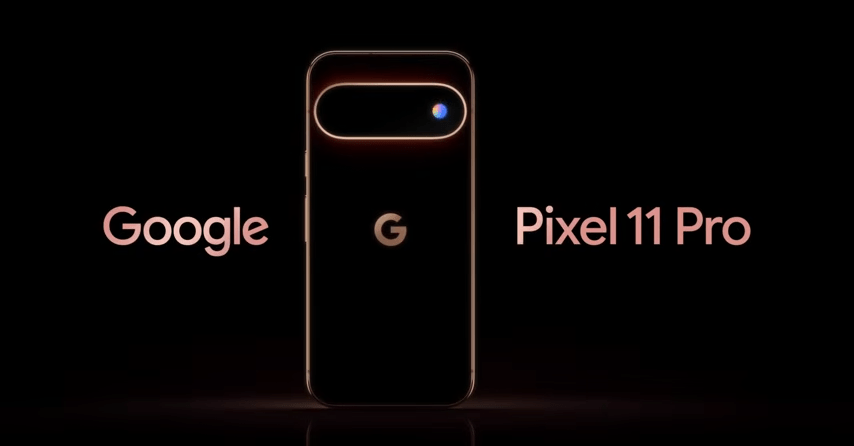
Google’s been one of the most adaptive companies when it comes to the modern proliferation of phone leaks. Last year it took the unusual step of simply revealing the Pixel 10 design in full almost a month ahead of the launch. This year it’s only showed glimpses of the Pixel 11 series, but in the process has revealed something that should excite most power users more than the launch itself: a notification light.
The light is built into the camera island of the Pixel 11 Pro (though perhaps not the regular model), where the flash normally is, suggesting that it serves as the flash and flashlight too. It’s a small feature, but a surprisingly big part of Google’s smartphone heritage. The majority of Google’s Nexus phones included hardware notification LEDs, and Google was one of the last manufacturers to drop the feature, which saw a brief resurgence in 2017’s Pixel 2 before Google binned it off again — we thought for good. The RGB lights could be used to show the phone’s charging status, flash when notifications come in, and activate in different colors. Open-source Android skins like CyanogenMod and apps like Light Flow gave even more flexibility, letting users set specific colors and blink rates for specific apps or contacts.
Notification LEDs went out of fashion about the same time that the always-on display came in. Who needs a little light when you can have the actual notifications on the screen at all times? Some Android phones instead include the option to have the edges of the display flash a certain color when notifications come in, which can even be visible when the phone is face down, depending on the design, but dedicated lights have been few and far between.

The most prominent recent examples have all come from Nothing, which has elevated the LED into an art form. Ever since 2022’s Nothing Phone 1, it’s incorporated complex light arrays and dot-matrix displays into the back of its phones, allowing not just quick flashes but complex, customizable patterns or icons that can vary by contact or app. There’s only one other recent phone I can think of to feature a dedicated LED, though in the case of the Trump phone, it felt like proof of its dated, recycled design rather than a forward-thinking feature.
The small light shown in the camera bar of the 11 Pro is more subtle than most of Nothing’s designs, though seemingly more colorful. Google hasn’t said what the light can do, though since the pulsing, multicolored animation resembles some of the Gemini design language, it seems a smart guess that it relates to Google’s AI assistant. Leaks suggest it may light up when you talk to the chatbot or receive calls from certain contacts, though I hope Google has more in mind for it than that, with the same customizability by app and by contact that Nothing phones support. The cruelest trick of all would be to bring back the notification light and then not have it light up for notifications.
Perhaps it’s odd that on the eve of Google’s flagship phone launch I’m most excited about the apparent resurrection of a feature Google sent to the graveyard nine years ago. I presume the new Pixel phones will also be interesting in other ways, with the usual chipset bumps, camera upgrades, and design language tweaks.
But as the company pushes into entirely new ways of launching its phones to entirely new audiences, there’s a charm in it giving its oldest fans what they want when it comes to the hardware itself. Somehow I doubt it’s going to dig any further and reveal a Pixel 11 with a 3.5mm headphone jack, microSD card slot, or replaceable battery, but at least we can dream.