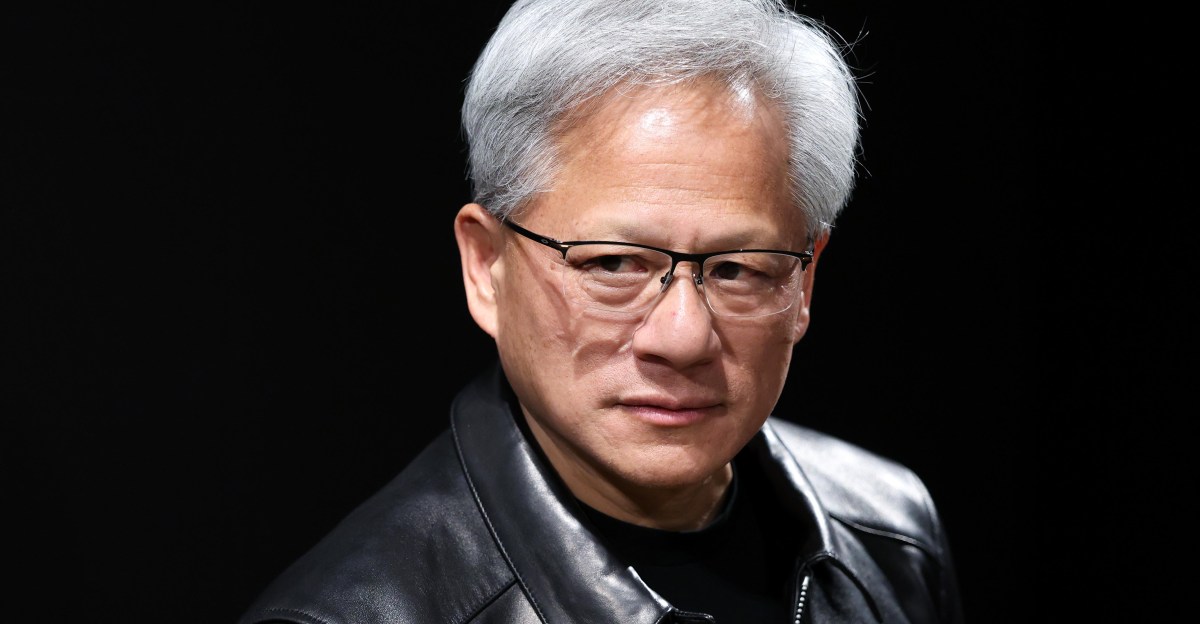
Jensen Huang talks about AI and climate change like a supervillain
As Jensen Huang puts it, AI can help fight climate change — but only if it inflicts “an enormous amount of pain and suffering” first.
The Nvidia CEO discussed the future of energy and AI’s impact on our planet in the latest episode of The Ezra Klein Show. But his comments boil down to the same accelerationist spin we’ve seen from a variety of tech leaders as well as President Donald Trump. They promise that AI will be such a gift to humanity that it’s worth the damage caused by data centers currently running on dirty energy.
Huang’s extreme level of privilege is glaring
Huang’s extreme level of privilege is glaring in the interview. He’s right that there will be pain. People are already suffering from fires and floods exacerbated by climate change. People are already dying earlier because of air pollution from fossil fuels. But Huang, with a net worth of around $192.6 billion, will not pay the price of the pollution his company creates through energy-hungry chip factories and data centers.
Huang tells Klein, after complaining that the US hasn’t built out enough fossil fuel plants, that:
It’s kind of like, in order to save you, they’ve got to hurt you first — that’s the nature of surgery. They’ve got to cut you open to save you. They’ve got to inflict an enormous amount of pain and suffering on you so that they can save you. And so I think AI’s kind of like that.
That’s the bit that gives Thanos energy. Resources are too limited and so after disappearing half of humanity, the Marvel supervillain believes, things will be much rosier. (“I will shred this universe down to its last atom, and then create a new one, teeming with life that knows not what it has lost but only what it has been given,” he tells the Avengers.)
Over the next several years we have to unfortunately use fossil fuels, because we just don’t have enough sustainable energy to make a difference. And then after that, hopefully, we can transition to that.
For context, nearly every country on Earth agreed to limit climate change when they adopted the Paris agreement in 2015. The accord sets a goal of cutting greenhouse gas emissions in half by 2030 and reaching net zero around 2050. That can only happen with swift transition to carbon-free energy like renewables and nuclear. Here’s just a short list of terrible things getting worse when we stall that progress to pursue advances in AI:
- Earth is expected to lose 99 percent of its coral reefs. Those reefs support coastal economies, and also serve as a buffer protecting communities from tropical storms, flooding, and coastal erosion.
- One in 10 people around the world, 770 million people, already face “acute risk” from sea level rise.
- Since 2001, peak daily wildfire growth rates have more than doubled in the western US. Wildfires are faster, more frequent, and more intense.
These effects are showing up in Huang’s backyard, even if he’s insulated from them. He mentions in the interview that he doesn’t know what his own address is. However, he reportedly bought a $7.5 million home on Maui in 2004 — before wildfires devastated the island in 2023. That year, an Nvidia spokesperson confirmed with The Verge that the Huangs “have owned the same home in Maui for many years.”
Huang’s property reportedly escaped damage, and the Nvidia spokesperson told me that the Huangs “donated significantly to local relief efforts.” But despite the philanthropy from tech billionaires with residences on Maui, the inferno also inflamed tensions over luxury properties’ hold on Maui’s water supply.
“Billionaires coming to Maui, buying up large swaths of land as their, I don’t know, seventh vacation home, it’s painful for our community,” Maui County Councilmember Keani Rawlins-Fernandez told me at the time. “It underscores the stark disparity between Indigenous people who want to mālama ‘āina, care for our land, and those who see Hawaii as a vacation destination.”
“Billionaires coming to Maui, buying up large swaths of land as their, I don’t know, seventh vacation home, it’s painful for our community.”
While greenhouse gas pollution from fossil fuels makes wildfires more dangerous by exacerbating hot, dry conditions, climate change isn’t entirely to blame for the flames that razed much of Lahaina on Maui. I reported at the time that previous generations of wealthy land grabbers primed the islands to burn. The US annexed the Kingdom of Hawaii in 1898, egged on by American plantation owners who wanted to evade import taxes. They cleared native vegetation for their businesses, allowing invasive grasses to take hold and make the landscape much more flammable than it used to be.
So when I hear Huang make the case now that there will need to be sacrifices in the name of AI progress, it reminds me that we’ve seen this playbook before. An industry that wants to grow at any cost. And nearby communities and their descendants are just supposed to live with the aftermath.
Huang mentions growing community opposition to data centers in the interview with Klein, and scolds other companies for not spreading the good news with residents about how efficient data centers purportedly are before they start construction. “If they don’t want data centers to be built in their town or whatever it is, then so be it. But if you’re going to build in their town, be sure to go there and let them know what’s coming,” he says.
“I am inevitable,” Thanos notoriously said — and apparently, so are AI data centers.
Even so, data centers don’t actually have to be as polluting as they are turning out to be.
In the interview, Huang also (unfairly) attributes record renewable energy purchases to AI. He blames climate action for stalling the construction of energy infrastructure, presumably for fossil fuels.
I think we just have to acknowledge that we got ourselves really gummed up in climate change and sustainable energy, and as a result, we just didn’t plan enough energy production.
Then he proclaims that AI is “the best opportunity we have” to “turn a corner on climate change, if you want a future that’s sustainable.” He sees AI accelerating demand for clean energy in the long term. But AI already needs a lot of energy now, and fossil fuels are what we’ve got.
“A more polluting AI buildout is not inevitable.”
But renewables were already the fastest–growing sources of new electricity generation before the recent generative AI boom. It’s generally cheaper to generate power from a wind or solar farm than a new gas or coal plant. But Trump, who lined his campaign coffers with money from the fossil fuel industry, is incentivizing the development of gas and coal plants to power data centers.
And now, data centers are in turn spurring the development of far more fossil fuel infrastructure. Air pollution associated with AI could lead to up to 1,300 premature deaths and more than $20 billion in public health costs by 2028, according to a study from UC Riverside, Caltech, and the Rochester Institute of Technology.
Nevertheless, “A more polluting AI buildout is not inevitable. It depends on the choices government makes now,” Marc Boom, a senior director of the Environmental Protection Network, a group made up of EPA alumni, said in a recent press briefing on the growing health risks posed by data centers.
It also depends on the attitudes of industry leaders like Huang. If other people’s pain and suffering is the price you’re willing to pay for so-called progress, that says less about what’s possible and more about your own personal priorities.