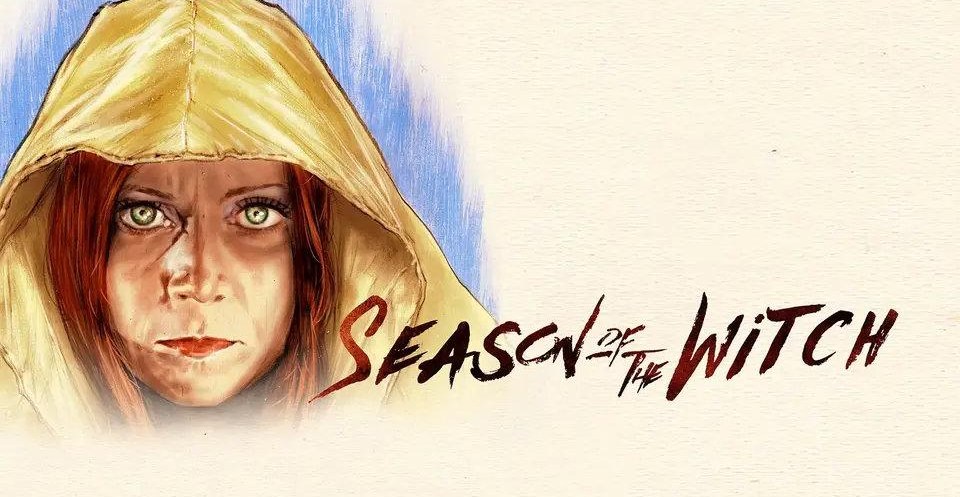
George A. Romero’s Season of the Witch is a slow-burn feminist occult drama
George A. Romero is obviously best known as the father of the modern zombie movie. But between inventing the genre with Night of the Living Dead and his outbreak horror, The Crazies, Romero made two much lesser-known films: There’s Always Vanilla, which I’ll admit I’ve never seen, and Season of the Witch, or, as it was originally titled, Hungry Wives.
Hungry Wives was supposed to be an exploitation film. The studio marketed it as a softcore porn, but it failed to find an audience — probably because the movie features minimal nudity, just one sex scene, and lots of talking. It was an undeniable flop upon its release in 1973. It was eventually rereleased as Season of the Witch after Romero’s Dawn of the Dead sparked renewed interest in his work.
While sadly, Romero’s original 130 minute cut of the film has been lost, parts of it have been recovered and restored, expanding the 89 minute original release to 104 minutes. An obvious reason for its failure, beyond the distributor butchering it it by cutting 40 minutes, is that, what Romero made wasn’t a softcore porn, instead it’s a slow-burn feminist drama where the occult is almost incidental.
Protaganist Joan Mitchell is trapped in an abussive marriage and unhappy with her role as submissive housewife. She eventually turns from therapy, to witchcraft in an attempt to escape her humdrum life.
Season of the Witch has its issues, for sure. The production value is quite low — apparently the movie was made for just $100,000 (around $800,000 adjusted for inflation). The acting is also wildly uneven. While star Jan White turns in an excellent performance, others appear to be reading off cue cards or chew scenery with Pachino-levels of camp.
Still, there’s something compelling about Romero’s directing and his, for the time, boldly progressive take on feminism. For all of its reliance on dialogue over action, Season of the Witch still manages a tense and, at times, halucinatory atmosphere. And it all leads to a somewhat predictable, but still extremely satisfying ending.