As Putin imposes internet blackouts, Russians show signs of frustration
Kisiev, 31, said local activists had submitted applications to hold rallies in 17 regions across Russia. They were all denied, he said, including some that were initially given the go-ahead. Despite that, the OVD-Info protest monitoring group reported that at least 20 people were arrested across Russia for protesting digital restrictions on Sunday. The group also reported detentions ahead of Sunday of people who tried to apply to hold a protest.
Protests could show those who don’t agree with the restrictions “that there are other like-minded individuals,” Kisiev said.
NBC News reached out to more than a dozen Russians to ask what they think about the calls for protests. Most did not respond, while some declined to speak, without providing a reason.
Earlier this year, some Russians said they feared the Kremlin was preparing the public for a “North Korea” model of the internet, heavily controlled and censored by the state. “I don’t think the Russian public will accept this,” Kisiev said, given how central the internet has become central to the lives of millions in the country.
Russian authorities have said mobile internet outages are necessary to stop attacks by Ukrainian drones, and that Telegram is turning into a breeding ground for terrorism.
These justifications are “absurd,” Kisiev said, while the real motivation seems obvious to him. “The government is intentionally killing the internet so that users don’t use foreign resources and get alternative information,” he said.
‘Bring back the internet’
Russian authorities have touted the merits of a life without the internet, arguing it’s an opportunity for a “digital detox” and more face-to-face interaction.

FORSUBSCRIBERS
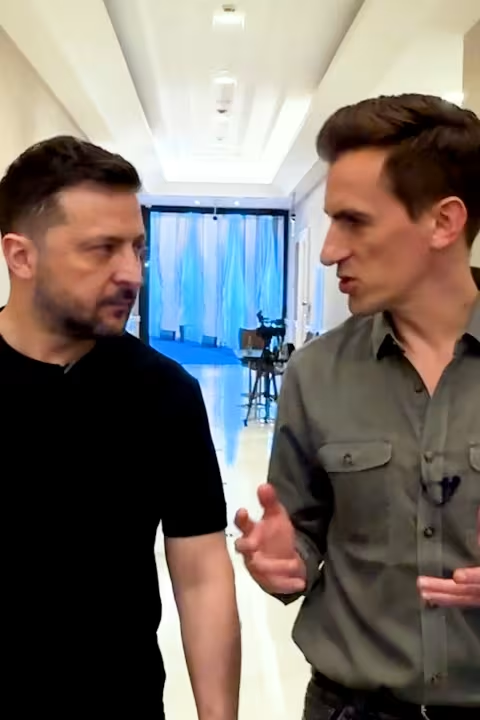
A popular game show that aired on a Russian state TV Channel as calls for protests grew earlier this month featured a children’s choir, dancing enthusiastically and singing about how they don’t need the internet. “The monitor’s blue screen won’t ruin my dinner,” they crooned.
But despite this effort from the Kremlin, there is a huge appetite from the public for a way to vent frustration about the mounting restrictions, said politician Boris Nadezhdin, who tried to run for president against Putin in 2024 and whose campaign was overseen by Kisiev.
Nadezhdin said in a phone interview that he supported the protests and had personally applied with authorities in the capital and the wider Moscow region for gatherings of up to 10,000 people. All his requests were turned down citing Covid-19 concerns, he said.
“The slogans are clear,” said Nadezhdin. “Bring back the internet, bring back Telegram, we don’t need your MAX,” he said, referring to the so-called national messenger increasingly imposed on Russians by the Kremlin. Critics say the app could be used for mass surveillance.
Taxi driver Alexey Popov applied for a protest against internet censorship in his Siberian town of Yakutsk. It was originally sanctioned for March 30, but that permission was later withdrawn, Popov, 27, told NBC News. The refusal letter from the municipal authorities, viewed by NBC News, stated that Popov could not hold a rally on any date because of “considerable attention” to the event from “destructive individuals.”