As Trump rails against NATO, secretary general heads to D.C.
During his second term, he has gone much further, shocking allies by saying he might use military force to take Greenland. There was so much concern that Danish soldiers were sent to Greenland with explosives, prepared to blow up two critical airport runways should Trump choose to follow through on his threats, according to two European officials. It didn’t happen. The Danish government declined to comment on the precautionary measures, which were first reported by the Danish outlet DR.
Trump walked those comments back at the World Economic Forum in Davos, Switzerland, this year, but during his time there he pressured Denmark and Europe to hand over what he called a “piece of ice.”
Western diplomats say the episode was a watershed for U.S. allies, who concluded that America could no longer be fully trusted as a reliable partner. The rift over the war against Iran and Trump’s bullying over trade have only reinforced NATO members’ perception that they must steer their own course and wean themselves off of U.S.-made weapons and technology.
The U.S.-NATO relationship was already strained by divisions in the approach to ending Russia’s war in Ukraine. While Europe sees helping Ukraine beat back Russia as the top security priority, Trump bluntly said as recently as last week, “Ukraine’s not our war.”
Trump halted direct military aid to Ukraine when he returned to the White House last year and has appeared to side with Russia in peace talks, which raised concerns in European governments that they could no longer dismiss his criticism of NATO as mere rhetoric. His actions showed that the U.S. was unwilling to support the alliance against its main threat — Russia, according to Western officials.

The U.S. also eased sanctions on Russian oil to counter rising prices after Iran blockaded the Strait of Hormuz despite Europe’s insistence that the pressure on Moscow should be increased to help end the Ukraine conflict. The Trump administration has also made it clear that U.S. weapons Ukraine urgently needs will be diverted if necessary to fight the war in the Middle East.
“I do think something fundamental has broken in the alliance, and it will be very hard to restore, not impossible, but very difficult,” Daalder said.
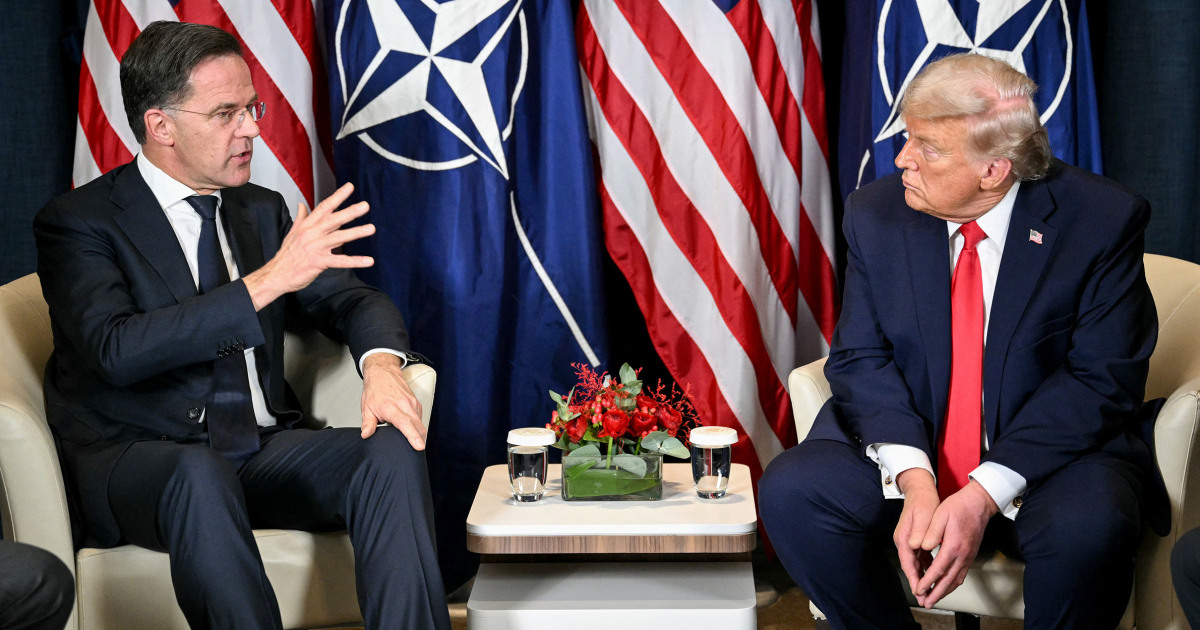
Rutte, who has the increasingly difficult task of holding the 32-nation alliance together, is well known for lavishing praise on Trump — even having once referred to him as “Daddy.” Sometimes referred to as the Trump whisperer, Rutte has been both applauded and criticized for his approach to handling Trump.
Even though the U.S. kept NATO allies in the dark ahead of the war in Iran, Rutte has publicly defended the U.S. military operations, saying what Trump is doing would “make the whole world safer.”
“If Iran would have the nuclear capability, including, together, with the missile capability, it will be a direct threat, an existential threat, to Israel, to the region, to Europe, to the stability in the world,” he told CBS News in an interview last month. “So the president doing this is crucial.”
But Rutte has also acknowledged his personal approach to Trump hasn’t always been well-received.
“I hear the criticism, obviously. I’m not deaf,” he said in a recent interview with Reuters.
Trump’s comments about NATO allies’ reluctance to get involved in the Iran war, particularly to secure the Strait of Hormuz, have prompted some public spats within the alliance.
“The countries of the world that do receive oil through the Hormuz Strait must take care of that passage,” Trump said in an address to the nation Wednesday night after he told the Telegraph, which asked whether he’d reconsider U.S. membership: “Oh yes, I would say [it’s] beyond reconsideration. I was never swayed by NATO.”
Not long after, Finnish President Alexander Stubb posted a message on X that he’d spoken with Trump, writing: “Constructive discussion and exchange of ideas on Nato, Ukraine and Iran. Problems are there to be solved, pragmatically.”
Lithuania and Estonia publicly extolled the importance and value of the U.S. as members of the alliance. Others were less pragmatic.
“The threat of NATO’s break-up, easing sanctions on Russia, a massive energy crisis in Europe, halting aid for Ukraine … it all looks like Putin’s dream plan,” Polish Prime Minister Donald Tusk said.

British Prime Minister Keir Starmer said, “NATO is the single most effective military alliance the world has ever seen, and it has kept us safe for many decades, and we are fully committed to NATO.”
Starmer has been a lightning rod for Trump’s personal attacks. Trump has dismissed him as “not Winston Churchill” for the U.K.’s reluctance to involve itself in the war. Starmer dismissed the attacks this week, saying, “Whatever the pressure on me and others, whatever the noise, I’m going to act in the British national interest in all the decisions that I make.”
“And that’s why I’ve been absolutely clear that this is not our war or we are not going to get dragged into it,” he said.