Cardi B’s Super Bowl halftime show cameo ignites a prediction market dispute
Cardi B’s appearance during Bad Bunny’s Super Bowl halftime show has stirred debate among prediction market users, raising questions about whether she actually “performed.”
Prediction markets users placed divergent bets on whether the rapper would perform at the halftime show, which the NFL says drew approximately 128 million viewers.
When Cardi B took the stage on Sunday, the Grammy winner danced alongside celebrities including Karol G, Young Miko, Jessica Alba and Pedro Pascal on a pink porch set. But it was unclear if the artist was singing, creating a murky situation for the nation’s most prominent prediction markets.
Polymarket is scheduled to issue a final decision on Wednesday, while Kalshi is facing a backlash after choosing not to declare a winner, citing ambiguity in whether Cardi B sang during her halftime appearance.
Kalshi instead settled the market at the last traded price before it was paused — paying 74 cents per contract to “No” holders and 26 cents to “Yes” holders — effectively issuing partial payouts.
That decision prompted one Kalshi user to file a complaint with the Commodity Futures Trading Commission, the independent U.S. agency that regulates prediction markets.
Millions wagered on the halftime show
Prediction markets allow users to wager on the outcome of future events, typically by responding to “yes” or “no” questions — called event contracts — and putting down a buy-in amount.
Leading up to the Super Bowl, Kalshi and Polymarket hosted event contracts revolving around whether Cardi B, among other artists, would perform, which racked up $47.3 million and $10 million in trade volume, respectively.
Kevin Mazur 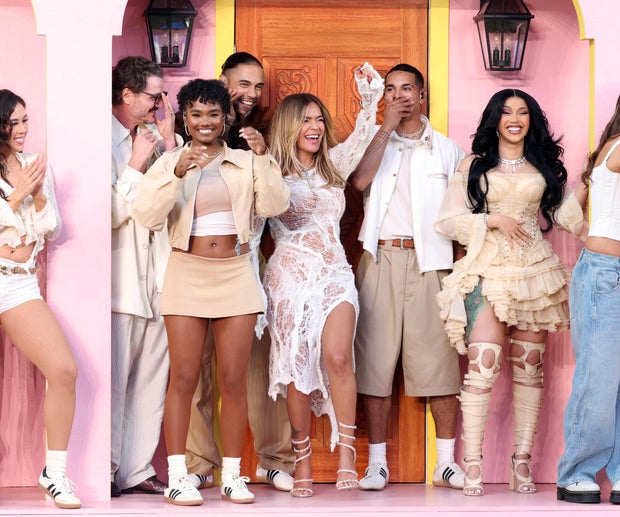
Some Polymarket users hashed out the debate in the comments section of the event contract, with some claiming they were scammed.
“There’s no way that you would count a cameo as a performance,” one person wrote. Another argued that a “performance” does not exclusively mean singing.
Polymarket did not immediately respond to a request for comment.
Kalshi also faced a backlash from some users over the halftime show. In the complaint with the CFTC, one user — who purchased a “yes” contract — said that as a result of Kalshi’s decision to settle the market price at the mid-trading value, they received $1,300 instead of $5,000. The user is seeking $3,700 in reparations.
In response, one user filed a complaint with the Commodity Futures Trading Commission (CFTC), first reported by the Event Horizon newsletter and posted by Front Office Sports. The user, who purchased a “yes” contract, claims that as a result of Kalshi’s decision to settle the market price at the mid-trading value, they received $1,300 instead of $5,000. The user is seeking $3,700 in compensation.
CFTC did not immediately respond to a request for comment.
“The rules were clear. Under the full rules, singing and dancing counted as a performance, but just dancing in the background did not,” a Kalshi spokesperson said in an email to CBS News. “In the as-broadcast performance, Cardi B was dancing and mouthing words to the song, but it was unclear if she was ‘singing’.”
On the day of the Super Bowl, Kalshi reported a daily record high of more than $1 billion in trading across its site, up 2,700% from last year.
Wagering on sports events has faced some pushback from states including Connecticut, which is arguing that platforms offering “sports events contracts” are illegal.
Some regulators, however, appear to be shifting their stances. In late January, CFTC Chair Michael Selig directed the agency to withdraw a 2024 rule proposal that sought to prohibit political and sports-related contracts. Selig said the advisory “contributed to uncertainty in our markets.”