Chaos in Europe as 2 planes from Serbia diverted over drone attacks | World | News
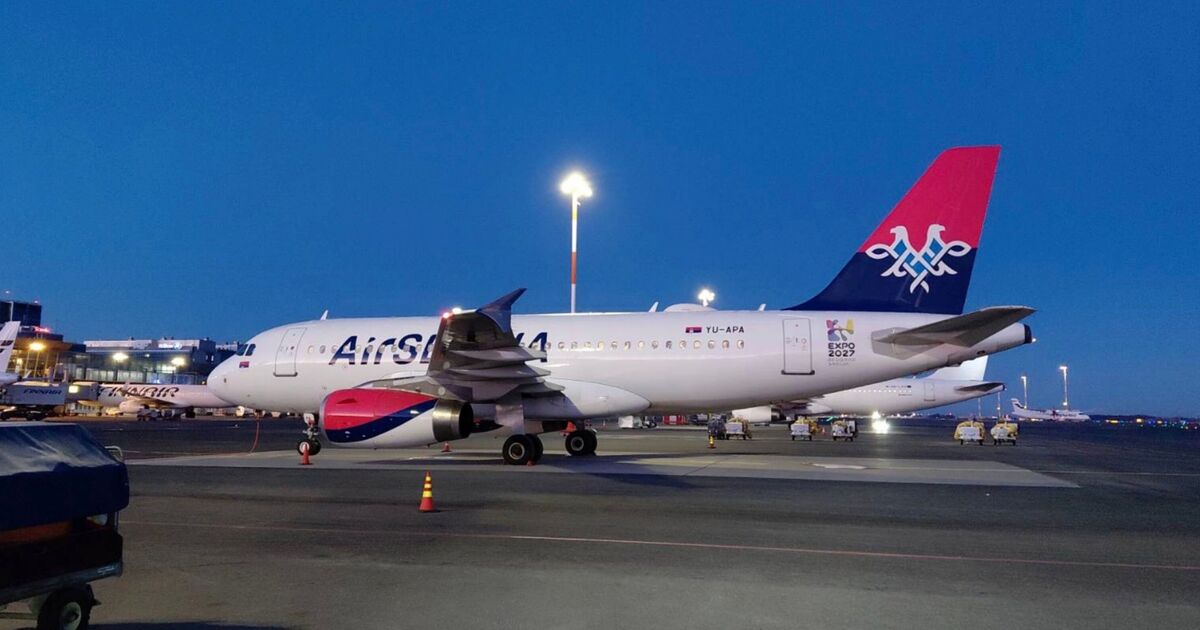
Two planes travelling from Serbia to St Petersburg, Russia, were forced to divert to Helsinki Airport (HEL) on Saturday morning (March 28) after multiple airports closed. The two flights landed in Finland as Russia’s Pulkovo Airport (LED) was closed as a result of a Ukrainian drone attack on Russia.
Finland’s Coast Guard said on X: “Two aircraft en route from Serbia to St. Petersburg landed early this morning at @HelsinkiAirport, which was serving as an alternate airport, as the St Petersburg airport was temporarily closed. After refuelling, one aircraft was able to continue its journey, while the other remained at Helsinki-Vantaa Airport because of a technical problem.”
This was due to Pulkovo Airport, Russia‘s second-busiest airport, being closed “for safety reasons”.
The Finnish coastguard added that passengers on the grounded plane were able to continue their journey on a replacement aircraft sent by the airline, AirSerbia, before the plane returned to Serbia. It also reported a similar landing in Helsinki on March 25, carried out by a plane travelling from Egypt to Russia.
St. Petersburg’s Pulkovo Airport is located nine miles south of the city centre and some 650 miles north of the Ukrainian border, but the city and surrounding Leningrad Oblast have been the target of recent drone activity. St Petersburg is the gateway for Russia’s Baltic oil exports, so by targeting the Ust-Luga and Primorsk terminals, Kyiv is continuing its strategy to cripple the Kremlin’s economy.
Finland has also felt other effects of the war between Russia and Ukraine near its borders. The Nordic country shares an 835-mile border with Russia, running mainly through forests and sparsely populated areas from the Baltic Sea to the Arctic Ocean. The border is heavily managed by the Finnish Border Guard, especially since the start of Russia’s full-scale invasion of Ukraine in 2022, and is marked by blue-and-white (Finland) and green-and-red (Russia) posts.
On Friday (March 27), the Finnish armed forces stepped up surveillance after reported Ukrainian drone strikes on Russian oil ports near the Gulf of Finland. The day before, the Finnish Meteorological Institute recorded extremely poor air quality in South Karelia, with the deterioration reportedly caused by fires at Russian ports after Ukrainian attacks, as well as airborne particles that reached Finland from central parts of the continent.
On March 24, the Finnish Border Guard signed a €5million (£4.4million) contract with the Finnish tech firm, Sensofusion Oy, to implement an advanced counter-drone system.
With the EU footing 90% of the bill through its Border Management and Visa Policy (BMVI) fund, this system is designed to detect, identify and neutralise unauthorised or hostile drones that threaten border security or interfere with critical operations. Additionally, Finland is constructing a 124-mile fence along parts of its border, expected to be completed in the next few years.