‘Common mistake’ alert for Vauxhall, Fiat, BMW, Ford, Hyundai drivers

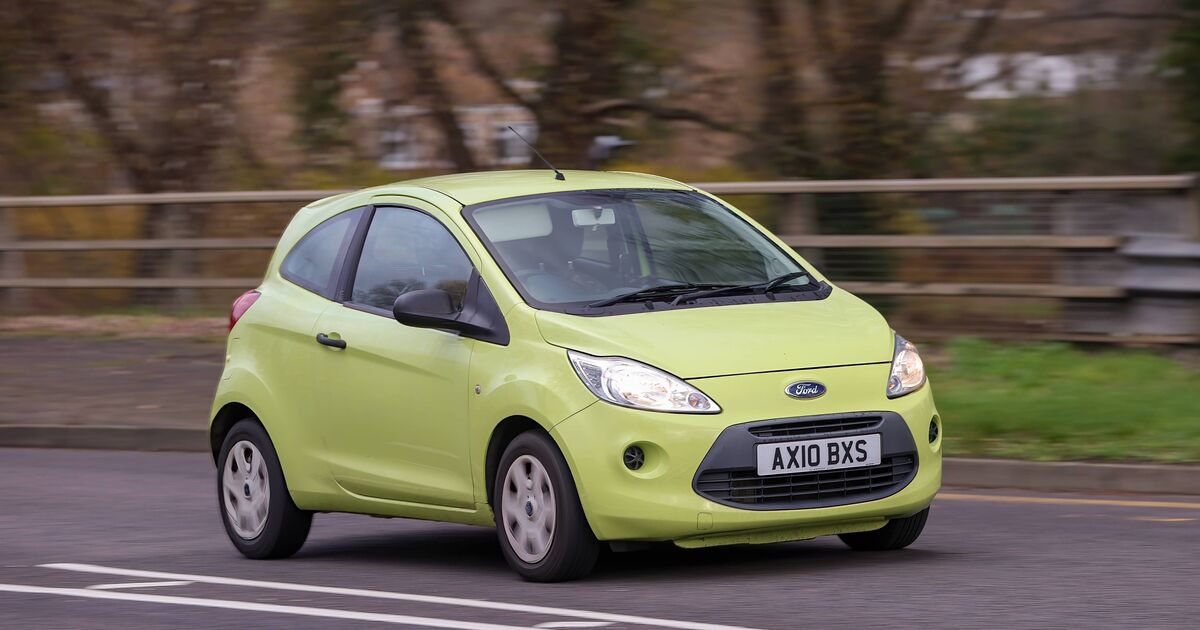
Ford was mentioned (Image: Sue Thatcher via Getty Images)
One in five second-hand vehicles has a history of damage, recent research reveals, as specialists caution that “buyers should not rely on appearance alone” when acquiring a new motor. Britain’s most damaged used cars of 2025 have been unveiled, with Vauxhall leading the national league table, according to fresh data from vehicle history platform carVertical.
A quarter of Vauxhalls (24.7 percent) examined in the UK had at least one documented damage incident, rendering it the most frequently damaged marque amongst those analysed. They were followed by Fiat (23.6 percent), SEAT (23.5 percent), Hyundai (23 percent), and Ford (22.6 percent), indicating that numerous vehicles British motorists purchase for affordability and daily practicality are also those most prone to displaying evidence of previous damage.
Across all vehicles examined by carVertical in the UK, one in five (20.3 percent) had damage history, while the average value of a single documented damage incident was £4,800. Bentley recorded the highest average damage value at £16,000, despite being amongst the least frequently damaged marques in the UK, while Tesla (£5,700) and BMW (£5,200) also stood out for elevated average damage costs.
Amongst individual models, smaller vehicles are those most likely to display damage history. The SEAT Ibiza was the most frequently damaged model in the UK, with 33.6 percent of those examined showing damage history, followed by the Audi A1 (30.6 percent) and Fiat 500 (30.1 percent). Matas Buzelis, motoring expert at carVertical, said a history of serious damage did not automatically make a car unsafe, but it should change the level of scrutiny.
He added: “Damage is one of the most common issues buyers can encounter in the used car market and in many cases it affects exactly the sort of models people shop for every day – affordable, practical cars from familiar brands. A damaged car is not automatically a bad car, but buyers need to be aware of how serious the damage was and how well it was repaired. Two vehicles can look almost identical in an advert, while one has a much more complicated history underneath.

BMW was on the list (Image: Sue Thatcher via Getty Images)
“That is why buyers should not rely on appearance alone. A car can be freshly cleaned, well photographed and priced attractively, but still have a record of accidents, poor-quality repairs, or even a previous insurance write-off classification. Without checking its history, it is very easy to miss that.
“One of the biggest mistakes buyers make is only checking the final car they are about to buy. It is much safer to compare several options side by side and rule out the ones with the worst histories early in the process. Leave no car unchecked.
“When buyers compare more than one vehicle, it becomes easier to spot what looks normal for the age, mileage, and price and what does not. That is where vehicle history checks can help, by giving consumers better context before they commit to a purchase.”
Nouran Moustafa, practice principal and IFA at Roxton Wealth, urged prospective purchasers to conduct a comprehensive vehicle history examination before committing to a purchase.

Vauxhall was top (Image: Sue Thatcher via Getty Images)
She added: “This is exactly why buyers should never confuse ‘looks fine’ with ‘is fine’. Used cars can be one of the easiest places to make an expensive mistake, because cosmetic repairs can hide bigger structural or mechanical problems underneath.
“The fact that so many everyday, practical brands are showing recorded damage does not mean they are bad cars, but it does mean buyers need to slow down and do proper checks instead of getting carried away by price alone. My advice is simple: always run a full vehicle history check, inspect the panel gaps, paint consistency, tyres, lights and shut lines, and never skip an independent inspection if something feels off.
“The biggest warning sign is usually when the price looks too good for the age, mileage and condition. A cheap used car can become a very expensive car if the damage underneath was never properly repaired.”
Rohit Parmar-Mistry, founder at Burton-on-Trent-based Pattrn Data, warned that dealers becoming evasive regarding documentation should raise concerns.
He added: “‘One in five’ isn’t a shocking stat, it’s a reminder that the used car market runs on incomplete information. Damage gets repaired, records get missed and sellers optimise for speed, not truth.
“The practical move is to treat every used car like a mini due diligence exercise: get a full history check, look for mismatched paint or panel gaps, watch for uneven tyre wear, and budget for an independent inspection. If a dealer gets defensive about paperwork, walk away. The cheapest car is often the most expensive after month two. The bigger issue is data quality.
“We audit automated decision systems all the time and the pattern is the same: people treat a report as ‘the truth’ when it’s really ‘the truth plus the gaps’. A clean report does not mean no damage, it means no recorded damage. Buyers should ask what would have to be true for this check to miss something, and who benefits from that blind spot.”