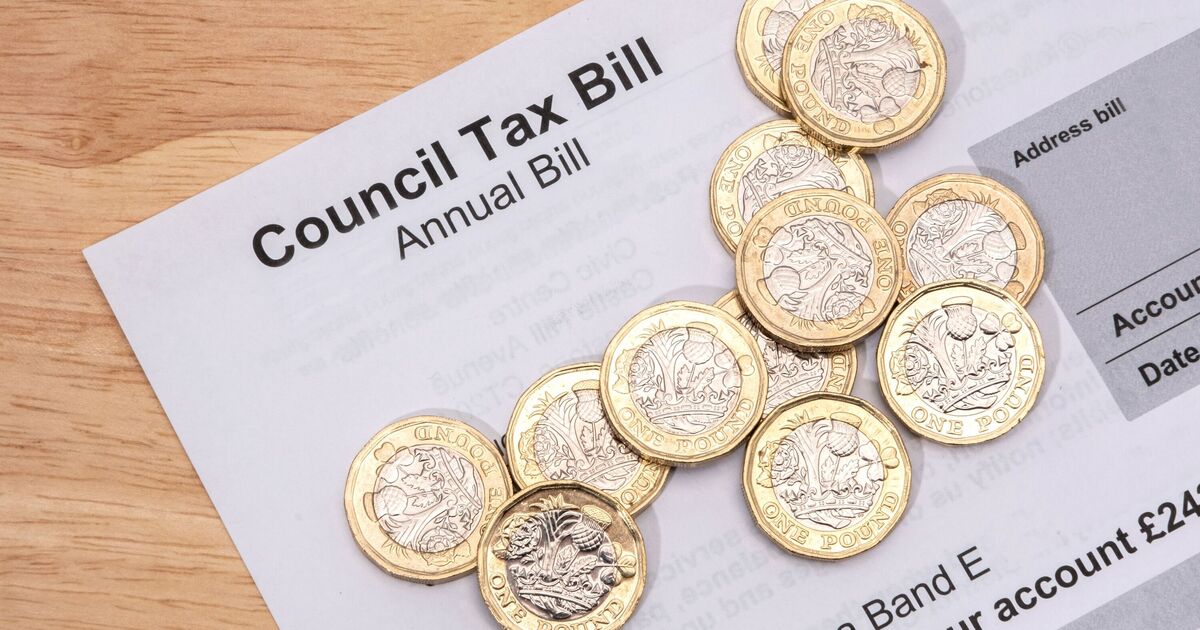
Full list of 9 conditions that can cut council tax to £0 | Personal Finance | Finance

he level of council tax support depends on who lives in the property. (Image: Getty)
Millions of households facing higher council tax bills from April 2026 could be eligible for significant reductions, with some able to pay nothing at all if they meet specific medical and financial criteria. In certain cases, individuals with long-term health conditions may qualify for a council tax discount that ranges from 25% up to 100%, depending on their circumstances. This support is linked to a scheme based on Severe Mental Impairment (SMI), which applies where a person has a severe impairment of their intellectual or social functioning (however caused), that appears to be permanent.
Eligibility is not automatic and depends on meeting two key requirements: you will need a certificate to say you’re severely mentally impaired from a medical professional, such as your GP and you’ll need to also prove your eligibilty for certain benefits.
READ MORE: Fury as SNP council declares war on second home owners – ‘£27k council tax bills
READ MORE: New UK passport rule change coming Wednesday ‘for first time’

Someone who lives alone and qualifies for SMI may have their entire council tax bill removed. (Image: Getty)
Kit Sproson, one of Money Saving Expert‘s money writers wrote: “The ‘severely mentally impaired’ (SMI) Council Tax discount is a reduction off of a household’s Council Tax bill, worth, at a minimum, 25%, all the way up to, in some cases, the entire bill being wiped.
“Severely mentally impaired’ is a horrible term, so we’ll refer to it as SMI for the purposes of this guide. SMI is a medical diagnosis in itself, but the underlying cause could be a condition such as dementia (including Alzheimer’s), profound learning difficulties, multiple sclerosis, the result of a severe stroke or something else.”
A 100% reduction will apply where the person lives alone or where every other adult in the household is either also classed as severely mentally impaired or is disregarded for council tax purposes such as full-time students. In situations where all other adults in the property are disregarded, the household may still receive a 50% discount on the council tax bill. If someone lives with a person who qualifies as severely mentally impaired, a 25% discount may apply, but only where there are no other counted adults in the home or where all other adults are disregarded under council tax rules.
To qualify for the council tax Severe Mental Impairment (SMI) discount, the person must be receiving at least one eligible benefit. These qualifying benefits can include Incapacity Benefit, Attendance Allowance, Severe Disablement Allowance, Disability Living Allowance (at the middle or higher rate for care needs), and additional state support linked to constant care or disability-related pension increases.
Other qualifying payments include Unemployability Supplement or Allowance, Constant Attendance Allowance, Income Support that includes a disability premium, Personal Independence Payment (standard or enhanced daily living component), and Armed Forces Independence Payment.
Further support can also count depending on the UK nation. In England and Wales, this may include Disability Working Allowance (where linked to income support with a disability premium) and Universal Credit where the claimant has limited capability for work or work-related activity. In Scotland, eligibility can also extend to Tax Credits that include a disability element, Employment and Support Allowance, and Universal Credit under similar disability-related conditions.
A previous legal ruling changed the system in England and Wales so that a person must now be in receipt of a qualifying benefit, rather than just eligible for it. In Scotland, the approach can vary by council, meaning some accept eligibility alone while others require actual receipt of the benefit, creating differences in how the discount is applied locally.
Medical conditions classified as SMI for council tax exemption include:
Severe learning difficulties
Long-lasting effects of a severe stroke
Other severe, permanent cognitive disorders