Giant 6ft 9in serial killer ‘kept victim’s head for horrific reason’ then murdered mother | World | News

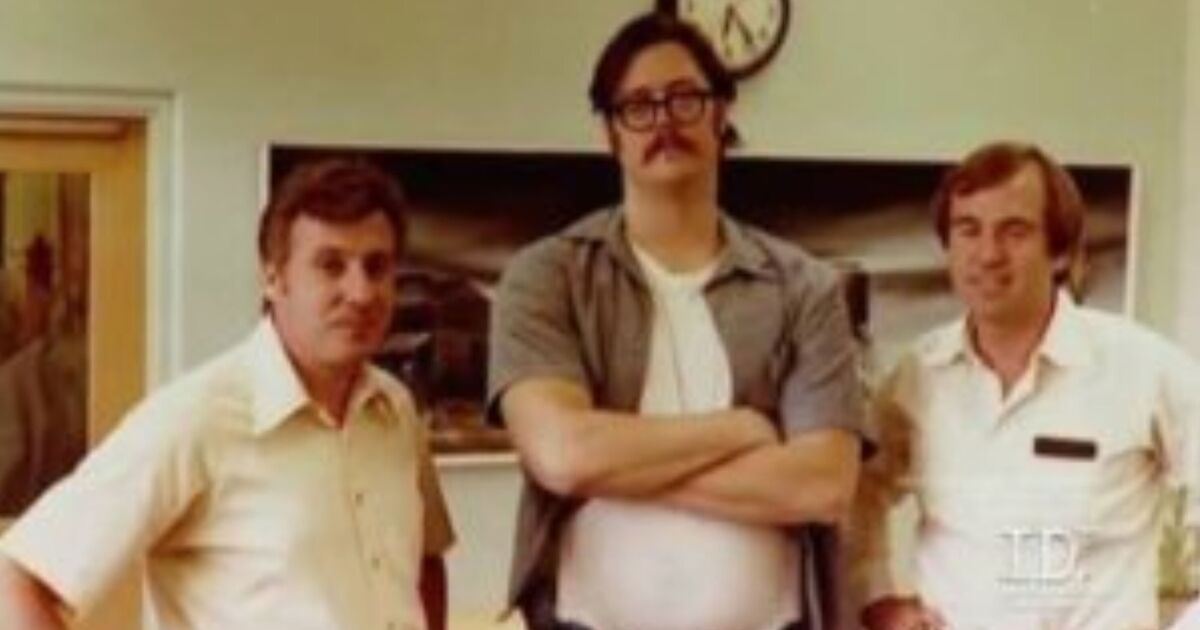
WARNING GRAB TAKEN FROM INTERNET CAPTION – Serial Killer Ed Kemper Ed Kemper Prison Interview htt (Image: WordPress)
Early indicators can often point to the possibility that a child may develop into a serial killer, and young Edmund Kemper III certainly displayed several of them. He took pleasure in torturing and killing animals, and disturbingly, he performed peculiar rituals with his sister’s Barbie dolls, decapitating them and removing their hands.
The towering Californian, who would reach a height of 6’9″ in adulthood, spent most of his childhood confined to the locked basement of his mother’s house. In a new podcast about Kemper’s life, true crime expert Kristina Collins reveals: “As Ed would grow older, his gem of a mother would banish him to the basement. So he wouldn’t have a room.
“He would just have to literally live in the basement anytime he was in the house. because [his mother] considered him sharing a room with his sisters unseemly.”
At 15, Kemper was sent to live with his grandparents, marking the onset of his murderous spree. Following a dispute with his grandmother, Maude Kemper, he shot her once in the head and twice in the back with his .22 rifle, then proceeded to stab her multiple times. As Kemper’s grandfather returned home, he was also immediately shot dead.
Kemper then calmly phoned the police and awaited their arrival. When interrogated, he chillingly confessed to the officers: “I just wanted to see what it felt like to kill Grandma.”
Read more: Expert shows what drove serial killer Rose West to murder
Read more: I unknowingly let the ‘babysitter killer’ care for my grandchildren

Kemper was eventually convicted of 10 murders (Image: Bettmann Archive)
Yet, this was only the beginning of his horrific crimes. Following his conviction for the murders of his grandparents, Kemper received a diagnosis of paranoid schizophrenia and was committed to the maximum-security Atascadero State Hospital.
During his time there, he became an exemplary prisoner, achieving impressive scores on intelligence assessments and being entrusted with positions of responsibility.
One psychiatrist at Atascadero observed: “He was a very good worker and this is not typical of a sociopath. He really took pride in his work.”
Kemper would later reveal that his role administering psychiatric evaluations to fellow inmates enabled him to understand the system’s workings and deceive his own psychiatrists.
He also acknowledged gaining insights from the sex offenders he assessed: “He had a genius IQ of 145, just a recipe for a final boss serial killer,” Kristina explains. “So he would thrive in his new hospital environment, learning how to be a better serial killer. And he would make some friends along the way, including a serial rapist who shared stories of his own crimes with Ed.”

Most of Kemper’s victims were transported in the trunk of his car (Image: Hearst Newspapers via Getty Images)
Kemper successfully persuaded the authorities that he had been reformed and, upon turning 21, was granted parole. Returning to live with his mother, tensions immediately reignited: “My mother and I started right in on horrendous battles, just horrible battles, violent and vicious,” Kemper recalled.
“I’ve never been in such a vicious verbal battle with anyone. It would go to fists with a man, but this was my mother…” Whilst still in his early twenties, Kemper sustained serious injuries in a motorcycle crash and utilised the $15,000 compensation he was awarded (equivalent to approximately £83,000 today) to purchase a 1969 Ford Galaxie that bore a striking resemblance to a police vehicle. He subsequently drove along California’s highways, offering lifts to young, attractive female hitchhikers.
Initially, Kemper resisted the homicidal urges he referred to as his “little zappies,” but this changed on May 7, 1972, when he collected Mary Ann Pesce and Anita Mary Luchessa, two 18-year-old students from Fresno State University. Explaining his choice of these specific victims, Kemper stated it was because they appeared “of a better class of people than the scroungy, messy, dirty, smelly, hippy types I wasn’t at all interested in”.
He restrained both women with handcuffs, offering an apology to Pesce when he inadvertently touched her breasts seconds before fatally stabbing her. Following their murders, he transported the bodies in his car boot, having been pulled over by a police officer en route due to a faulty brake light.
Upon arriving at his flat with the two young women’s remains, Kemper undressed and photographed them before committing sexual acts on both bodies. He subsequently dismembered them, scattering body parts along a nearby walking path.

Now 77 and eligible for parole, Kemper says he has no desire to be free (Image: Wikipedia)
Prior to disposing of the heads, Kemper violated them sexually one final time. A few months later, Kemper claimed his next victim, a 15-year-old Korean dance student named Aiko Koo.
Once again, he placed her body in the boot of his vehicle after strangling her. Kemper made a stop at a bar on his journey home and, following a couple of beers, returned to the car park and opened the boot to view Aiko’s body: “I suppose I was standing there looking,” he recalled in an interview.
He continued: “I was doing one of those triumphant things, too. Admiring my work and admiring her beauty, and I might say admiring my catch like a fisherman.”
Kemper’s subsequent murder was accompanied by what was perhaps his most disturbing act. By January 1973, he had returned to live at his mother’s residence, and, after collecting 18-year-old student Cindy Schall and shooting her fatally, he travelled back home where he concealed Cindy’s body inside a wardrobe.
The next day, whilst his mother was out working, he repeated the same process as previously, undressing the corpse and performing sexual acts with it. On this occasion, however, after beheading his victim with a power saw, Kemper retained her severed head for several days, repeatedly using it for sexual gratification.

Detectives carrying evidence away from Kemper’s car (Image: Hearst Newspapers via Getty Images)
Eventually, he interred Cindy’s head in the garden, positioned so it faced his mother’s bedroom window because, he explained, Clarnell Kemper “always wanted people to look up to her.”
A month later, two additional young women became victims of Kemper’s deception. He collected them individually in the Santa Cruz vicinity, then drove to an isolated location where he shot both in the head.
On this occasion, he decapitated the victims inside his vehicle and transported the headless bodies to his mother’s residence to engage in sexual acts with them.
When subsequently asked about his consistent choice to decapitate his victims, Kemper stated: “The head trip fantasies were a bit like a trophy. You know, the head is where everything is at, the brain, eyes, mouth. That’s the person.
“I remember being told as a kid, you cut off the head and the body dies. The body is nothing after the head is cut off… well, that’s not quite true, there’s a lot left in the girl’s body without the head.”

Kemper freely discussed his crimes in interviews with psychologists (Image: Youtube)
In a separate statement, which echoed his childhood “rituals” with his sister’s dolls, Kemper remarked: “It was more or less making a doll out of a human being, and carrying out my fantasies with a doll, a living human doll.”
Kemper’s penultimate murder, his ninth, struck closest to home. Following a final row with his mother, Kemper waited until she had retired for the evening before entering her bedroom with a claw hammer and beating her to death.
He subsequently decapitated his mother and “humiliated her corpse.” He described how he positioned his mother’s head on a shelf and shouted at it for an hour, hurled darts at it, before ultimately “smashing her face in.”
He recounted how, after attempting to dispose of her tongue and vocal cords down the waste disposal unit, substantial fragments of her throat were ejected back from the sink. “That seemed appropriate,” he subsequently reflected, “as much as she’d b****ed and screamed and yelled at me over so many years.”

Most of his murders included necrophilia, decapitation, dismemberment and possibly cannibalism (Image: Santa Cruz County Sheriff’s Office/Wikipedia)
However, the murderer had not yet concluded his rampage. He extended an invitation to his mother’s closest friend, 59-year-old Sally Hallett, to join him for dinner at the house.
Upon her arrival, Kemper strangled her before concealing the body in a wardrobe.
Anticipating his imminent capture, Kemper then left a message for authorities and embarked on a journey exceeding a thousand miles to Pueblo, Colorado, consuming numerous caffeine tablets to remain alert throughout the drive.
Upon realising that law enforcement had not yet initiated a search for him, Kemper contacted the Santa Cruz police in an attempt to surrender himself. He was compelled to ring three times before reaching an officer who actually took his startling admission seriously.
He was ultimately apprehended in April 1973 and returned to California, where he faced trial, was found guilty and received a life sentence. Whilst he has been eligible for parole since 2017, Kemper has stated he is “happy going about his life in prison.”