Home Office tells Ukrainian to use ‘headphones’ to block bombs in asylum snub | UK | News
The Home Office allegedly told a Ukrainian family seeking asylum in the UK that their teenage daughter should consider wearing noise-cancelling headphones to cope with the sound of explosions. The family is among several who have been refused asylum on the basis that parts of Ukraine are deemed “safe”, despite the war entering its fifth year.
While more than 310,000 Ukrainians have come to Britain under special visa schemes set up after Russia’s full-scale invasion in February 2022, those schemes do not provide a route to permanent settlement. Many families who have built lives in the UK are now applying for asylum or alternative visas in the hope of securing indefinite leave to remain. According to letters seen by Sky News, the Home Office has rejected claims on the grounds that applicants could move to western regions of Ukraine or to the capital, Kyiv.
Officials state that conditions do not meet the threshold of serious harm under asylum law. Current guidance, published in January 2025, argues that the humanitarian situation is not so severe across the country as to amount to inhuman or degrading treatment.
Families and immigration lawyers dispute that assessment. They point to a November statement from the UN Refugee Agency warning: “No part of the country should be considered safe.” This followed a deadly aerial strike on Ternopil.
Home Office data shows that while most Ukrainian asylum claims were approved before April 2025, refusals have since risen sharply.
One mother, who fled Kyiv on the second day of the invasion with her five children, described the impact of the refusal on her teenage daughter, who developed panic attacks after the family’s escape.
Doctors in the UK had helped stabilise her condition. However, the rejection letter stated that because they would be relocated to a “non-conflict zone”, her symptoms did not meet the required threshold.
The Home Office suggested: “Look into noise-cancelling headphones and soundproofing rooms to manage panic attacks.” Since being told she must return, the girl’s panic attacks have resumed.
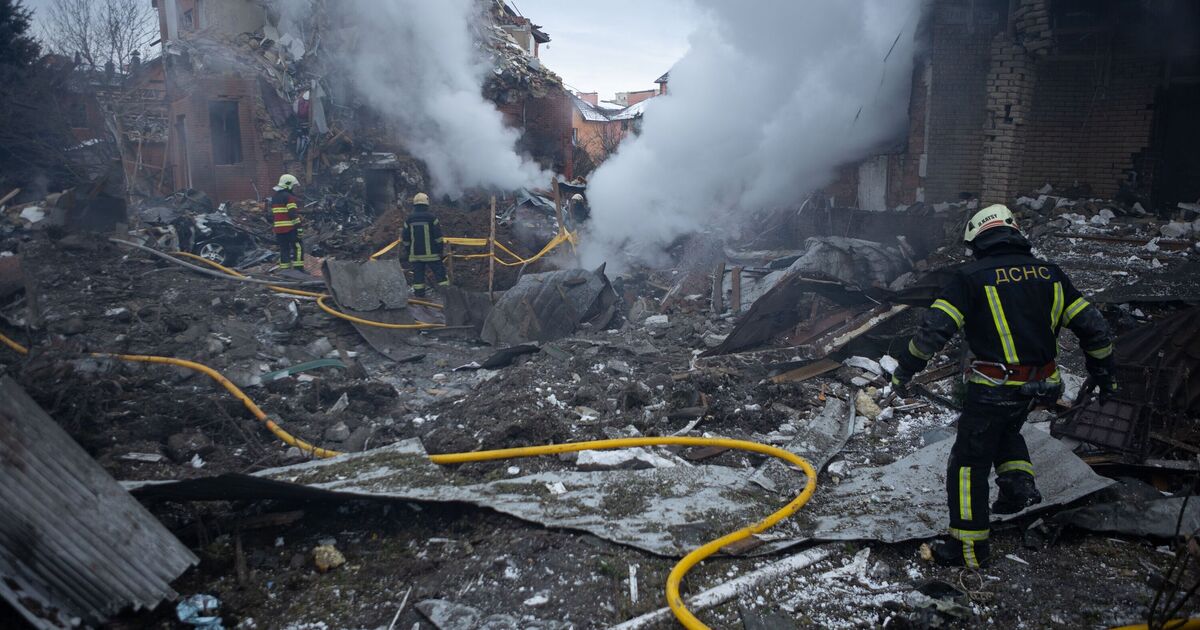
The family was advised they could settle in Chernivtsi, Rivne or Ternopil — the latter hit by a Russian strike in November that killed 38 people and injured more than 120.
The mother asked: “Why does government travel advice warn British nationals against all but essential travel to western Ukraine, yet my children are expected to live there?”
Another family from Mariupol, whose home was destroyed, also had their claim rejected. The Home Office accepted that the father had been tortured by Russian forces and was being sought by security services, acknowledging his fear of being killed or forcibly conscripted.
However, officials concluded he would not face a “real risk” if he relocated to western Ukraine or Kyiv.
The couple’s young son, who is autistic, stopped speaking after their home was bombed. His mother says he has made progress in Britain but would regress if uprooted again.
The Home Office determined his condition did not amount to “exceptional compassionate circumstances”.
Liberal Democrat MP John Milne has accused the Government of abandoning families it once welcomed.
He has urged Home Secretary Shabana Mahmood to create a clear pathway to settlement, with John Milne arguing: “Repeated short-term extensions to visa schemes merely prolong uncertainty.”
A Home Office spokesperson said: “Our Ukraine schemes remain open for those seeking sanctuary. More than 310,000 Ukrainians and their families have been offered or granted continued support.
“In September 2025, we announced the Ukraine Permission Extension scheme would be extended for a further 24 months following the initial 18‑month period.”