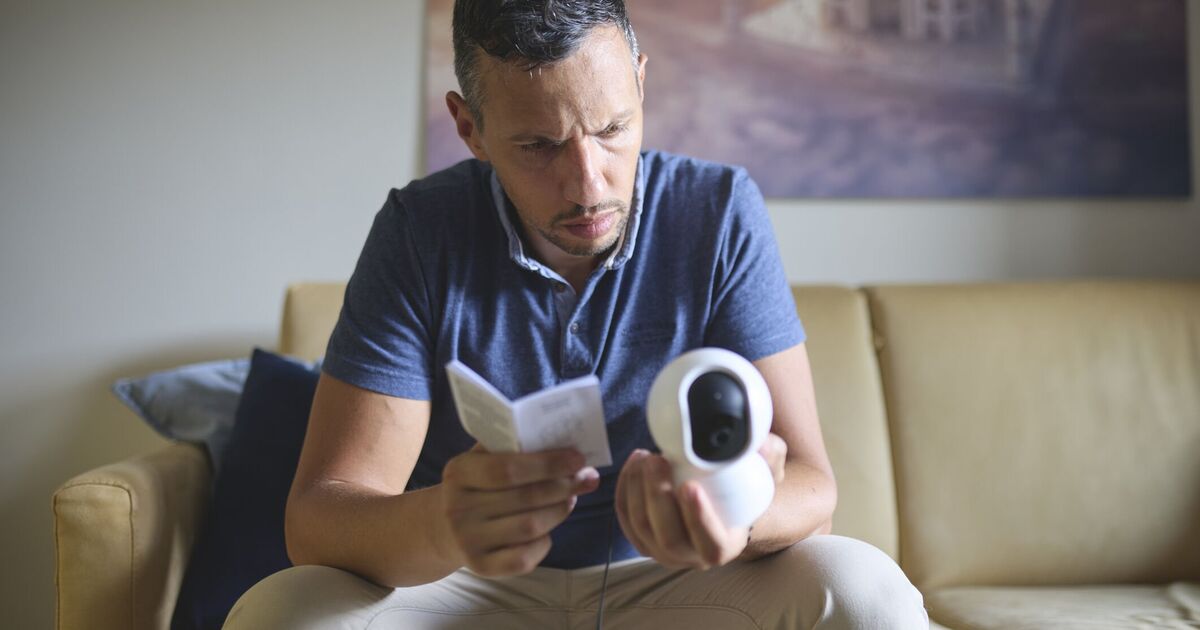
Homes with cameras could face ‘criminal offence’ for little-known rule
Homeowners with security cameras must follow a series of stringent rules to legally film and store footage. Failing to comply with these laws could lead to prosecution for criminal offences such as harassment or stalking.
Details of the rules were discussed as Conservative MP Suella Braverman questioned in Parliament whether the Home Office plans to reassess the classification of neighbour harassment involving invasive CCTV monitoring. Labour MP Sara Jones outlined precisely what regulations domestic surveillance cameras must follow and how people might breach harassment legislation.
She explained: “Where there is sufficient evidence of harassment or stalking from a domestic camera system, this may lead to prosecution for a criminal offence of harassment or stalking under the Protection from Harassment Act 1997.
“Individuals that use CCTV to film outside their property boundary have to comply fully with the UK General Data Protection Regulation (GDPR) and the Data Protection Act 2018.
“The police have a range of powers to deal with any behaviour that causes harassment, alarm or distress to others. The Government fully supports the police in their use of these powers to maintain public order and keep communities safe.”
The MP highlighted that beyond harassment allegations, CCTV users could face accusations of private nuisance, a common law tort concerning a person’s private rights regarding land.
She encouraged those operating CCTV systems to review the guidance issued by the Information Commissioner’s Office. This guidance states that home CCTV systems can encompass fixed cameras and even smart doorbells.
It stipulates: “Where possible owners should position their cameras to only capture their own property. However, if this isn’t possible and the CCTV captures someone else’s property, a public area or communal space, then data protection law applies.
“This is because CCTV can capture images and voices of other people, and this counts as their personal information.”
Under the data protection law, CCTV capturing visuals or audio recordings beyond the confines of their property must adhere to several criteria including:
- have a clear reason for using the CCTV
- make sure the CCTV doesn’t capture more than they need to
- let people know they are using CCTV (eg by displaying a sign)
- in most cases, provide some of the recordings if asked by a person whose image or audio, or both, the CCTV has captured
- delete the footage regularly or automatically, or both
- stop recording a person if they object to being recorded and there’s no legitimate reason to continue recording them
More information and guidance for using CCTV equipment on your property can be found on the Gov.uk website.