Horror dollhouses of death created for sinister purpose | UK | News
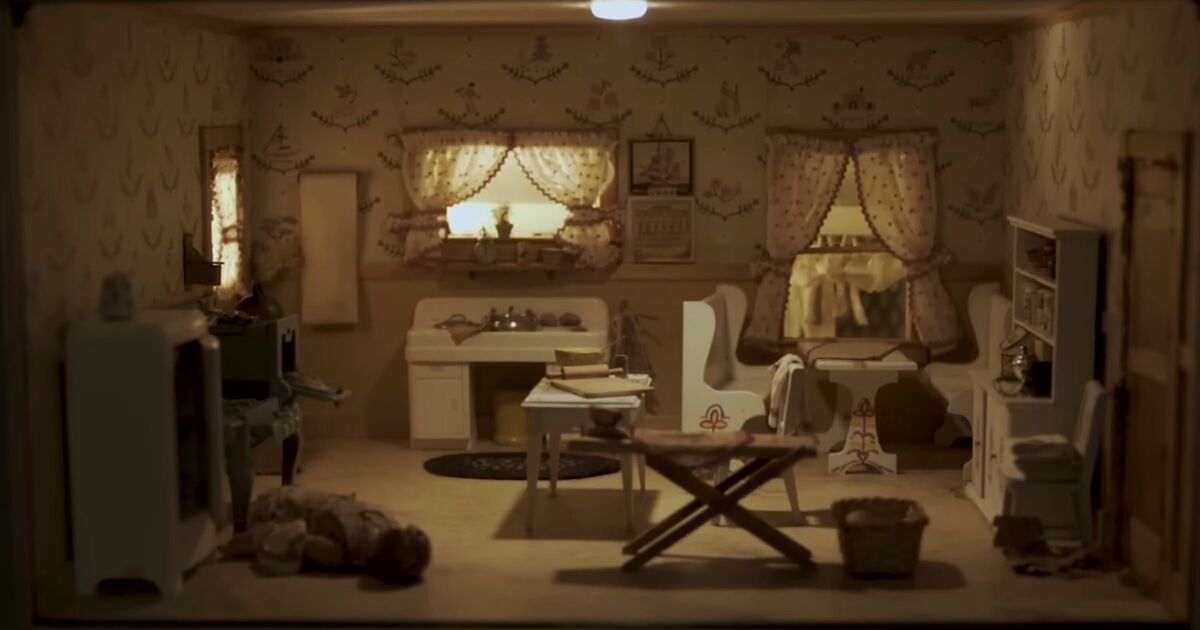
An eerie miniature house of horrors, fitted with 18 tiny deaths, was crafted to produce the perfect crime that would season America’s budding detectives.
These special dollhouses of death were invented by a woman known as “the mother of forensic science”, according to
Messy Nessy Chic. Frances Glessner Lee bastardised a set of children’s toys, turning them into perfectly proportioned miniature murder scenes.
Spatters of blood are splashed across tiled floors, and old ladies lie dead at the bottom of carpeted stairs. Worldwide, experts flocked to see the 20 dollhouse dioramas based on true crime scenes and autopsies Lee herself had visited.
Lee’s miniature crime scenes were part of a department of legal medicine that she founded at Harvard University in 1945.
This was a time when forensic science was still in its embryonic stages of growth, as limited technology knee-capped any efforts to trace a crime back to the criminal purely through science.
Even the doll-victims were incredibly precisely constructed, sometimes painted to mimic bruising or inflated to suggest bloating, which can be seen in post-mortems. Each doll mimicked a victim Lee had seen herself in autopsies.
In one house, a suicide was suggested by a pair of shoes in the corner. Another victim has a tiny bite marks on her neck and chest.
Although Lee was the daughter of a wealthy Chicago industrialist, this career was not handed to her on a silver platter, she was home-schooled and not allowed to attend university.
However, her brother went to Harvard and brought home a friend in the holidays who studied medicine, specialising in death investigation. This sparked her interest in forensic pathology.
Up until the age of 52, Lee was for all intents and purposes a socialite. She married and divorced a wealthy lawyer before her fate changed in her early fifties.
Receiving a handsome family inheritance, she used the money to pursue her life-long dream of forensic science. She founded the Harvard Department of Legal Medicine, the first in the country, as well as the the Harvard Associates in Police Science, a national organization for the furtherance of forensic science.
Lee named her department the Nutshell Studies of Unexplained Death, named after the principles of forensic investigation, to convict the guilty, clear the innocent, and find the truth in a nutshell.
Lee held week-long seminars and lectures in homicide investigation for law-makers as well as detectives, and investigators. With a torch and an hour and a half students were asked to find all the evidence they could and solve the crime.
Then she spent $4,500 on each of her expertly crafted dollhouses, also funded by her inheritance. When students finished their week-long seminars at the Nutshell Studies of Unexplained Death, Lee treated them to a banquet at the Ritz Carlton.
When Lee died 1966, at 83, the Nutshell department was closed and permanently loaned to the Maryland Medical Examiner’s Office in Baltimore, Maryland, U.S. where they are still used for training purposes by Harvard Associates in Police Science enrolled in the Frances Glessner Lee Homicide School. To this day, the dollhouses remain the same as when Lee left them and are still used to train America’s authorities.