Households urged to carry out 10-second job and cut £100 off energy bi
As temperatures plunge outside so energy bills tend to soar inside but there is one handy little trick that could save you up to £100 off your bills. Research shows that more than 250,000 UK households have already tried this nifty little trick to save money, and if 10 million households followed suit, this could wipe £1billion off UK energy bills and save 1.7 million tonnes of carbon emissions – the equivalent of nearly six million people taking transatlantic flights.
The average UK gas boiler produces approximately the same amount of carbon emissions in a year as taking seven transatlantic flights. Take this simple action to reduce energy waste from your home. Heating homes with fossil fuels accounts for 15% of the UK’s carbon emissions. So by using energy more efficiently, we can cut carbon emissions and save money on our heating bills at the same time. so what do you need to do?
Turning down the flow temperature on your combi boiler to 60°c or below can knock a lot of money off your heating bill each year and reduce energy waste from your home
Turning down a single setting will make your boiler work more efficiently, saving around £65 to £100 a year for the average household.
There are more than 15 million homes in the UK with a combi boiler, and many combi boilers are burning more gas, generating more carbon emissions and costing households more than they need to.
“People could be saving energy and money simply by ensuring their boiler is running as efficiently as possible. But many people aren’t aware they can change their boiler settings” according to the Money Saving Boiler Challenge.
The flow temperature is the temperature that a boiler heats water up to before it goes around the radiators in your home.
Changing the flow temperature on a combi boiler will not affect the temperature of the hot water from your taps and showers.
The Money Saving Boiler Challenge is based on extensive research by Nesta, the UK’s innovation agency for social good, that lowering boiler flow temperatures reduces carbon emissions and saves money on energy bills.
That evidence shows that the average household can save approximately 9% on its total gas use by making this change, assuming the boiler flow temperatures are currently set at 80°C. For an average household with an annual gas consumption of 12,000 kWh, reducing the flow to 60°C would save 1,092 kWh of gas per year, which could save you anywhere between £65 and £100, depending on your usage and the size of your home.
The 9% gas bill saving, and the advice to lower to 60°C is based on multiple sources of evidence. These sources include:
*Measuring the impact of lowering flow temperatures in the Energy House at the University of Salford; a traditional early 20th-century two-bedroom terraced house, set up in an environmental chamber
*Reviewing existing evidence on the impact of reducing flow temperatures
* Estimating the proportion of UK homes that could successfully lower flow temperatures, based on modelling work by Cambridge Architectural Research.
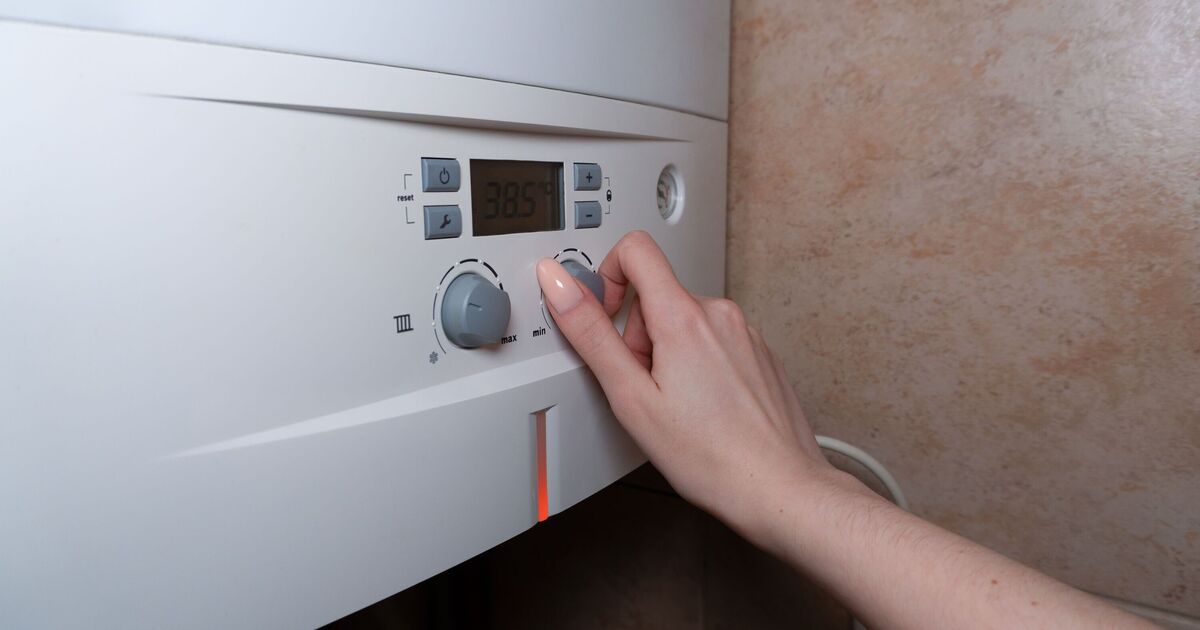
So how do you do it? To lower the flow temperature on a combi boiler, use the dedicated heating dial or button featuring a radiator icon on the boiler’s front panel. Lowering this to between 55°C and 65°C improves efficiency, though some systems may require trial and error to ensure the home remains comfortable. Doing this will not affect water temperature.
If you have a conventional boiler with a hot water cylinder, there’ll be just one dial or setting to adjust. If you have a combi boiler with no hot water cylinder, there’ll be two dials or settings – one for the radiators and one for hot water. You need to adjust the radiator setting, which you may see as by an icon of a radiator rather than a tap.
A spokesperson for the Energy Saving Trust said: “Everyone’s looking for easy ways to cut their energy bills during winter, and one option that people often talk about is turning down your boiler’s flow temperature.
“Your boiler flow temperature is the temperature your boiler heats your water to before it gets sent to your radiators. As it flows through the radiators, the water cools before it returns to the boiler. The temperature of the water at this point is the return temperature.
“Reducing the flow temperature also lowers the return temperature. Boilers are more efficient when the return temperature is low, and this can save you both energy and money.”
They added: “Your boiler controls are separate from your central heating controls, such as your room thermostat, programmer and radiator valves. The central heating controls turn your heating on and off, while the boiler thermostat changes the temperature of the water in the system. It’s important to get your heating controls right before you try to change the flow temperature.”