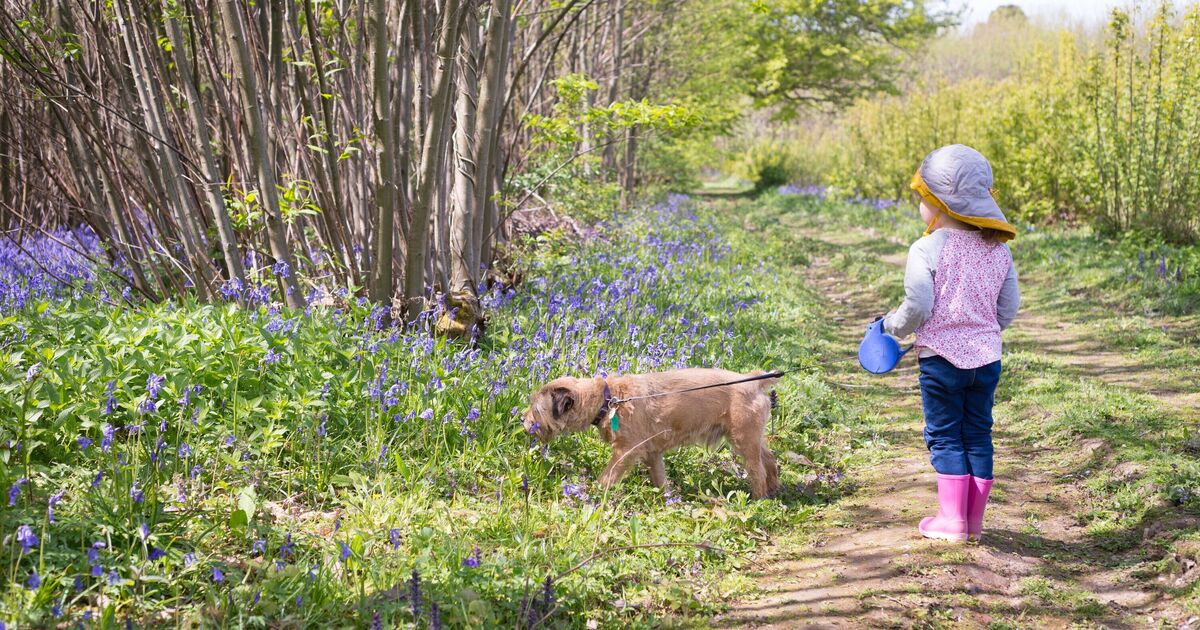
Important advice issued to anyone planning to do bluebell dog walk
Bluebell season is upon and while the wild flower might be pleasing on the eye, it’s important to be aware of its toxicity to dogs.
Also known as Hyacinthoides non-scripta and considered both a flower and a plant, bluebells tend to bloom in the UK from mid-April to May and have the ability to light up any woodland walk. Fortunately, their distinct colour makes them easy to recognise when you’re out and about with your pet.
Animal experts, Purina warn that bluebells are poisonous to dogs. “Unfortunately, as pretty as they are, bluebells pose a big risk for our pets due to a toxic chemical present in the plant called glycoside,” they advised online. “This means every part of the flower can lead to health problems when consumed by dogs. If you suspect your dog is suffering from bluebell poisoning, contact the vet immediately.”
As well as native bluebells, the flower comes in a Spanish variety – albeit no less dangerous. Purina explained: “Although bluebells are usually blue, you might come across a range of other colours such as white, pink and even grey bluebells.
“These plants are also poisonous to dogs and you shouldn’t allow your pet to sniff them, as irresistible as these breath-taking flowers might be.”
Signs of bluebell poisoning in dogs
If you suspect your dog has gotten too close to bluebells on the daily walk, monitor them closely in the next few hours in case any unusual signs show up. The most common symptoms of bluebell poisoning include:
- Diarrhoea
- Vomiting
- Abdominal pain
- Drooling
- Trembling
- Reduced heart rate
- Lethargy
So next time you’re out on a walk, while capturing photographs of your four-legged friend playing among the bluebells may paint a pretty picture, do be wary of the damage the flower can do.
According to the Woodland Trust, bluebells are native to western Europe with the UK being a species stronghold.
They’re associated with ancient woodland and are often used in combination with other species as a clue that a wood is ancient.
The Trust added: “They reach their greatest densities in the UK’s woods where many thousands of bulbs can exist in one woodland, creating the incredible blue carpets we fondly associate with spring. They also grow along hedgerows and in fields.”