Iran threatens to strike oil facilities after U.S. hits military targets on Kharg Island, a critical oil hub
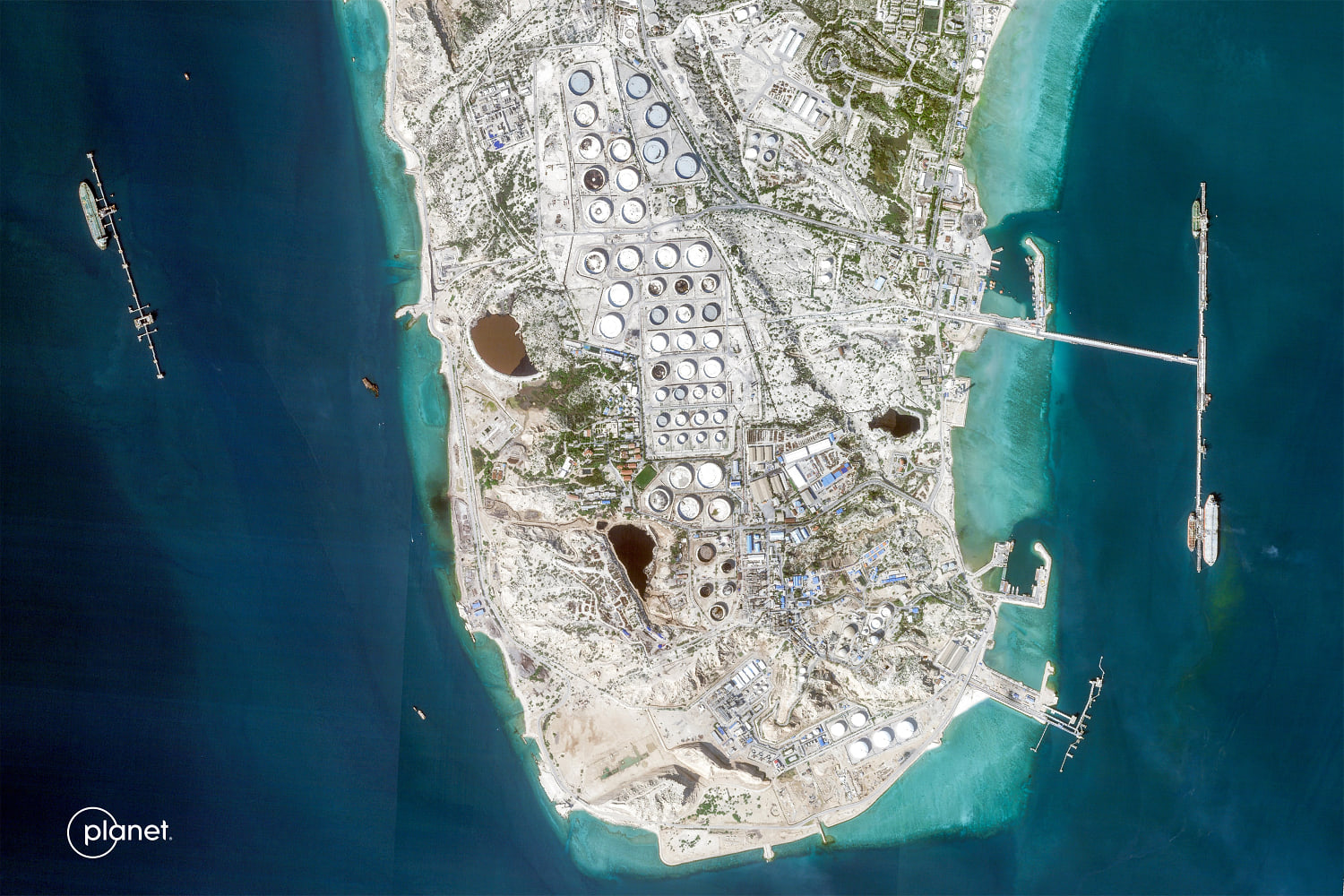
President Donald Trump said late Friday that U.S. forces “obliterated” military targets on Kharg Island, a critical hub of Iran’s oil Gulf operations, with the country responding by threatening to strike U.S. allies’ oil facilities if its infrastructure is damaged.
“Moments ago, at my direction, the United States Central Command executed one of the most powerful bombing raids in the History of the Middle East, and totally obliterated every MILITARY target in Iran’s crown jewel, Kharg Island,” Trump wrote in a post on Truth Social.
Kharg Island, a tiny but strategic island 15 miles off the coast of Iran in the Persian Gulf, is home to an oil terminal that ships 90% of the country’s oil exports. There are also military capabilities there, including air defenses and mines buried underground.
Its oil terminal has so far been unscathed in the war, according to oil market research firm Energy Intelligence, and the president said the island’s oil infrastructure was spared in Friday’s attack, but could be struck down the road.
“Should Iran, or anyone else, do anything to interfere with the Free and Safe Passage of Ships through the Strait of Hormuz, I will immediately reconsider this decision,” said Trump, as Iran has actively interfered with shipping in the strait for several days.
Iran’s Fars News Agency, which is linked to its Islamic Revolution Guards Corps, said on Telegram Saturday that more than 15 explosions were heard on the island during the U.S. attacks, which it said targeted air defenses, a naval base, airport control tower and a helicopter hangar.
It said there was no damage to oil infrastructure on Kharg Island, but warned about the consequences of “any attack” on Iran’s energy infrastructure.
“If this happens, all oil and gas infrastructure in the region in which the U.S. and its allies have interests will be set on fire and destroyed,” Iran’s armed forces said.
U.S. Central Command is set to provide more information soon about the strikes on Kharg Island, a U.S. official told NBC News. The official said the military hit security infrastructure that supports oil infrastructure on the island, as well as military infrastructure on the island.
Kharg Island is the “backbone” of Iran’s oil trade infrastructure, according to one analyst, who said Iran earned $53 billion USD in net oil export revenues in 2025, around 11% of the country’s annual GDP.
The island “serves as the physical hub enabling Iranian crude exports and the primary gateway for oil revenues,” said Petras Katinas, a Research Fellow in Climate, Energy and Defense Royal United Services Institute. It also allows Iran to sustain crude oil sales despite U.S. sanctions, he added, which “undermines a key U.S. foreign policy tool.”
Trump’s focus on Kharg Island appears to go back decades. In an interview with the Guardian newspaper in 1988 where Trump expressed his desire to one day be president, he said he’d be “harsh on Iran,” who have been “beating us psychologically.”
“One bullet shot at one of our men or ships and I’d do a number on Kharg Island,” he said.
When asked by Fox Radio host Brian Kilmeade in an interview on Friday whether he would take Kharg Island after being reminded of his past comments, Trump said it “was not high on the list.”
“Let’s say I was gonna do it, let’s say I wasn’t gonna do it,” Trump said. “It’s sort of a foolish question.”
Two U.S. officials told NBC News last week that Trump has privately expressed a serious interest in deploying U.S. troops inside Iran.
Katinas said that seizing the island “would cut off Iran’s oil lifeline,” but require a commitment of ground troops, which this administration seems hesitant to undertake.”
With shipping in the Strait of Hormuz now stopped, Iran “cannot sell it anyway,” he added. “But looking ahead, seizure would give the US leverage during negotiations, no matter which regime is in power after the military operation ends.”
Ehsan Jahaniyan, the deputy governor of Bushehr, a port city close to Kharg Island, said Saturday after the strikes that “exports, imports and the activities of companies on the island are proceeding normally.”
The overnight strikes came after Iran’s new Supreme Leader, Mojtaba Khamenei, issued a fiery first public statement on Thursday, vowing to keep blocking the vital Strait of Hormuz trade route and attacking Gulf states. The written statement was read by a state television announcer.
About one-fifth of global oil supplies and one-third of fertilizers used around the world pass through the vital waterway.
Eight seafarers and shipyard workers have been killed in attacks in the past two weeks, while four are still unaccounted for, according to the International Maritime Organization.
The price of oil has since soared back above $100 a barrel, while the U.S. eased sanctions on Russian oil in a bid to stabilize markets in a move that drew criticism from Ukraine and Europe.
On Wednesday, the U.N. Security Council passed a resolution condemning Iran’s attacks on its neighbors and calling on Tehran to halt its threats to ships in the Strait of Hormuz.
Asked about the possibility of the U.S. Navy escorting tankers through the strait while speaking to reporters on Joint Base Andrews Friday, Trump said, “It’ll happen soon. Very soon.”
Trump also said that gas prices would fall when the war ends.
“I think your gas prices, as soon as that’s over, are going to come tumbling down, along with everything else. I think it’s going to be — you’re gonna see a very big decrease in the price of gasoline, gas, anything having to do with energy as soon as this has ended,” the president said.
Defense Secretary Pete Hegseth on Friday dismissed the situation in the Strait of Hormuz, suggesting that the blocked strategic waterway is not a major concern.
“As the world is seeing, they are exercising sheer desperation in the Straits of Hormuz, something we’re dealing with. We have been dealing with it, and don’t need to worry about it,” Hegseth said at the Pentagon news briefing.
“We’re on plan to defeat, destroy, disable all of their meaningful military capabilities at a pace the world has never seen before,” he added.