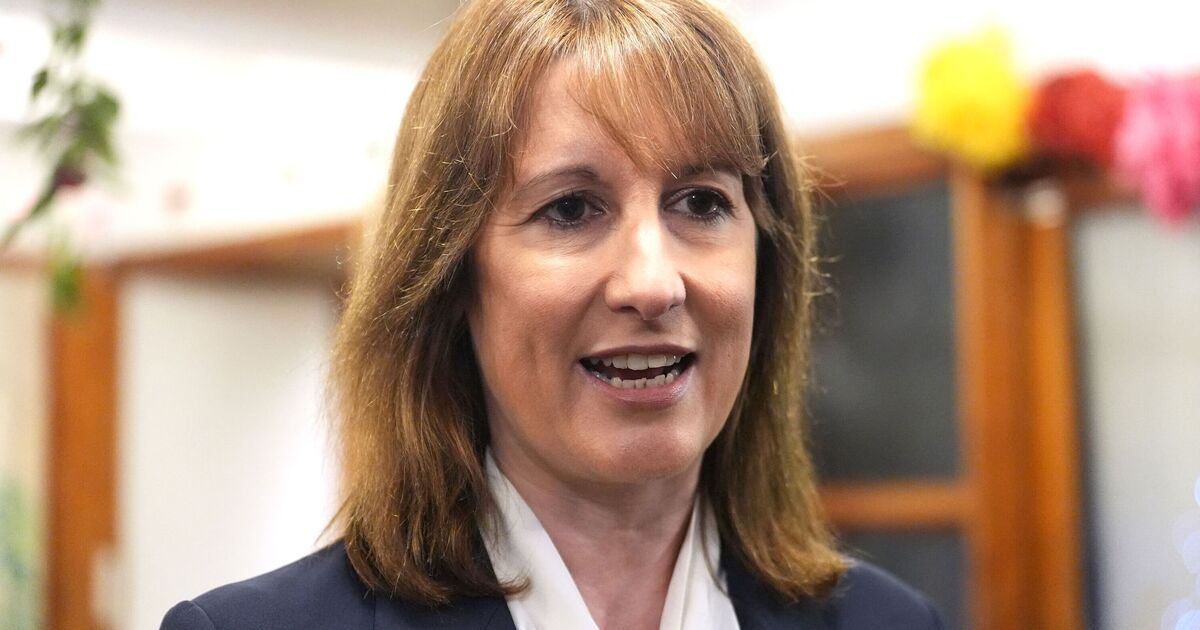
Reeves slammed as GDP growth is ‘economic version of treading water’ | Personal Finance | Finance

Reeves slammed as GDP growth is ‘economic version of treading water’ (Image: Getty)
The UK economy grew by just 0.1% in the three months to November 2025, with construction experiencing its largest decline in three years. Experts have warned that the figures are “the economic version of treading water”.
The Office for National Statistics said UK gross domestic product (GDP) increased by 0.3% for the month, following a 0.1% decline in October. The increase was sharper than expected, with economists having predicted a 0.2% rise for the month. Official figures also showed the UK economy grew in September, with a 0.1% rise, after previous estimates of a 0.1% fall were revised on the back of more data, particularly from the pharmaceutical sector.
November’s economic growth was supported by a 25.5% jump in the motor manufacturing industry as it continued to recover following a sharp fall in activity in September after JLR’s factory shutdown. The latest GDP figures are “more evidence of Labour’s economic mismanagement”, the Conservatives said.
READ MORE: South East Water under investigation by regulator over UK water outage chaos
READ MORE: ‘Council tax, broadband and water bills rising – discounts up to 50% available’
Shadow chancellor Sir Mel Stride said: “This morning’s news that growth is flat-lining is more evidence of Labour’s economic mismanagement. Growth was just 0.1% in the three months to November, having not grown at all in the previous three-month period.”
He added: “With every U-turn, the Chancellor loses more credibility, and Labour shows they do not have a plan.”
Craig Fish, director at Lodestone Mortgages, said the UK economy is struggling despite technically expanding.
He said: “On paper, the UK economy has technically grown, but for households and businesses, it doesn’t feel like it. These GDP figures are tweaked and revised almost every month, which does little to build public confidence, much like the constant policy U-turns we’ve seen from the Government in recent weeks.
“A 0.1% rise over three months is hardly a sign of a strong or growing economy, especially when construction output is falling sharply, and manufacturing remains under pressure. For many people, costs are still high, confidence is fragile and day-to-day finances remain stretched.”
He added: “From a mortgage and rates perspective, this kind of weak, uneven growth supports the case for interest rates to fall gradually rather than stay higher for longer. But it also underlines why borrowers shouldn’t expect dramatic cuts overnight. The economy is bumping along, not booming and mortgage rates are likely to reflect that cautious reality rather than the headline figures alone.”
Philly Ponniah, chartered wealth manager and financial coach at Philly Financial, said households are not confident.
She said: “This is the economic version of treading water — not sinking but not moving forward either. Services growth of 0.2% is soft by historical standards, so it doesn’t give households much to feel confident about.
Our community members are treated to special offers, promotions, and adverts from us and our partners. You can check out at any time. Read our Privacy Policy
“The construction decline is another confidence signal. It usually means projects are being paused or that there’s hesitancy to commit to longer-term spending. It feels like the UK economy is stuck in a low gear.”
Emma Jones, managing director at Whenthebanksaysno.
She added: “While growth of 0.3% in November is encouraging, the drag from construction is a major concern. The government’s housing target is increasingly looking like a pipe dream. The housebuilding sector simply isn’t delivering the homes it needs to help more people get on the ladder.”
Omer Mehmet, managing director at Trinity Finance, added: “Though there was some respectable growth in November, a month of uncertainty given the Budget, the fly in the ointment is the weakness of the construction sector. More than anything, this country needs more homes, and they simply aren’t being delivered at the pace and scale they need to be.”