Russia burning as huge fireball erupts after massive Ukrainian strike | World | News
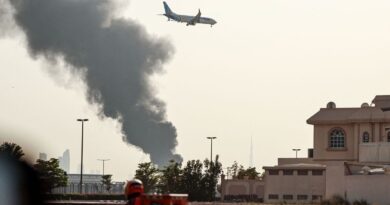
A coordinated Ukrainian drone strike has ignited a massive fire at an oil depot in Russia‘s Belgorod region overnight into January 7, 2026. The facility, identified as the Oskolneftesnab depot in the Stary Oskol district, serves as a critical fuel link for Russian military forces operating in the region.
Several storage tanks caught alight during the attack, producing intense flames and thick black smoke that lit up the night sky, as captured in various videos circulating on social media. The fire was visible for miles, highlighting the vulnerability of fuel infrastructure so close to the border.
Belgorod Governor Vyacheslav Gladkov confirmed the incident, stating that while regional air defences engaged incoming targets, several tanks were ignited. No casualties were reported, and emergency services reportedly extinguished the blaze by morning.
Ukraine’s General Staff officially claimed responsibility, describing the strike as part of a systematic campaign to undermine Russian offensive capabilities. By targeting such “fuel arteries,” Kyiv is aiming to disrupt the logistics essential for moving and maintaining occupying troops during winter operations.
The attack coincided with another Ukrainian operation, which hit a logistics warehouse in the Russian-occupied Donetsk region used by the 20th Motorised Rifle Division. Russia’s Defence Ministry reported downing 32 Ukrainian drones across various regions during this wave.
The strikes followed a much larger Ukrainian drone offensive the previous night, which saw Russian authorities claim the interception of 129 drones. Despite these defence claims, the campaign reached multiple high-value targets deep inside Russia.
Strikes were reported at oil depots in Lipetsk and Voronezh oblasts, a major ammunition arsenal in Kostroma, petrochemical facilities in Bashkortostan, and industrial sites in Penza. These long-range assaults demonstrate a significant expansion of Ukraine’s domestic drone programme.
Some of these targets are located over 700 miles (1,000 km) from the border, proving that Ukraine can now strike deep within the Russian heartland. The strategy forces Moscow to redistribute its expensive air defence assets away from the front lines to protect internal industrial sites.
In retaliation, Russia launched a significant barrage consisting of one Iskander-M ballistic missile and 95 drones against Ukraine. According to the Ukrainian Air Force, air defences successfully downed the missile and 81 of the drones.
However, 14 impacts were recorded across eight locations. These included strikes on residential areas in Dnipro where several people, including children, were injured. The retaliatory strikes continue to focus heavily on civilian and energy infrastructure.
Meanwhile, in western Ukraine, the city of Lviv experienced major power disruptions. Mayor Andriy Sadovyi reported that some hospitals and all municipal electric transport, including trams and trolleybuses, were temporarily disconnected under a new national outage schedule.
The Mayor noted that the decision to “balance” the grid by treating medical facilities like ordinary consumers was a dangerous move. He worked with the Prime Minister and national authorities to restore power to critical infrastructure by morning.
The Ukrainian Cabinet of Ministers has since reaffirmed a prohibition on disconnecting medical facilities from the supply. These nationwide schedules stem from cumulative damage caused by persistent Russian attacks on Ukraine’s energy system.
To prevent a total grid collapse during the harsh winter, Ukrenergo has been forced to apply hourly shutdowns and limits on industrial consumption. These measures reflect the immense strain on the country’s power generation and distribution networks.
The reciprocal strikes on energy and military targets illustrate the escalating aerial dimension of the nearly four-year conflict. Both nations are seeking to impose severe economic and logistical costs on each other, while their civilian populations bear the brunt of the damage to their infrastructure.