‘Secret court hearings’ continue in key pre-payment meter update | Personal Finance | Finance
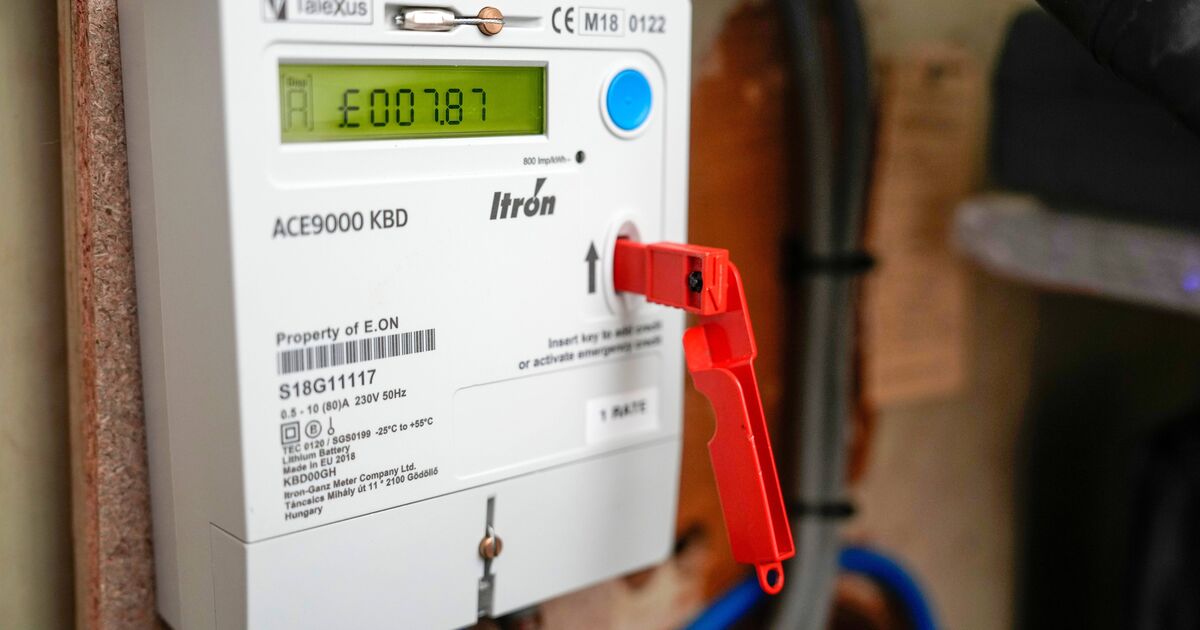
Campaigners are calling for Government and Ofgem intervention to put a stop to the compulsory installation of pre-payment meters by utility companies, following new revelations that magistrates are granting warrants in confidential court hearings. Energy firms found themselves at the centre of controversy in late 2022 when they were accused of sending debt collectors to forcibly install these meters in customers’ homes, often targeting vulnerable individuals and families already grappling with the cost-of-living crisis.
It was also disclosed that magistrates throughout England and Wales had been rubber-stamping large numbers of warrants without thoroughly examining whether customers had been adequately warned about potential break-ins. This national scandal resulted in a temporary halt on energy companies applying for warrants, along with pledges from the government to enhance practices.
Just last month, the End Fuel Poverty Coalition penned a letter to ministers, regulator Ofgem, and high-ranking MPs, demanding an immediate halt to the warrant process after it came to light that courts are now approving them behind closed doors, frequently without scrutinising the details of the applications. Chief Magistrate Paul Goldspring has initiated an investigation into the court’s practices, responding to concerns initially voiced by the London Standard.
Simon Francis, co-ordinator of the End Fuel Poverty Coalition, said: “It is extraordinary that more than three years after this scandal first broke, families are still being dragged through secret court processes that even now appear to lack basic safeguards.
“We now have confirmation that the Chief Magistrate is reviewing how these warrants are being issued. The only responsible response is to pause forced prepayment meters immediately, until that investigation is complete and the system is shown to be lawful, transparent and safe. No household should face forced entry into their home because they are in energy debt, especially when the process authorising that entry is itself under serious question.”
The coalition — representing more than 100 campaign organisations, charities, local authorities and consumer groups — has written to energy consumers minister Martin McCluskey, courts and legal services minister Sarah Sackman, and Ofgem chief executive Jonathan Brearley demanding immediate intervention. They urged the Government to suspend forced home entry, particularly for pre-payment meter installations, until the Chief Magistrate’s inquiry concludes and its complete findings are made public.
The campaign group is calling for “transparency is restored to the court process”, alongside “clear, enforceable protections” for vulnerable customers. It is also urging a conclusion to the Ofgem investigation into past practices by British Gas, which began following the original pre-payment meter scandal.
Applications for warrants to be carried out by utility companies were suspended in early 2023 following a national outcry over the tactics being used against some of the nation’s most vulnerable people. In April 2024, the Chief Magistrate approved a redesigned court system for warrant applications, designed to address public concerns and introduce greater safeguards.
Energy companies were told they must provide at least 10 days’ notice to a property occupier of a warrant being sought, make at least 10 attempts to reach someone before requesting a court to approve the installation of a pre-payment meter, and only approach the court once a month had elapsed since the last bill went unpaid. Under the new system, the Chief Magistrate agreed that uncontested warrant applications could be dealt with in private court sessions, with an agent for the utility companies swearing on oath that they are supplying truthful and accurate information.
Regarding transparency issues, the Ministry of Justice stated that its staff are unable to share any written particulars from the closed-door court proceedings with either the press or members of the public, claiming the material is “highly sensitive” and referencing security considerations. This position was, however, challenged by a district judge who determined, following a 10-month legal dispute concerning a specific warrant hearing, that the limited data retained by the courts – including names, addresses and debt amounts – could be disclosed in its entirety.
Revised procedure
The revised procedure instructs magistrates to randomly choose 10 warrant applications from batches exceeding 100 and examine those 10 cases thoroughly. The Magistrates’ Association has indicated that entire batches of applications ought to be turned down if there are worries about non-compliance with statutory requirements.
During a hearing at Uxbridge Magistrates’ Court in November 2024, which a reporter was permitted to attend, two of the 10 applications chosen for examination were pulled because they failed to satisfy the necessary criteria established by the Chief Magistrate. Two additional applications were subsequently selected and met the standard, prompting the magistrate to authorise the entire batch of over 100 warrants – without any additional scrutiny as to whether the shortcomings found in the two withdrawn applications might have been more prevalent.
The courts are also denied access to complete warrant applications they’re being asked to approve. Magistrates receive only the names and addresses of those targeted by the warrants, alongside a standardised justification for entering premises “in order to inspect the fittings, pipes, lines or plant, to ascertain the quantity of fuel conveyed to the premises, to cut off or discontinue the supply, to ascertain whether the supply has been reconnected following disconnection, to remove or replace any meter or other fitting, or do any other such thing for which they have a right of entry under Schedule 6 of the Electricity Act 1989 if needs be by force”.
Documents from the Uxbridge hearing revealed that the magistrate couldn’t identify which energy supplier was allegedly owed money from each address, and was forced to depend on verbal statements from a debt collection agency representative for additional information.
A HM Courts and Tribunal Service spokesperson said: “The procedures for utility warrant applications are set out by the independent judiciary, which all courts must follow to ensure appropriate scrutiny. There is no legal requirement for uncontested warrants to be heard in open court.
“Often, warrants involve highly sensitive information that can’t be shared publicly or may put police investigations at risk. We try to accommodate press attendance for hearings where possible.”
A judicial spokesperson said: “The Chief Magistrate is investigating concerns raised and we will respond fully in due course.”
The End Fuel Poverty Coalition letter, dispatched on December 31, is still awaiting a ministerial response.