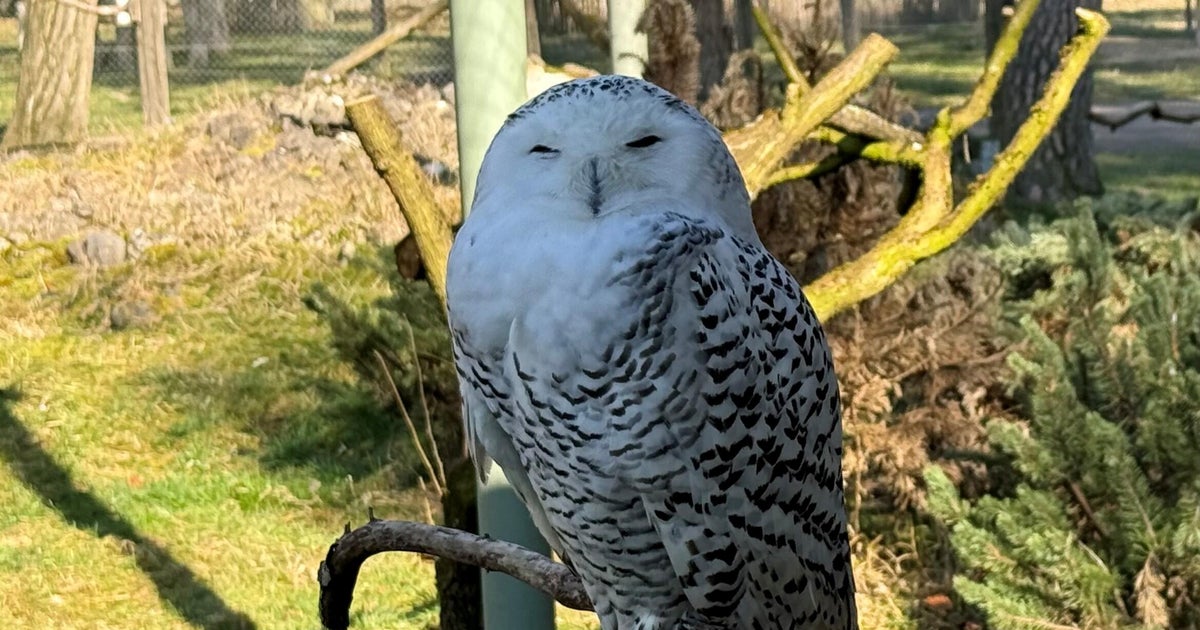
Snowy owl, hammerhead shark and cheetah among 40 new species granted international protection, U.N. says
The U.N. Convention on the Conservation of Migratory Species of Wild Animals (CMS) on Sunday approved the listing of 40 new species for international protection, including the snowy owl featured in the Harry Potter saga.
The decision came at the conclusion of the COP15 summit on migratory species in Campo Verde, Brazil, which brought together representatives from 132 countries and the European Union.
It is one of the world’s most important global meetings for wildlife conservation.
Also on the new list for protection along with the snowy owl (Bubo scandiacus) are the Hudsonian godwit (Limosa haemastica) — a long-beaked shorebird threatened with extinction — and the great hammerhead shark (Sphyrna mokarran).
The new list featured land mammals like the striped hyena (Hyaena hyaena) and the cheetah (Acinonyx jubatus) and other aquatic wildlife such as the giant otter (Pteronura brasiliensis).
“From cheetahs and striped hyenas to snowy owls, giant otters and great hammerhead sharks, CMS Parties have backed stronger international action as new evidence shows many migratory species are moving closer to extinction,” CMS said in a statement on social media.
The countries that are party to the CMS are legally obliged to protect species listed as at risk of extinction, conserve and restore their habitats, prevent obstacles to migration and cooperate with other range states.
Campo Verde is in Brazil’s biodiversity-rich Pantanal wetlands, in the southern Amazon.
According to a report released ahead of the summit, nearly half (49 percent) of all species catalogued by the CMS are showing signs of declining numbers, and nearly one in four are threatened with extinction on a worldwide scale.
“We came to Campo Grande knowing that the populations of half the species protected under this treaty are in decline,” CMS Executive Secretary Amy Fraenkel said in a statement. “We leave with stronger protections and more ambitious plans but the species themselves are not waiting for our next meeting.”
Another major U.N. assessment, published on Tuesday as the summit opened, warned that migratory freshwater fish populations crucial to river health and sustaining the livelihoods of millions of people are in freefall and risk collapse.
Habitat destruction, overfishing and water pollution from the Amazon to the Danube threaten the very survival of hundreds of species whose epic voyages along the world’s great rivers go largely unnoticed.
Last November, Brazil hosted the COP30 climate summit in the Amazonian city of Belem. Leaders from nearly 200 nations attended the summit but not from the world’s three largest greenhouse gas emitters — China, the United States and India. Beijing and New Delhi did dispatch senior-level delegations for the two-week summit. The White House, however, said no high-level U.S. officials would attend this year’s COP. President Trump has repeatedly dismissed human-caused climate change as “a hoax.”