Stocks tumble as Wall Street nears longest losing streak in nearly 4 years
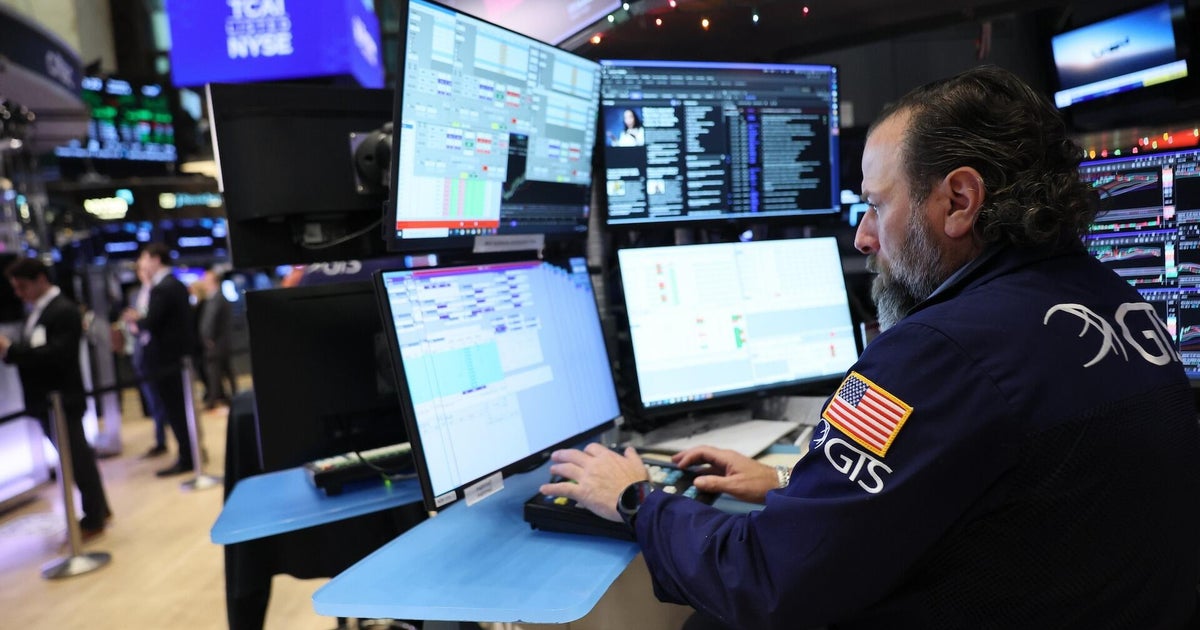
Stocks tumbled Friday as Wall Street was headed for a fifth straight weekly decline, its longest such stretch in nearly four years. The losses come a day after U.S. markets suffered their worst drop since the Iran war began Feb. 28.
The S&P 500 slumped 55 points, or 0.85%, to 6,422 in late-morning trading, while the Dow Jones Industrial Average shed 371 points, or 0.8%, to 45,589. The tech-heavy Nasdaq declined 1.3%.
The S&P 500 has dropped back to its level in August and is 8% below its all-time high set earlier this year.
Investors are unsettled by surging crude oil prices and conflicting messages from U.S. and Iranian leaders. President Trump says he extended his deadline for Iran to reopen the Strait of Hormuz because negotiations to end the war are “going very well,” while Iran has denied any direct talks and continues its blockade of the vital waterway in the Persian Gulf.
“Each time the conflict intensifies, oil spikes, stocks fall, and yields rise. Each time there is even a hint of restraint, those moves reverse,” said Nigel Green of investment firm deVere Group in an email. “The pattern now seems firmly established.”
A dip in U.S. consumer confidence added to investors’ unease, with the University of Michigan’s preliminary March sentiment index, released Friday, showing the lowest reading since December 2025. The drop in sentiment was more pronounced among middle- and high-income consumers.
“When we go to war, people anticipate worsening economic constraints, including higher prices. But they also anticipate volatility in their investments,” said Elizabeth Renter, senior economist at NerdWallet, in an email. “That’s why this time the dip in consumer sentiment is being felt across higher incomes and those with stocks.”
Higher oil prices
The fear in financial markets is that the war will disrupt the production and transport of oil and natural gas in the Persian Gulf for a long time. It could keep so much oil and gas out of the world’s markets that it sends a punishing wave of inflation through the global economy.
It would not only raise prices for drivers buying gasoline, but could also push businesses that use trucks, ships or planes to move their products to raise their own prices.
The price for Brent crude rose 2.2% on Friday to $104.13 a barrel and is up from roughly $70 before the war began. Benchmark U.S. crude rose 3% to $97.28 per barrel.
If the war continues until the end of June, strategists at Macquarie say the price of oil could reach $200 per barrel. So far, the highest oil prices on record were just above $147 during the summer of 2008. That was when Iran’s missile testing, including one that could reach Israel, and strong demand from China helped send prices spiking despite the Great Recession.
Impact on bonds
Long-term Treasury yields rose even further in the bond market following Friday’s rise for oil prices. The yield for the 10-year Treasury climbed to 4.44% from 4.42% late Thursday and from just 3.97% before the war began.
That rise has already sent rates jumping for mortgages and for other loans taken by U.S. households and businesses, slowing the economy.
On Wall Street, most stocks fell, including two out of ever three in the S&P 500.
Among the few stocks to rise was Netflix, which added 0.3% a day after announcing price hikes for its services.