The European town with 95% Russian speakers that could be Putin’s next target | World | News
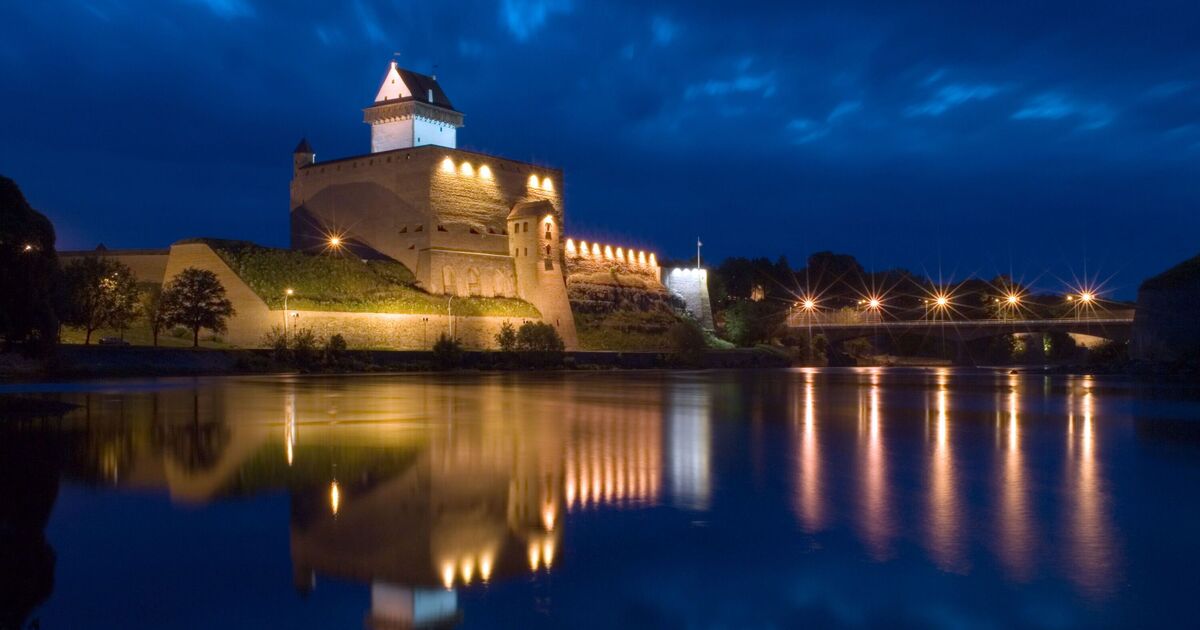
2026 has been the year when some analysts predicted Vladimir Putin might launch attacks on NATO. The countries most worried are in the Baltic region, where Russia’s historic influence and the presence of large Russian-speaking populations raise security concerns. One town in particular is Narva, on Estonia’s eastern border. About 95% of its residents speak Russian, and the city sits directly across the Narva River from Ivangorod in Russia, separated by just 101 metres. Narva has around 54,000 residents, many of whom hold Russian passports or have family ties across the border.
This combination of location and demographics makes Narva a likely point of interest for Moscow. Some compare it to eastern Ukraine‘s separatist regions, which Russia used to justify military action. Worryingly, in what analysts have called the “Narva scenario”, Putin could use claims of protecting Russian speakers as a pretext for his intervention. Estonia is a member of both the European Union and NATO, and any attack on Narva would trigger Article 5, meaning a collective defence response. Tallinn has repeatedly stressed that NATO presence and military backing make a direct assault unlikely, though the risk keeps security planners alert.
Perhaps the biggest paradox in modern geopolitics is the Narva-Ivangorod “Friendship Bridge”, which links Estonia to Russia. Just a few metres apart, the two cities are physically connected, yet they sit on opposite sides of a tense international border. The bridge shows how close East and West can be geographically, while remaining politically and militarily worlds apart.
For Narva residents, Russian is the main language spoken at home. While cultural ties with Russia remain strong, the shadow of the war in Ukraine, now in its fourth year, has left residents torn apart.
When asked about Russia by journalists, they have been reserved in their responses.
“Anything is possible these days, but I’m not scared,” a man told the Kyiv Independent in response to a question about a potential invasion.
Some locals were more irritated by questions about a threat from Russia. “Russia has better things to do than attacking Estonia, it’s building its economy,” they told the Kyiv-based paper, echoing Russian propaganda. The invasion of Ukraine happened because locals had “asked” Russia for protection.
“And we are not asking for it.”
Recent “difficult” Russia-Ukraine peace talks in Geneva ended without a breakthrough, and Moscow has not signalled a clear willingness to compromise. Meanwhile, Estonia has been strengthening its defences and maintaining close coordination with NATO.