The incredible underwater tunnel in major city that cost £3bn but is only 3 miles long | World | News
From record-breaking bridges to towering skyscrapers, today’s world is now packed with projects which, centuries ago, would have seemed the stuff of fiction. Modern engineers are pushing boundaries like never before, carving roads through mountains, stretching railways across oceans and even building vast tunnels beneath the waves, revolutionising how we travel.
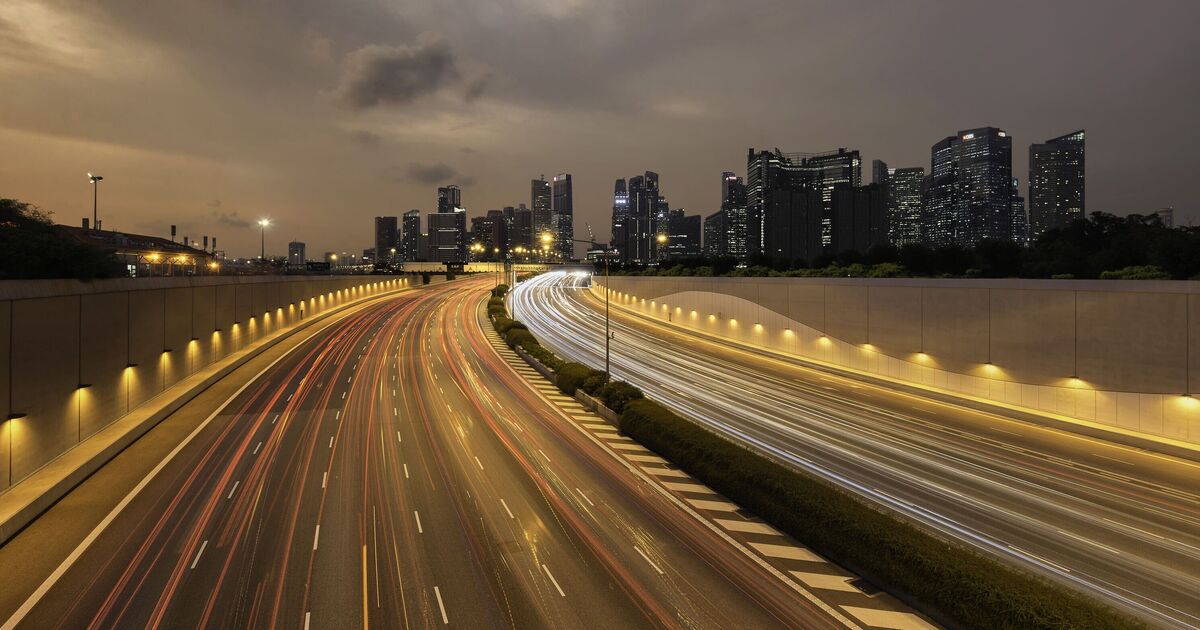
One of the most remarkable examples can be found in Singapore, where the Marina Coastal Expressway (MCE) has redefined what a motorway could look like. The MCE is the 10th of the island country’s network of expressways and also holds the record as its most expensive and first undersea road. Construction of this impressive project began in 2008 and was completed by the end of 2013. Opened on December 29, it serves as a critical link between the eastern and western parts of Singapore and the new Downtown at Marina Bay.
The expressway spans 3 miles, with 2.2 miles in a tunnel. The most impressive segment is a 1,377-foot (420-metre) stretch that runs directly beneath the seabed of Marina Bay. At its deepest point, the tunnel sits approximately 66 feet below the seabed, and it features a massive 10-lane design to accommodate high volumes of traffic.
The construction of the MCE cost approximately S$4.3 billion (£2.5 billion), making it the most expensive expressway per kilometre in Singapore’s history. At its peak, construction required the removal of three million cubic metres of soil – enough to fill roughly 1,200 Olympic-sized swimming pools.
The primary purpose of the MCE was to support the long-term development of Marina Bay’s financial district. By burying the road, the Government was able to decommission a portion of the old East Coast Parkway, freeing up valuable land for high-density commercial and residential projects. Today, it serves as a vital high-speed link between the island’s eastern and western corridors.
At 197 feet wide, the MCE is significantly wider than standard tunnels, requiring extensive structural reinforcement and over 10 million man-hours to complete. To construct the undersea section, engineers used a cut-and-cover method by building temporary watertight enclosures on the seabed and pumping out the water to create a dry workspace.
The MCE is widely considered one of Singapore’s most complex engineering feats, given the unique environment of Marina Bay. Much of the expressway was built on reclaimed land consisting of thick layers of marine clay. This soil has a consistency similar to toothpaste, making excavation extremely unstable and requiring extensive ground reinforcement.
The undersea section is also located just 150 metres (492ft) away from the Marina Barrage dam, built at the confluence of five rivers. As a result, engineers had to design the tunnel to withstand huge water pressure and turbulence created whenever the barrage discharges water into the sea.