Ultrasound detects dangerous blockages from cosmetic filler injections
NEWYou can now listen to Fox News articles!
Each year, more than five million cosmetic filler procedures are performed in the U.S. — but these injectables can potentially block key blood vessels, putting patients at risk for serious harm.
In a study presented this week at the annual meeting of the Radiological Society of North America (RSNA) in Chicago, doctors found that ultrasound technology can spot these dangerous blockages early enough to guide treatment and help prevent lasting injury.
The researchers looked at data from 100 patients from six different locations who experienced vascular complications after hyaluronic acid filler injections. All data were collected between May 2022 and April 2025, according to a press release.
RARE NECK CONDITION COULD TURN SALON HAIR-WASHING INTO DANGEROUS STROKE RISK
They found that ultrasounds successfully detected vascular occlusion, which is a blockage in a blood vessel that stops normal blood flow.
If this condition goes untreated, it can cause pain, skin damage and scarring — and, in severe cases, vision loss or stroke.
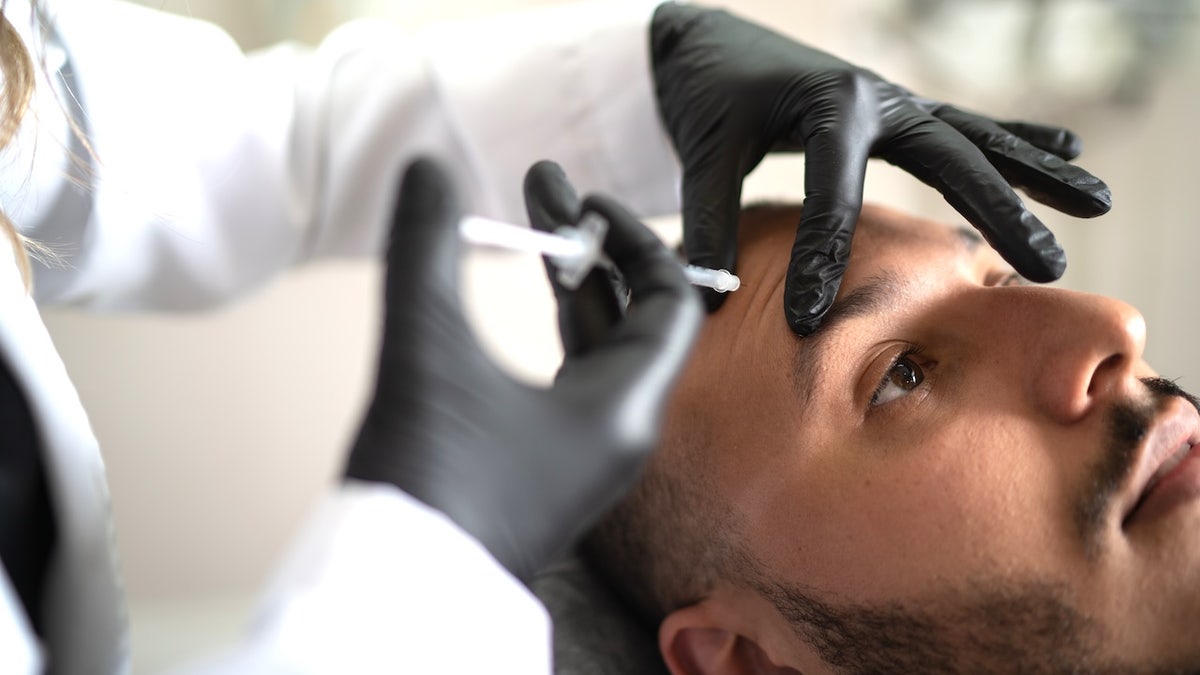
Each year, more than five million cosmetic filler procedures are performed in the U.S. — but these injectables can potentially block key blood vessels. (iStock)
“Doppler ultrasound helps doctors see exactly where the filler is, how the blood is flowing in real time, and whether blood vessels may have been affected after a cosmetic procedure,” lead researcher Rosa Maria Silveira Sigrist, M.D., attending radiologist at the University of São Paulo in Brazil, told Fox News Digital.
“The physical exam continues to be very important, but the ultrasound adds extra information that makes the evaluation safer and the treatment more precise.”
In the study, more than 40% of patients had blockages in the perforator vessels, which are small connecting blood vessels, while 35% had major facial arteries that showed no blood flow.
The nasal region was identified as the highest-risk area, as the lateral nasal artery runs along the side of the nose and supplies blood to larger arteries that lead toward the eye and the brain.

Doctors found that ultrasound technology can spot dangerous blockages early enough to guide treatment and help prevent lasting injury. (iStock)
“Vascular occlusion after filler injections can lead to devastating outcomes, including skin necrosis, tissue loss, and — in the worst cases — blindness and even stroke,” Dr. Anthony Berlet, a board-certified plastic surgeon in New Jersey, who was not involved in the research, told Fox News Digital.
“Once a critical artery — for example, one feeding the retina or skin — is occluded by filler or embolus, the damage may be irreversible.”
CLICK HERE TO DOWNLOAD THE FOX NEWS APP
In the hands of an experienced, licensed professional using proper techniques, the risk of a vascular occlusion should be less than 1%, according to Dr. Samuel Golpanian, a double board-certified plastic surgeon in Beverly Hills.
“But if fillers are done by someone untrained or using the wrong needles or methods, the complication rate can be much higher — 10% to 20%, which is completely unacceptable,” Golpanian, who also did not work on the study, told Fox News Digital.
CLICK HERE TO SIGN UP FOR OUR HEALTH NEWSLETTER
Ultrasound helped doctors pinpoint the locations of the blockages, allowing them to place a dissolving enzyme (hyaluronidase) right where it was needed and avoid using large, guesswork doses.
The researchers suggested that using ultrasound during the injection itself could help to prevent blood-vessel injuries and enable faster, more precise treatment if blockages occur.

In the hands of an experienced, licensed professional using proper techniques, the risk of a vascular occlusion should be less than 1%, one plastic surgeon stated. (iStock)
“Ideally, ultrasound should be integrated into care in a way that supports timely decision-making — either as an immediate point-of-care tool in trained hands, or to confirm and optimize management once initial rescue therapy has begun,” Dr. Asif Pirani, a board-certified cosmetic plastic surgeon in Toronto, Canada, told Fox News Digital.
To minimize dangerous complications, Pirano — another outside expert not involved in the study — emphasized that injectable treatments should be performed by board-certified specialists with formal training in facial anatomy and complication protocols.
Study limitations
Some limitations of the study were noted, including its relatively small sample size (100 adults) and the fact that it has not yet been peer-reviewed.
CLICK HERE FOR MORE HEALTH STORIES
“Another limitation we noticed is that the Doppler exam is performed differently even among very experienced specialists,” the lead researcher told Fox News Digital. “This shows how important it is to create clear, standardized guidelines, so the exam can be done in a more consistent way.”
“Once a critical artery is occluded by filler or embolus, the damage may be irreversible.”
Also, all study participants experienced significant complications, which means the findings may not apply to those with milder cases or different filler types.
TEST YOURSELF WITH OUR LATEST LIFESTYLE QUIZ
There could also be some degree of geographic bias, as the research was conducted in Brazil, where training standards may differ from the U.S.
Future studies are needed to follow more patients over longer time periods and track their recovery after ultrasound-guided treatment, the study noted.