Venezuela promised to free political prisoners, but their families are still waiting
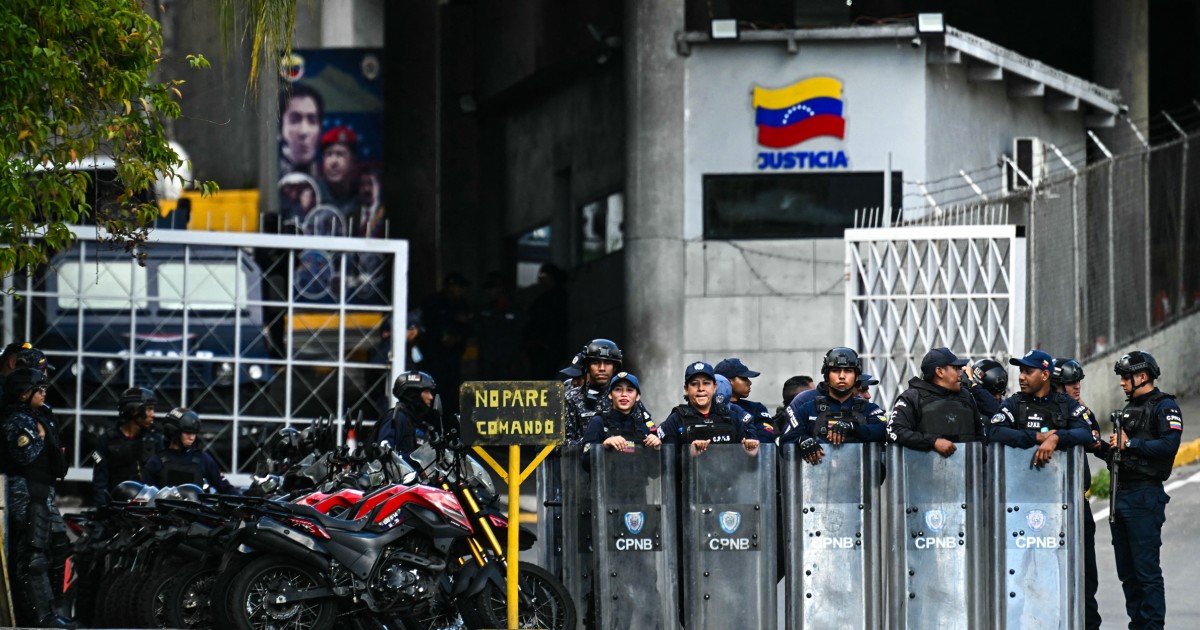
CARACAS, Venezuela — The joy prompted by news that Venezuela would free an “important number” of prisoners has given way to anguish for many of their loved ones. A week later, a fraction of the more than 800 political prisoners believed to be held by the repressive regime are out, and the future of those who have been freed is uncertain
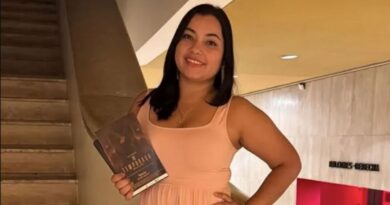
“We don’t know how many people will be released … this opacity victimizes us all over again,” said María Constanza Cipriani, whose husband, Perkins Rocha, has been detained almost 19 months.
Rocha, a lawyer for opposition leader and Nobel Peace Prize recipient María Corina Machado, was detained after the 2024 elections and was held incommunicado for a year, according to Cipriani. He is at the spiral-shaped El Helicoide prison, infamous as a center of torture. Cipriani said prison authorities have allowed calls every two or three days in recent months and described her husband as “serene,” “calm and strong” during their last conversation.
Still, she is consumed by anxiety.
“I follow what credible social media accounts report and cling to that — nothing else,” Cipriani said. “Where does this process even stand?”

Acting Venezuelan President Delcy Rodríguez vowed to continue releasing prisoners during a press briefing Wednesday, saying the government was entering a “new political moment.”
She said the process of releasing hundreds of detainees “has not yet concluded.”
Venezuela’s government said Monday that 166 prisoners had been released but did not provide a list of names or evidence. The following day, the head of Venezuela’s National Assembly, Rodríguez’s brother Jorge Rodríguez, said more than 400 people had been freed, but this figure includes two rounds of releases carried out before the U.S. capture of Nicolás Maduro on Jan. 3.
Human rights groups dispute these numbers. Foro Penal, a leading rights organization that tracks and advocates for Venezuelan prisoners, says 79 had been released as of Wednesday night. An estimated 800 to 900 political prisoners were believed to have been incarcerated in Venezuela at the time of Maduro’s capture.
The State Department announced Tuesday that multiple Americans who were detained in Venezuela have been released. Several detainees with Spanish citizenship were also let go last week.
Diego Casanova, spokesperson for the Committee for the Freedom of Political Prisoners, told NBC News that members of the group have gone to prisons around the country to wait for releases. He said anxiety has increased because unofficial lists of political prisoners and names have been circulating, but so far nothing has been confirmed.
“If only partial releases occur, this means that the repressive policy continues. All these people will remain unjustly detained, which is why we have insisted on the full and immediate release of all political prisoners,” he said.
Even after being released, former political prisoners aren’t fully free, Casanova said. They aren’t viewed as political prisoners by the government, and instead seen as “politicians who have broken the law and called for invasion,” according to a recent address by Rodríguez.
For example, they must periodically appear before a court to show that they are in the country and have complied with orders.
“The judicial process remains open, which is very unjust because the crimes they are charged with are lies,” he said.
The releases come as the interim government intensifies its crackdown on citizens, looking for signs of support for Maduro’s capture. Fifteen minors and two 18-year-olds were arrested last week in Barcelona, Anzoátegui state, for allegedly celebrating the U.S. operation. Within 48 hours, they were brought before a court where the judge ordered all to remain in custody.
The 15 were released Tuesday following sustained pressure from their parents and neighbors. But the two 18-year-olds remain detained.
Meanwhile, contacts between President Donald Trump and the Venezuelan leadership are ongoing.
Trump on Wednesday spoke with the acting president, and both described the call as positive.
“We just had a great conversation today and she’s a terrific person,” Trump said in the Oval Office. “I think we’re getting along very well with Venezuela.”
Machado met with Trump at the White House on Thursday, after he dismissed her capacity to run the country. “She’s a very nice woman, but she doesn’t have the respect within the country … I think it would be very tough for her to be the leader,” Trump said during a news conference Jan.3 following the U.S. military operation that captured Maduro.
Machado and Edmundo González Urrutia, whom the U.S. recognized as the winner of last year’s presidential election, have also raised concerns about irregularities in the recent prisoner releases.
“Our message to the regime, Venezuela, and the international community is unambiguous: genuine democratic transition is impossible while political prisoners remain behind bars, and Venezuela cannot be truly free as long as anyone faces persecution for their political beliefs.” they said in a statement released on Tuesday.
They also denounced the death of Edilson Torres on Saturday while in prison, where he was held incommunicado. The family of Torres, a police official, had been waiting for his release when he died of a heart attack. He was jailed in December for criticizing the government through WhatsApp messages. According to Machado and González Urrutia, this marks the eighth fatality in state custody since the 2024 elections.