What to do if your car skids on ice this winter – according to expert

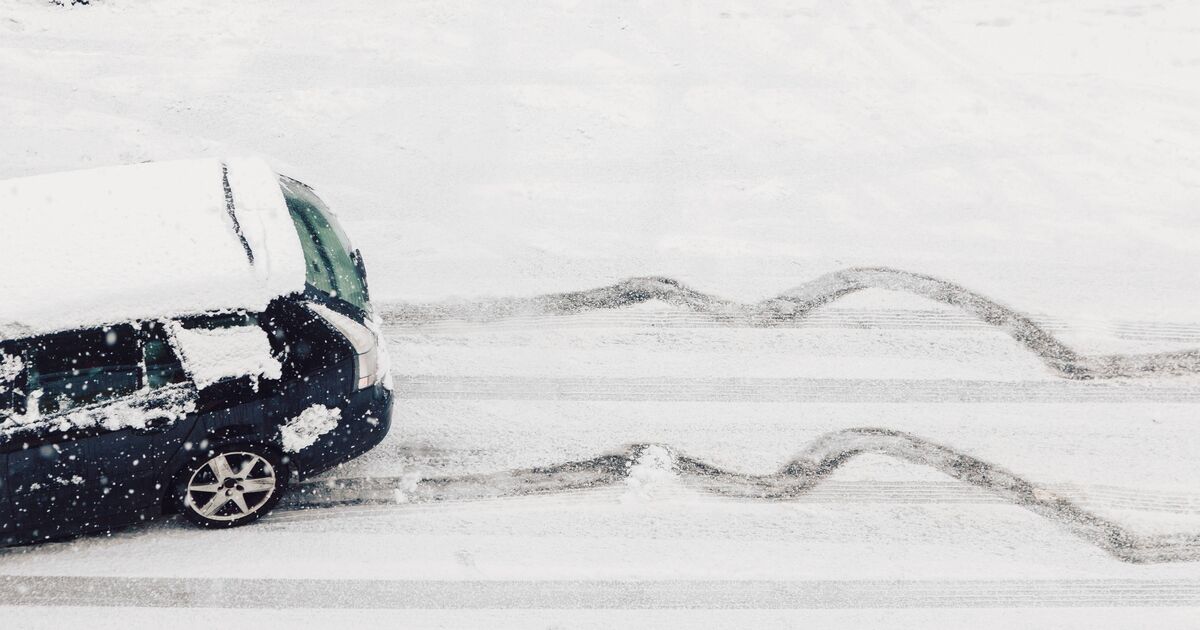
Experts have shared advice on skidding in snow and ice (stock) (Image: EyeEm Mobile GmbH via Getty Images)
One of the most daunting scenarios for drivers navigating snowy and icy conditions is the possibility of skidding and causing an accident.
And with the cold spell expected to persist throughout January, an expert has offered guidance on how to handle this frightening situation should it occur. Adrian Flux Insurance has highlighted one crucial action to take if your vehicle begins skidding on ice roads this month.
The experts shared an instructional video on TikTok, stating: “If you have to go out in the car in snow or icy weather, make sure your windows and lights are completely clear, and that you drive slowly and carefully.”
The insurer then demonstrated the recommended technique through a graphical illustration, advising: “Steer gently into the skid.” For instance, if the back of your vehicle is sliding to the right, motorists should steer to the right.
They added: “Do not take your hands off the steering wheel or break hard.” Whilst this may appear counter-intuitive, there’s sound reasoning behind this approach. By steering in the direction of the skid, your wheels align with the actual direction of travel, helping your tyres regain traction on the road surface.
Furthermore, steering in the opposite direction risks overcorrecting, potentially causing the vehicle to spin out of control or fishtail more severely. Therefore, steering into the skid enables you to smoothly realign the car with your intended direction of travel.
What does the AA say about driving in wintry conditions?
The AA provides advice on driving in wintry conditions, suggesting gentle acceleration and shifting into a higher gear as soon as possible. It also emphasises the importance of reducing speed overall.
They suggest: “Keep an eye on the vehicle in front of you as this can give a clue to where patches of black ice are (you may see the vehicle in front skidding slightly).”
Furthermore, the AA highlights: “If snow is falling heavily it will reduce how far ahead you can see, so you should drive much more slowly and give yourself longer to react. Secondly, braking distances can be doubled in wet conditions – and increased by at least 10 times on snow or ice.”
The AA elaborates: “The stopping distance at 30mph in normal conditions is 23 metres, which equates to 75 feet. In snowy conditions, your stopping distance at 30mph could be as high as 230 metres or 750 feet.”
Reacting to the advice, one TikTok user admitted: “Thanks for clarification of ‘into the skid’, I thought it meant follow the front of the car which was odd, and would be a disaster!”.
Another person shared their experience: “Did my first skid yesterday, it was unnerving but I handled it well, used engine braking to bring the speed down and managed to get the car pointing in the right direction, turned into an icy road and my back end slid out.”
A third person revealed: “As someone who skidded across several lanes of traffic, in icy, grassy and tarmac and in heavy rain, this really DOES work. Me and my son were perfectly fine and my car ONLY had 4 blown tyres. Luckily there wasn’t anyone who we went into/went into us.”