World’s richest monarch is 50 times richer than King Charles | World | News
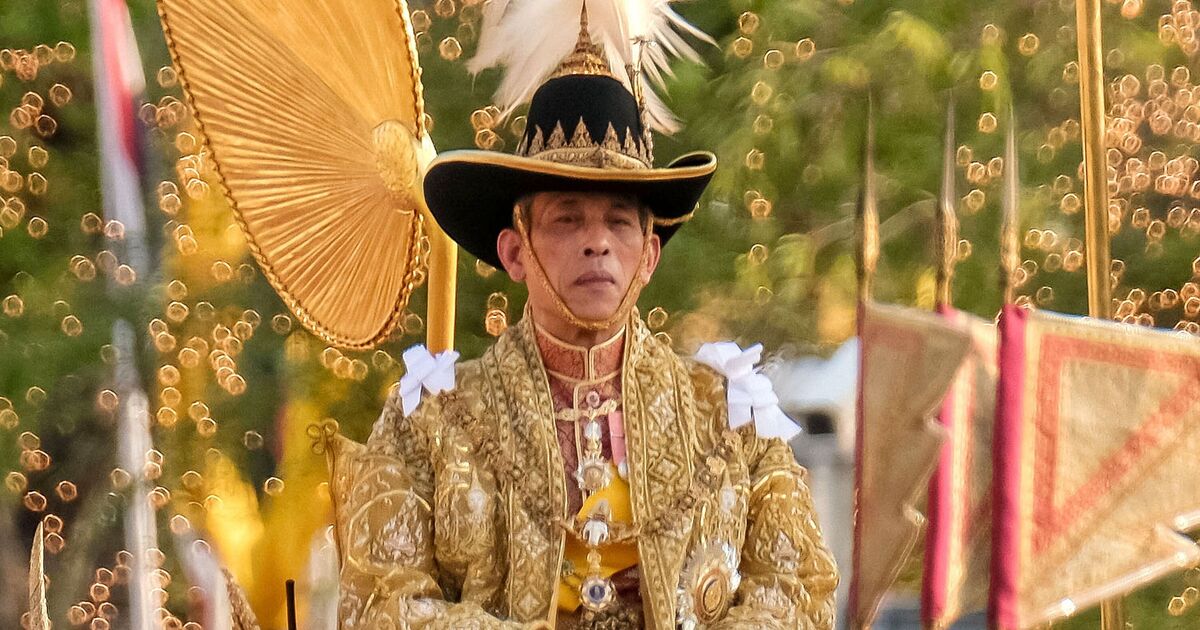
Setting aside the £15 billion value of the Crown Estate — which technically belongs to the monarch but is managed commercially on his behalf — King Charles III’s personal wealth is estimated at around £640 million. While that is an enormous sum, the King’s fortune is absolutely dwarfed by that of Thailand’s King Rama X. The free-spending Far Eastern monarch has splashed out some of his £32bn fortune on 17,000 houses, 38 private jets, 300 cars and 52 luxury boats.
Officially known as His Majesty King Maha Vajiralongkorn Bodindradebayavarangkun, the Thai king ascended to the throne in 2016, two months after the death of King Bhumibol Adulyadej. He delayed his coronation to allow sufficient time to mourn his father. When he became the 10th monarch of the Chakri dynasty — which has ruled Thailand since 1782 — Rama also inherited a legacy worth $43 billion (around £32bn), a staggering fortune that immediately made him the richest monarch in the world. He is estimated to be roughly 50 times wealthier than King Charles.
Rama has reportedly managed his incredible wealth astutely, investing in property and the telecommunications industry to significantly increase his already vast fortune.
The king’s property portfolio includes commercial buildings and luxury hotels, as well as historic palaces.
He is also said to own a collection of some 300 luxury cars — ranging from vintage Rolls-Royces to state-of-the-art supercars. Rama additionally owns a private “air force” of 38 helicopters and fixed-wing aircraft, many of which have been customised to suit his unique requirements.
In line with Thai tradition, he also has a ceremonial fleet of 52 golden barges, which he uses for regular river processions that emphasise the monarchy’s strong cultural connection with the country.
Similar to the UK’s Crown Estate, Thailand has an agency called the Crown Property Bureau, which controls much of the ruling family’s business holdings. However, Rama has exercised increasing personal control over the organisation.
Some in Thailand have questioned Rama’s rule, calling for democratic reforms, amendments to the constitution and, in particular, the repeal of Thailand’s lèse-majesté laws — which make any criticism of the king illegal.
Questions have also been raised about the king’s extraordinary wealth, which for many appears to be at odds with Thailand’s economic inequality.
In 2019, Rama placed two army units under his personal control, a move that Joshua Kurlantzick of the Council on Foreign Relations described as an attempt to push the country “closer to an absolute monarchy”.
Writing in World Politics Review, Kurlantzick said that while his father, Bhumibol, had been relatively subtle in his political interventions, Rama had “managed to manoeuvre himself to the centre of Thai politics, decreasing the power of both the army and politicians along the way”.